
Staff Writer
GABORONE-The Government of Botswana and Zimbabwe’s Geo Pomona Waste Management (Pvt) Ltd have signed a landmark Memorandum of Understanding (MoU) to explore sustainable waste management projects in Botswana.
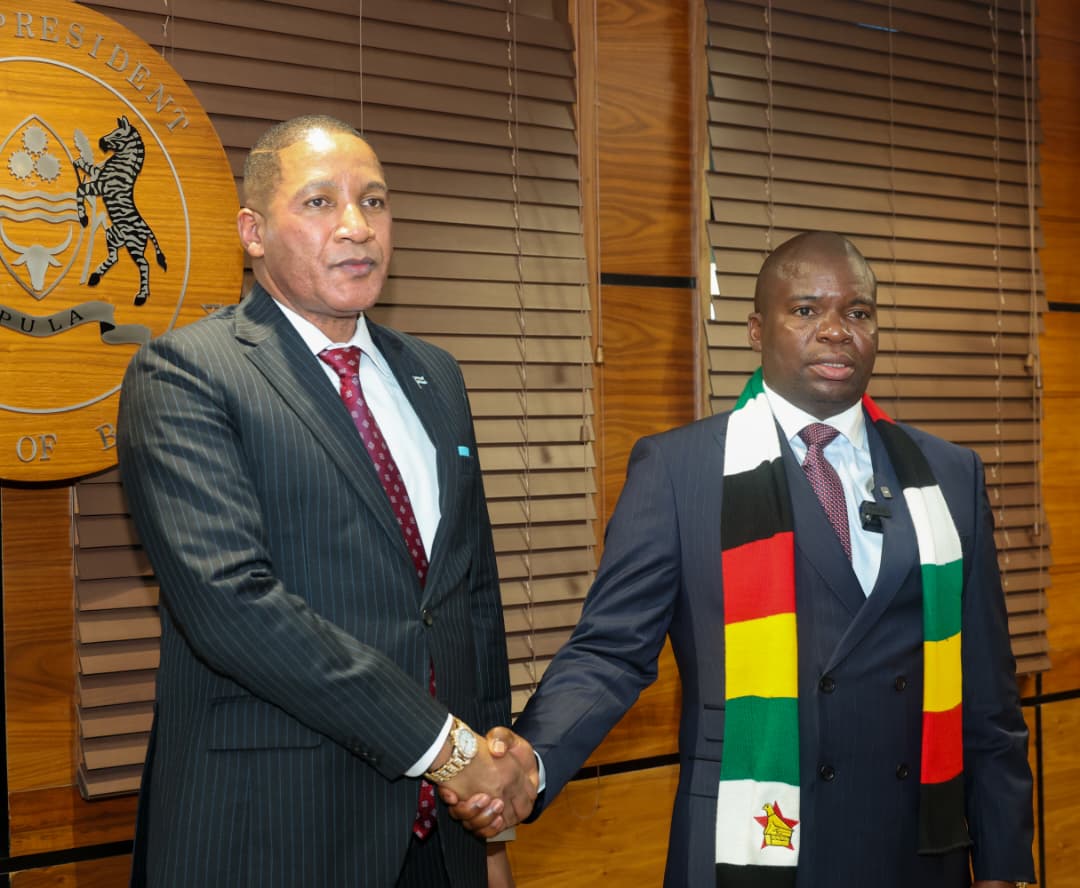
The agreement was signed at the Office of the President in Gaborone on 8 October 2026 and witnessed by Botswana President Advocate Duma Gideon Boko.
The MoU was signed by Ms Tshepo C. Kebakile, Deputy Permanent Secretary for Projects, representing the Government of Botswana, and Dr Dilesh Nguwaya, CEO and Executive Chairman of Geo Pomona Waste Management, who also serves as Special Advisor on Waste Management and Environmental Sustainability to Zimbabwean President Cde Dr E.D. Mnangagwa.
The ceremony was attended by Botswana’s Minister of Local Government and Traditional Affairs, Honourable Ketlhalefile F. C. Motshegwa, senior government officials and representatives of Geo Pomona.
President Boko expressed satisfaction with the signing, recalling his previous visit to Geo Pomona’s facility in Harare, where he witnessed the transformation of the former Pomona dumpsite into an integrated waste management operation. He commended the company’s expertise in transforming what was previously an environmental eyesore into a facility that has attracted regional interest.
President Boko said the agreement followed engagements dating back to 2024 and called for swift action to translate the commitments into practical outcomes.
Addressing the ceremony, Dr Nguwaya described the signing as a defining moment in strengthening cooperation between Zimbabwe and Botswana.
“Today, we do more than sign an agreement; we commit to turning a shared regional challenge into a shared opportunity,” he said. “This MoU opens a new chapter between Botswana and Zimbabwe, grounded in trust, African expertise and the conviction that environmental challenges demand coordinated action across borders.”
Dr Nguwaya said sustainable waste management offered opportunities beyond environmental protection, including skills development, improved public health, institutional strengthening and the growth of green economies.
“By combining the leadership of the Government of Botswana with Geo Pomona’s operational experience, we can strengthen local authorities, develop integrated waste systems, transfer practical expertise and build lasting institutional capacity,” he said.
Under the agreement, areas of cooperation will include technical knowledge exchange, capacity building, training, preliminary feasibility assessments and the examination of potential waste management infrastructure and project delivery models.
The two parties will also assess technologies and lessons drawn from Geo Pomona’s experience in Harare to determine their applicability to Botswana’s needs.
A Joint Steering Committee comprising representatives from both parties will oversee coordination, identify priority areas, develop work plans and monitor progress. The committee may also establish a Technical Reference Group to provide specialist advice on landfill rehabilitation, resource recovery and environmental safeguards.
The MoU provides a framework for preliminary technical cooperation and does not constitute the award of a specific project or implementation contract. Any future projects will be subject to technical assessments, regulatory approvals, funding arrangements and definitive agreements.
Dr Nguwaya said the cooperation aligned with the African Union’s Agenda 2063 and the United Nations Sustainable Development Goals relating to sustainable cities, climate action and international partnerships.
“Let this MoU be judged not by the signatures we place on paper today, but by the cleaner cities, stronger institutions, new green jobs and healthier communities it delivers,” he said.
“Together, Botswana and Zimbabwe can turn this shared commitment into tangible progress: cleaner cities, stronger institutions, thriving green economies and healthier communities for generations to come.”