
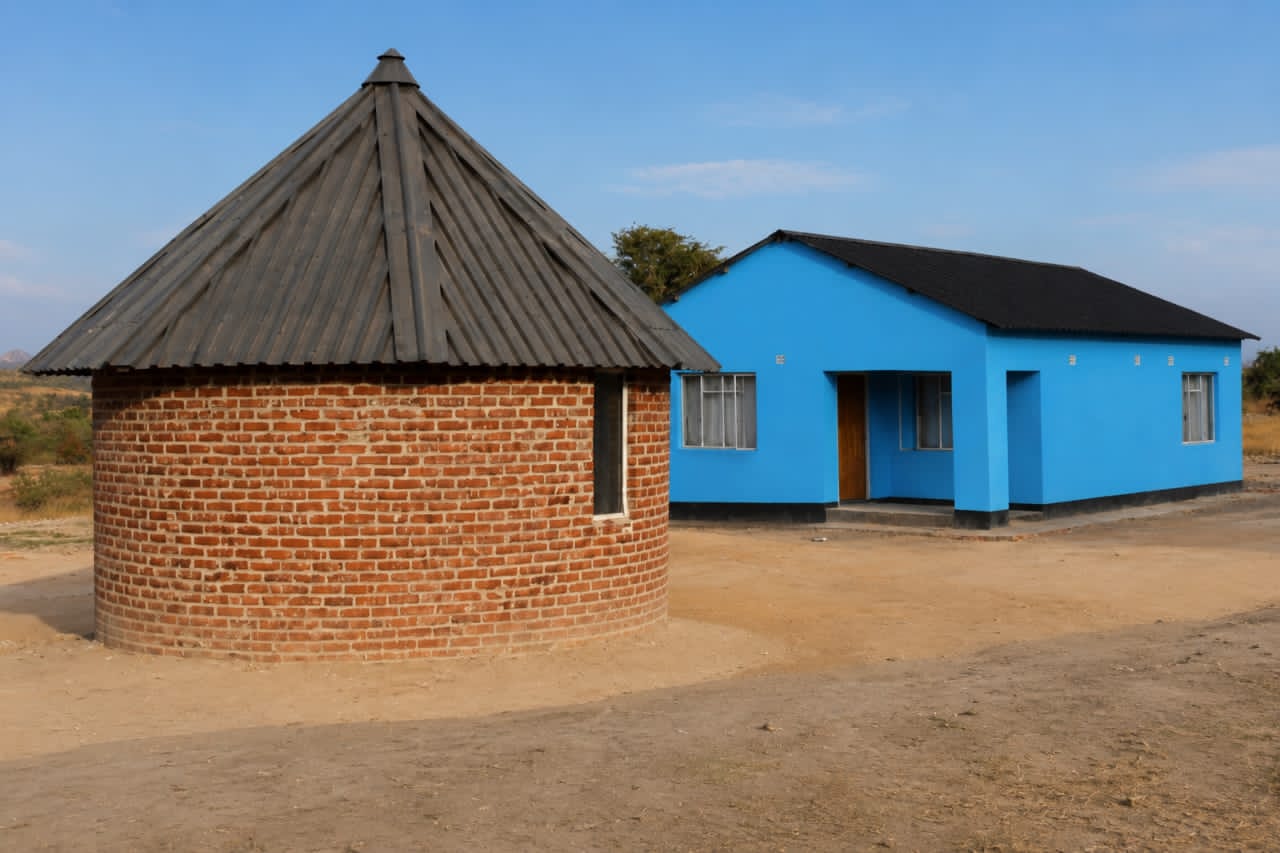
….Kunzvi Community Houses built by the government
By Desire Tshuma
Goromonzi – The quiet hills of Goromonzi are witnessing an emotional transition as families prepare to bid farewell to generations of their ancestors, while stepping into newly built homes that symbolise a fresh beginning under the Government’s ambitious Kunzvi Dam project.
More than 534 graves will be carefully exhumed and reburied to clear the future reservoir. This marks one of the most sensitive phases of a project expected to reshape Zimbabwe’s water security and transform livelihoods for decades to come.
The relocation exercise, estimated to cost nearly US$500,000, follows delays that prevented authorities from storing water during the last rainy season. This was after homesteads and ancestral graves remained within the dam basin.
Despite the emotional weight carried by the exercise, affected families have already begun a new chapter in Government-built modern houses constructed as part of the resettlement programme.
Resident Engineer John Tangayi said every effort had been made to ensure communities displaced by the project were treated with dignity and provided with better living conditions.
“Government has constructed quality houses for every affected family before relocation. Our objective has been to ensure that no household is disadvantaged by the project. At the same time, the relocation of graves is being conducted in consultation with families and traditional leaders to ensure cultural values and traditions are fully respected,” Tangayi said.
He said bids received for the grave relocation range from US$300 to US$1,000 per grave, placing the total cost of the exercise at approximately half a million United States dollars.
Tangayi expressed confidence that once the relocation programme is completed, the remaining works would gather pace, with the entire Kunzvi Dam project scheduled for completion by December 31, 2026.
The dam, whose principal construction contract is valued at US$108.147 million, has also seen Government invest an additional US$15 million in the construction of replacement houses for relocated families. This reflects efforts to balance national development with community welfare.
Once commissioned, Kunzvi Dam will become Zimbabwe’s third-largest inland water body. It will supply much-needed raw water to Harare, Chitungwiza and surrounding settlements, where demand has continued to outstrip available supplies.
The project is also expected to unlock new economic opportunities across Goromonzi. These include irrigation agriculture, fisheries, tourism and other water-driven industries, creating jobs while stimulating investment in the district.
Like many large infrastructure developments, Kunzvi Dam has faced numerous obstacles. These include funding shortages, logistical challenges and the painstaking process of relocating entire communities from land destined to disappear beneath water.
Yet as bulldozers continue shaping the landscape and families settle into their new homes, the project is steadily moving towards its final milestone.
For the affected communities, Kunzvi Dam represents both sacrifice and hope — a difficult farewell to ancestral resting places, but also the promise of improved housing, reliable water supplies and broader economic opportunities.
If completed on schedule, the project will stand not only as an engineering achievement but also as a lasting investment in Zimbabwe’s future. The sacrifices made today will help secure water and development for millions tomorrow.