
Own Correspondent
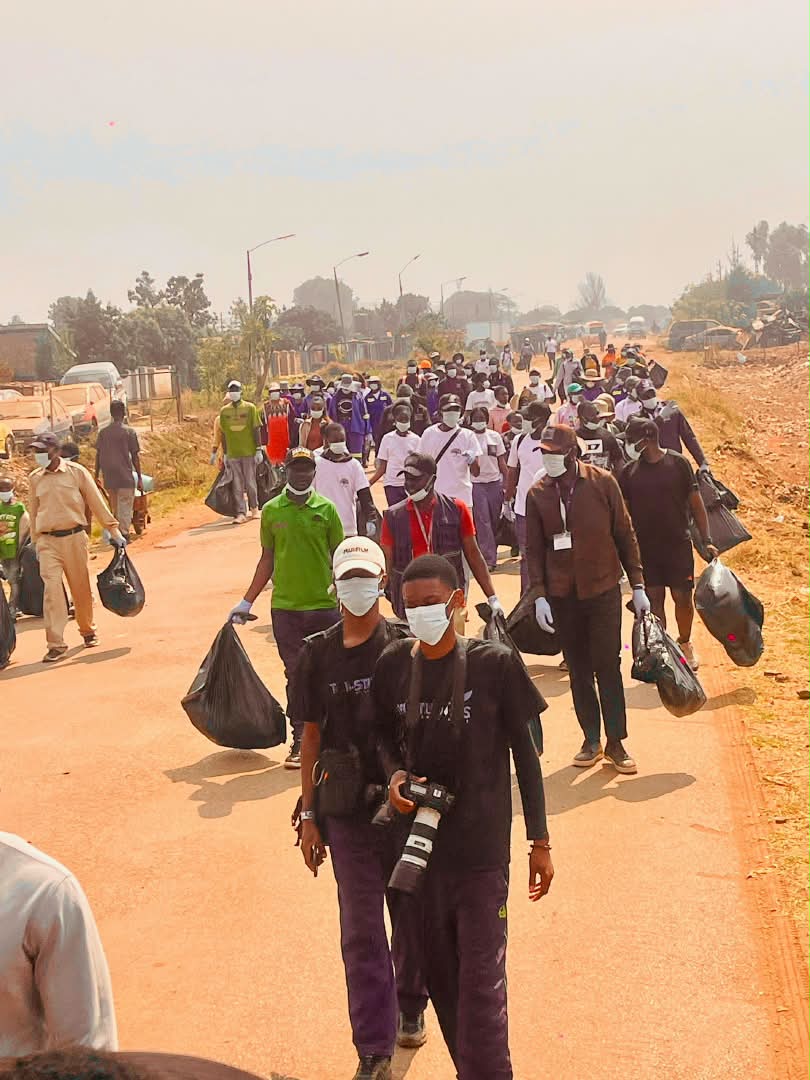
HARARE, Zimbabwe — Residents of Dzivarasekwa are being challenged to stop treating waste management as the sole responsibility of local authorities and instead take ownership of the environment in which they live.
The call comes from Sheba Muchabaiwa, Coordinator of the Zimbabwe Environmental Care Network (ZECN), following the Dzivarasekwa Community Walkathon held on September 4, 2026.
Muchabaiwa, who has lived in Ward 45 since 2017, said the initiative was born out of concern over poor waste management and the growing disconnect between communities and their environment.
For her, the solution begins at grassroots level.
“Charity begins at home. I believe in starting at the grassroots before we go out there,” Muchabaiwa said.
The walkathon brought together residents, churches, young people, schools, community leaders and other stakeholders around a simple but powerful message:
“A clean Dzivarasekwa, our health — Dzivarasekwa yakachena, hutano hwedu.”
According to Muchabaiwa, the campaign was designed to move the community beyond complaining about waste and towards taking practical action.
She said a clean community begins with individual responsibility — from keeping household yards clean to separating waste at source and ensuring rubbish does not end up blocking drains or littering public spaces.
The initiative also sought to highlight the direct connection between environmental management and public health.
“Blocked drains lead to flooding, while litter creates breeding grounds for flies and increases health risks such as cholera,” she said.
From Walking to Action
The walkathon was not intended simply as a symbolic march.
One of its key objectives was to mobilise residents to clean Robert Mugabe Way in Dzivarasekwa while raising awareness about proper waste disposal, waste separation and relevant Harare City Council by-laws.
Muchabaiwa said the campaign also seeks to change the way young people view environmental challenges.
Rather than waiting for employment opportunities or stipends, young people can become waste monitors, environmental champions and green job seekers, she said.
“We can move from complaining to participating; from waiting for stipends to becoming waste monitors, environmental champions, and green job seekers,” Muchabaiwa said.
The initiative is also seeking to establish stronger partnerships with Geo Pomona Waste Management, Harare City Council, churches and other organisations to create sustainable environmental solutions.
Faith and Environmental Responsibility
Muchabaiwa, who is also a Youth Pastor with Grace Ablaze Ministries, believes churches have a major role to play in addressing environmental and social challenges.
She draws inspiration from Genesis 2:15, which speaks about humanity’s responsibility to work and care for creation.
For her, environmental stewardship is therefore not separate from faith.
“When people understand that keeping their street clean and separating waste at source is an act of caring for their neighbour, it shifts the mindset from seeing it as ‘Council’s job’ to understanding it as ‘God’s calling’,” she said.
Through ZECN, Muchabaiwa said the organisation has conducted pulpit campaigns on waste separation at source in 18 churches across Dzivarasekwa and Kuwadzana Phase 3.
She argues that faith must translate into practical action.
“We cannot preach about the soul while people are becoming sick from cholera due to dirty streets,” she said.
Residents Demand More
The response from the community has reportedly been encouraging, with participants calling for the initiative to return.
Muchabaiwa said some participants simply told organisers: “Do it again.”
Churches also expressed their willingness to play a greater role, with the message: “Let the church be the light.”
The involvement of Ward 45 leadership also helped generate interest. After Councillor Shoko shared information about the walkathon in the Ward 45 WhatsApp Group, residents expressed eagerness to participate.
For organisers, the response demonstrates that there is an appetite for community-led environmental initiatives.
Twice a Year — and a Bigger Vision
The walkathon is expected to become a recurring community initiative, with organisers planning to hold it twice a year alongside an annual flagship event.
Muchabaiwa said future editions will focus on improving mobilisation, increasing access to resources such as bins and protective gloves, and expanding partnerships with the council, Geo Pomona and the private sector.
Organisers also want to introduce more health and waste-management education at the conclusion of future walks, ensuring that participants leave with practical knowledge that can be implemented at household level.
The ultimate vision extends beyond a single clean-up campaign.
Muchabaiwa wants to see every household practising waste separation, every street having waste monitors, churches leading environmental action and young people benefiting from green employment opportunities.
The bigger ambition is for Dzivarasekwa to become a model for other communities across Harare.
“Our vision is a Clean, Healthy, and Dignified Dzivarasekwa,” Muchabaiwa said.
And the message to households and potential partners is straightforward: environmental transformation cannot be achieved by government alone.
“When you invest in a clean Dzivarasekwa, you are investing in the health, dignity, and future of our community,” she said.
For Dzivarasekwa, the walkathon may have lasted only a day.
But its organisers hope the movement towards a cleaner, healthier and more dignified community will continue long after the walking stops.