
Staff Writer
HARARE — Harare residents and ratepayers have petitioned the City of Harare to urgently finalise and enforce its proposed Trade Effluent Management By-law, amid growing concerns over industrial pollution, deteriorating water quality and the rising cost of water treatment.
The petition, presented to the Mayor on August 26, 2026, calls on the local authority to strengthen regulation of industrial and commercial effluent discharges and ensure that companies responsible for pollution bear the costs associated with remediation, restoration and environmental monitoring.
The petitioners describe themselves as residents and ratepayers representing the interests of consumers and communities dependent on safe, reliable and affordable water services. They also say they are committed to protecting environmental rights, public health, water security and sustainable development.
The residents invoked constitutional provisions which, among other things, provide for the right to petition public institutions, public participation in development programmes, the right to an environment that is not harmful to health or wellbeing, and the right to safe, clean and potable water.
They also cited provisions of the Environmental Management Act governing water pollution and industrial and trade effluent, as well as the Urban Councils Act, which empowers local authorities to make and enforce by-laws relating to public health, sanitation, environmental management and water services.
Residents raise alarm over untreated effluent
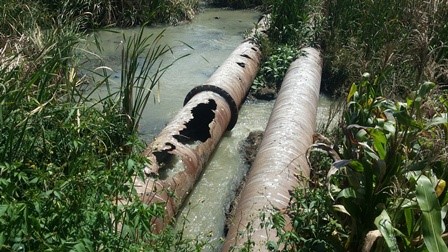
At the centre of the petition is concern over what residents describe as the continued discharge of untreated or inadequately treated industrial effluent into Harare’s sewerage system, rivers, streams and other water bodies.
The petitioners say the pollution is contributing to environmental degradation within the Manyame Catchment and Lake Chivero basin, with potentially serious consequences for water quality, public health and the environment.
“We are deeply concerned by the continued discharge of untreated and inadequately treated industrial effluent into Harare’s sewer reticulation system, rivers, streams, and water bodies,” the residents and ratepayers said in their petition.
They further raised allegations that more than 350 companies do not have pre-treatment facilities, which they argue is contrary to requirements governing industrial effluent.
According to the petition, industrial pollution remains among the major contributors to the deterioration of water quality in Lake Chivero, Harare’s principal raw-water source.
The residents argue that deteriorating raw-water quality increases water-treatment costs, reduces water-production efficiency, threatens aquatic biodiversity and creates risks to public health.
Ratepayers say residents are paying the price
The petitioners contend that the consequences of industrial pollution are ultimately being passed on to ordinary residents through higher costs and unreliable services.
They cite recurring water shortages, declining water quality and escalating water-purification costs among the burdens being experienced by residents.
“Residents continue to bear the cost of industrial pollution through recurring water shortages, declining water quality, and escalating water purification costs,” the petition states.
The residents further argue that these costs are ultimately transferred to consumers through increased tariffs and service charges.
The petition also points to recent increases in water tariffs for both commercial and domestic users, arguing that residents should not be made to shoulder the financial consequences of pollution caused by industrial activities.
Residents want Trade Waste By-law finalised
The residents and ratepayers say the absence of a finalised and enforceable Trade Waste Effluent Management By-law is weakening the City of Harare’s ability to regulate industrial discharges effectively.
They argue that without a strong regulatory framework, the council faces limitations in monitoring compliance, enforcing pollution standards and holding companies accountable for environmental damage.
“The absence of a finalized and enforceable Trade Waste Effluent Management By-law limits the local authority’s capacity to effectively regulate trade waste discharges, monitor compliance, enforce pollution standards, and hold polluters accountable,” the petitioners said.
The residents are therefore calling for the draft by-law, which they say is currently under review by the Environmental Management Division, to be urgently completed, approved and adopted.
El Niño fears add urgency
The petition comes against the backdrop of concerns over anticipated El Niño conditions during the 2026–2027 rainy season.
Residents fear that reduced rainfall, lower dam inflows and prolonged dry spells could worsen Harare’s water insecurity while increasing the concentration of pollutants in already stressed water bodies.
They argue that reduced rainfall could leave Lake Chivero with insufficient dilution of pollutants.
“There will be no adequate rainfall to dilute the heavily polluted water at Lake Chivero,” the petition states.
The residents say the reported condition of raw water in Lake Chivero, combined with delays in finalising the Trade Effluent Management By-law, exposes communities to heightened environmental, health and economic risks.
They maintain that protecting the lake and other strategic water sources should be treated as an urgent priority.
Call for tougher inspections and penalties
Beyond simply adopting the by-law, the petitioners want the City of Harare to establish clear and enforceable trade-waste discharge standards.
They are also demanding stronger monitoring, inspection and reporting mechanisms, together with meaningful penalties for companies that fail to comply.
The residents want community environmental stewardship incorporated into the regulatory framework and are calling for inspection and enforcement systems to be strengthened to ensure that industries comply with environmental and wastewater-discharge requirements.
A major demand is the full implementation of the “polluter pays” principle.
Under their proposal, industries responsible for pollution should meet the costs of remediation, restoration and environmental monitoring rather than leaving the financial burden on ratepayers and consumers.
Residents demand urgent action
The petition concludes with an appeal to the City of Harare to treat finalisation of the Draft Trade Effluent Management By-law as a matter of urgency.
The residents and ratepayers want the council to demonstrate its commitment to environmental protection, public health and water security by adopting and implementing what they describe as a robust regulatory framework capable of reducing industrial pollution.
They specifically identify Lake Chivero and other strategic water sources as assets that require stronger protection for current and future generations.
For Harare’s residents and ratepayers, the dispute is therefore not simply about a council by-law. It is about who ultimately carries the economic and environmental burden when industrial waste enters the city’s water system.
The petition places responsibility firmly on the local authority to strengthen enforcement while insisting that polluters, rather than ordinary consumers, should bear the costs associated with environmental damage.
The residents are now waiting for the City of Harare to consider their demands and move the draft Trade Effluent Management By-law from review to adoption and enforcement.