
By Simba Matake
Harare City Football Club are on the verge of securing promotion to the Premier Soccer League (PSL), but their potential return to the top flight is likely to reignite debate over the use of municipal funds to finance professional football amid persistent service delivery challenges in the capital.
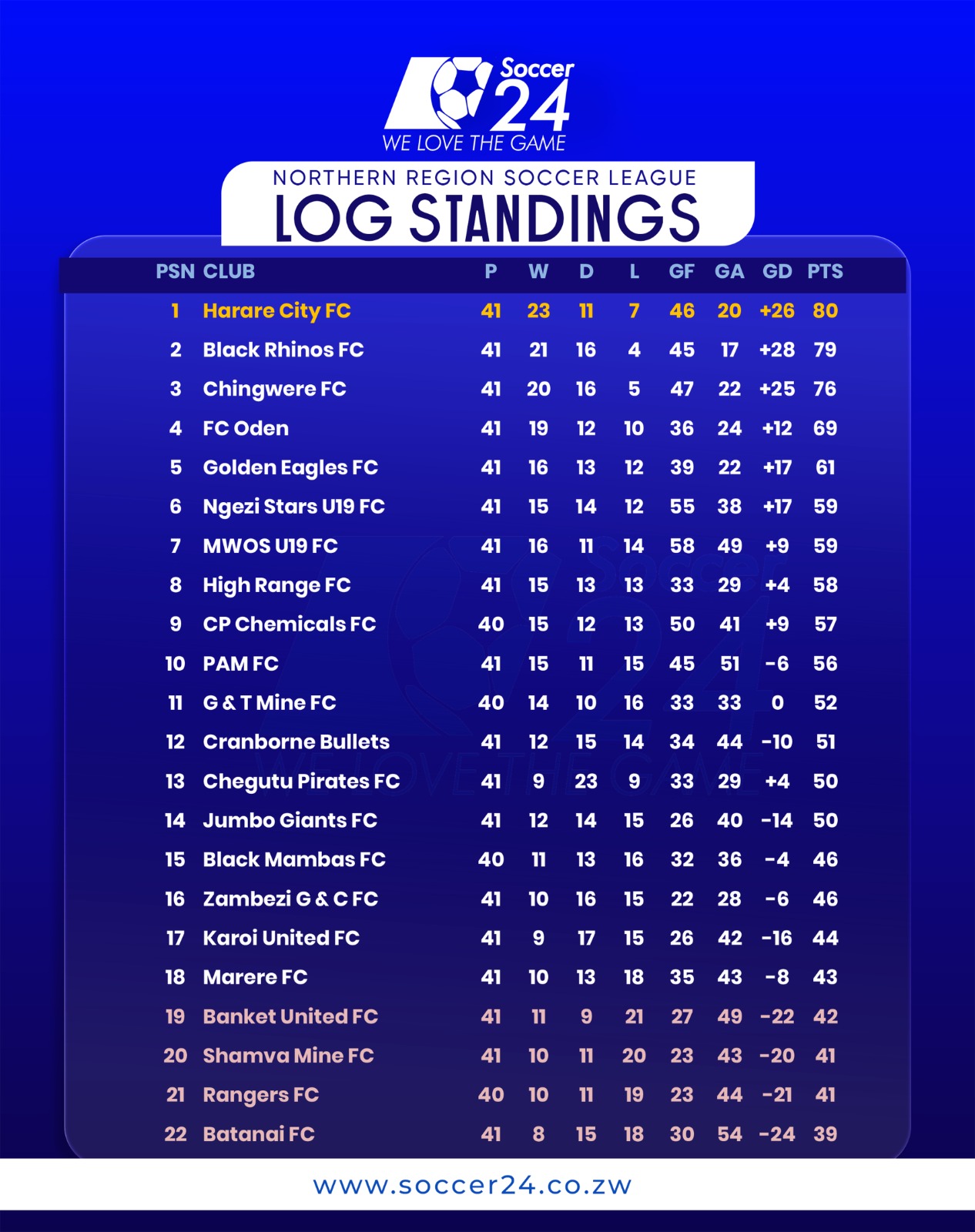
The latest Northern Region Soccer League standings show Harare City sitting at the top of the 22-team table with 80 points from 41 matches, just one point ahead of second-placed Black Rhinos, who have accumulated 79 points.
Chingwere FC are third with 76 points, while FC Oden occupy fourth position with 69 points.
The championship will be decided on Saturday, 7 November, when Harare City host Jumbo Giants, while Black Rhinos take on Karoi United in two decisive fixtures scheduled for a 3pm kick-off.
The Sunshine Boys need victory to guarantee the championship and automatic promotion to the PSL.
However, Black Rhinos remain firmly in contention and could snatch the title if Harare City drop points and they win their match against Karoi United.
Karoi United, who are 17th with 44 points, will nevertheless have a significant role in determining the destination of the championship trophy.
Harare City were relegated from the PSL in 2023, and promotion would mark their return to the country’s top-flight football after two seasons in Division One.
The Ratepayers’ Question: Who Pays for Premier League Football?
Beyond the excitement surrounding the promotion battle, Harare City’s potential return to the PSL raises important questions about the financial implications for residents and ratepayers.
Harare City FC is owned by the City of Harare, meaning its financial relationship with the municipality deserves public scrutiny, particularly if promotion brings increased operational demands.
A PSL campaign is generally more expensive than competing in Division One, with higher expectations regarding player remuneration, technical personnel, transport, accommodation, medical facilities, training infrastructure and match-day operations.
The question facing residents is whether the municipality will increase its financial commitment to the football club to sustain its top-flight status.
Harare continues to face significant service delivery challenges, including unreliable water supplies, uncollected refuse, deteriorating roads, sewage problems and inadequate public infrastructure.
For residents struggling with these challenges, any decision to commit additional municipal resources to professional football is likely to attract scrutiny.
The debate is not necessarily about whether Harare should have a football club, but whether its financing should take priority over essential municipal services.
Potential Benefits for the City
On the other hand, having Harare City in the PSL could present economic and social opportunities for the capital.
A competitive top-flight team could help restore the city’s sporting identity, attract sponsorship, increase activity at Rufaro Stadium and create business opportunities for vendors, transport operators and other small businesses on match days.
Promotion could also provide opportunities for young footballers, strengthen the city’s sporting development programmes and enhance Harare’s visibility through national football competitions.
However, these benefits would need to translate into measurable financial and social returns rather than leaving the municipality dependent on continued taxpayer-funded subsidies.
As Harare City moves closer to promotion, residents and civic organisations may reasonably demand greater transparency regarding the club’s financial operations.
The municipality should publicly clarify how much it currently spends on the football club, whether the team generates sufficient revenue to cover part of its operating costs and how any additional PSL expenditure would be financed.
A clear financial framework separating the club’s operational budget from essential municipal service delivery expenditure would help address concerns.
The club could also explore increased private-sector sponsorship, commercial partnerships, ticket sales and other revenue-generating activities to reduce its reliance on municipal funding.
Ultimately, promotion should not become an additional financial burden for residents who already expect the municipality to provide basic services.
Saturday’s matches will determine whether Harare City reclaim their place among Zimbabwe’s football elite.
But for Harare’s ratepayers, the bigger question may be what that achievement will cost them — and whether the benefits will justify the investment.
The city may be celebrating a return to the PSL, but residents will want to know whether their own priorities will remain on the municipal agenda.