
Stephen Chadenga
The Zimbabwe Congress of Trade Unions (ZCTU) is demanding a minimum non-taxable salary of US$400, arguing that any income below the poverty datum line will make government’s vision of attaining upper middle-income status impractical.
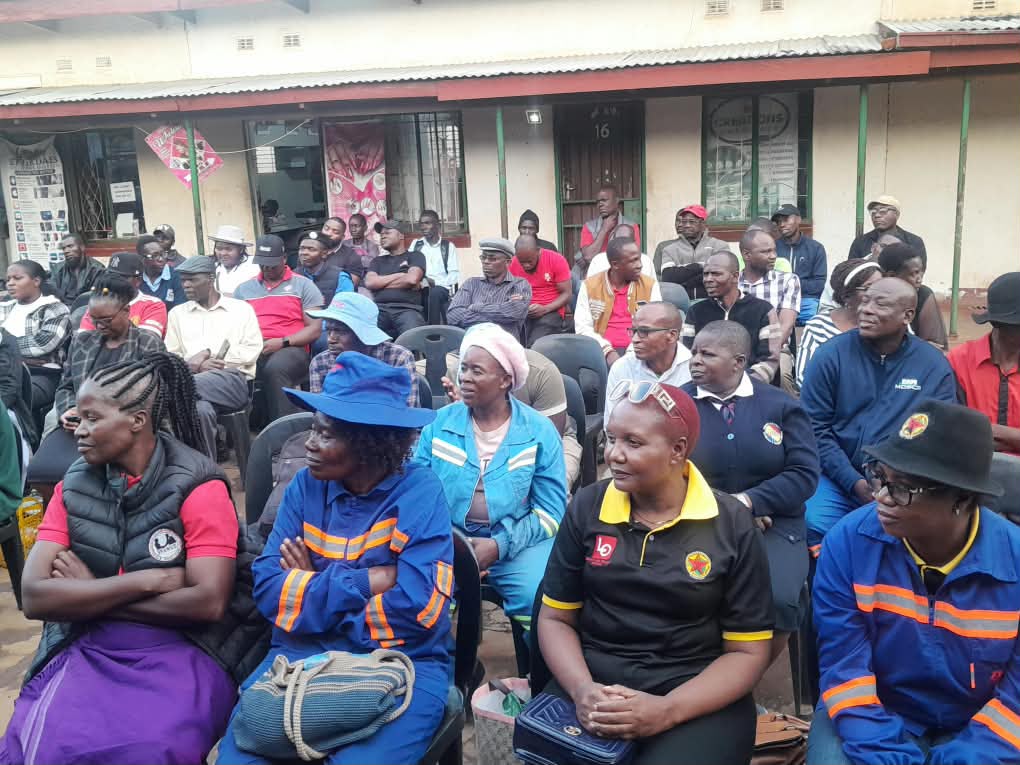
Speaking at a labour forum held in Gweru, ZCTU president Valentine Chikosi said Finance Minister Mthuli Ncube’s proposal to set the Pay As You Earn (PAYE) tax-free threshold at earnings below US$150 would not uplift the lives of the majority of poor workers.
During the recent national budget presentation, Ncube proposed a tax band of 20 percent on US$150.01 to US$300 earnings, from the previous 20 percent on US$100.01 to US$300 incomes.
“On the poverty datum salary, we are expecting a living and minimum wage of not less than US$400,” Chikosi said.
“So on minimum taxable income, we also expect a minimum of US$400.”
“We are now calling for members of Parliament to send back the budget to the Minister of Finance for revision on minimum taxable income and also progressive tax tables and the introduction of tax-free retrenchment payments.”
Chikosi asked: “How do we as a country move towards an upper middle-income economy by the year 2030 when the majority of the workers, who are also consumers, are earning pathetic salaries which are far below the poverty datum line?”
The ZCTU boss said there was need for a progressive Tripartite Negotiating Forum — including government, labour and employers — that pushes for “real incomes” that can benefit lowly-paid workers by increasing the minimum wage threshold to respectable levels.
“Our principled position as workers is that any salaries that fall below the poverty datum line should be tax-free,” he said.
“Why should we continue to tax the poor while business gets many tax concessions? We also need, as workers, to see taxes that improve and give the best social services like health care, education, social protection and other services.”
He said public service delivery was supposed to be people-centred and that it was unacceptable for workers and citizens to pay taxes, rates, levies and charges but still be forced to buy their own medicine, pay for essential hospital services, source water privately and repair infrastructure that should be maintained by the state.
Chikosi called on government to decisively deal with corruption, financial leakages, abuse of public funds and unnecessary expenditure, vices he said undermined government’s capacity to provide essential services.
“Every dollar lost through corruption is a lost opportunity to build a school, improve a road or provide clean water,” said the ZCTU leader.
He said labour would continue to engage government and Parliament to ensure the final budget reflects the realities faced by workers, warning that failure to address low wages and high taxes would deepen poverty and widen inequality.