
By Sharon Tate
The Zimbabwe Teachers Association (ZIMTA) has called on the Government to increase funding for public education, urging authorities to allocate at least 20 percent of national public expenditure to the education sector to improve learning outcomes and ensure equitable access to quality education.
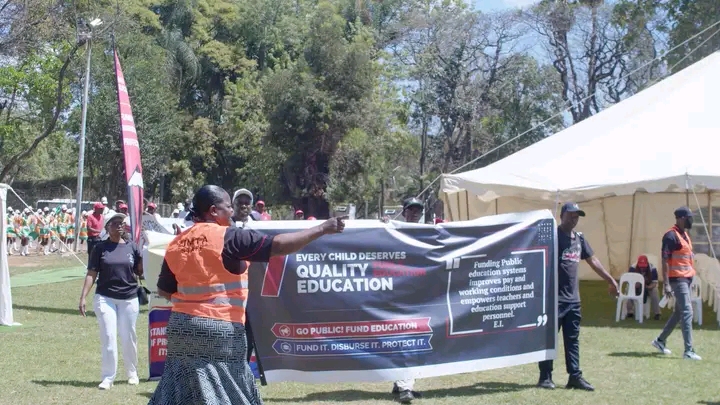
In its Go Public! Fund Education advocacy campaign, ZIMTA emphasised the need for increased investment, transparency, accountability and responsiveness in education financing, arguing that adequate funding is essential to protecting education as a fundamental right.
The association outlined what it described as the key principles for strengthening public education financing, placing emphasis on the size of resources allocated to education, the share of the national budget directed towards the sector, scrutiny of expenditure and sensitivity to the needs of vulnerable and marginalised learners.
On the question of funding, ZIMTA called for an increase in the overall resources available for education, stressing that the Government should ensure that at least 20 percent of public expenditure is allocated to the sector.
“The size of resources available for education must increase, while the share of national public expenditure allocated to education should be at least 20 percent,” the association said.
ZIMTA argued that increasing budgetary allocations would provide a stronger foundation for addressing challenges affecting the education system, including inadequate learning resources, infrastructure gaps and inequalities in access to quality education.
The association also highlighted the importance of strengthening oversight mechanisms to ensure that money allocated to education is properly utilised and delivers tangible benefits to learners and schools.
Under the principle of scrutiny, ZIMTA called for stronger transparency and accountability in education financing, emphasising that increased allocations must be accompanied by effective monitoring and oversight.
“Scrutiny is essential in ensuring that education financing is transparent, accountable and subject to effective oversight. Resources allocated to education must be properly accounted for and translated into meaningful improvements in the learning environment,” ZIMTA said.
The association further stressed the importance of sensitivity in education policies and budgetary decisions, particularly in responding to the circumstances of vulnerable and marginalised communities.
It said education financing should take into account the different challenges faced by learners, ensuring that national policies and budgets do not leave disadvantaged children behind.
“Education policies and budgets must respond to the needs of the most vulnerable and marginalised. Every learner deserves an opportunity to access quality education, regardless of their social or economic circumstances,” the association said.
ZIMTA said the principles of increased investment and stronger accountability should ultimately translate into practical action, calling for resources to be directed towards improving the quality, accessibility and fairness of education.
The association outlined three key priorities for turning evidence into action: investing more, investing fairly and investing for every learner.
It argued that increased funding should be distributed equitably to address disparities between schools and communities, while ensuring that learners in disadvantaged areas receive the support and resources they need.
“Invest more. Invest fairly. Invest for every learner. Education financing must be guided by evidence and directed towards ensuring that no learner is disadvantaged or excluded because of their circumstances,” ZIMTA said.
The association’s campaign is anchored on the principle that education is a fundamental right which requires adequate public investment, protection and effective delivery.
Its advocacy also draws attention to the importance of evidence-based decision-making in determining national education priorities, with the association citing the UNESCO 2023 Global Education Monitoring Report and the International Monetary Fund’s 2023 public expenditure on education data as reference sources.
The campaign comes amid continuing calls for improved investment in Zimbabwe’s education sector, with teachers, parents and education stakeholders highlighting the need for adequate school infrastructure, teaching and learning materials, improved working conditions for educators and better support for learners.
ZIMTA’s position underscores the argument that education financing should not only be measured by the amount of money allocated in the national budget but also by how effectively and fairly those resources are distributed and utilised.
The association maintains that sustainable improvements in education require a combination of adequate funding, transparent management, accountability and policies that prioritise the needs of every learner.
Through its Go Public! Fund Education campaign, ZIMTA is urging the Government and other stakeholders to treat education financing as a national priority, ensuring that public resources are sufficient to protect the right to education and deliver meaningful learning outcomes.