
By Bothwell Chabarika
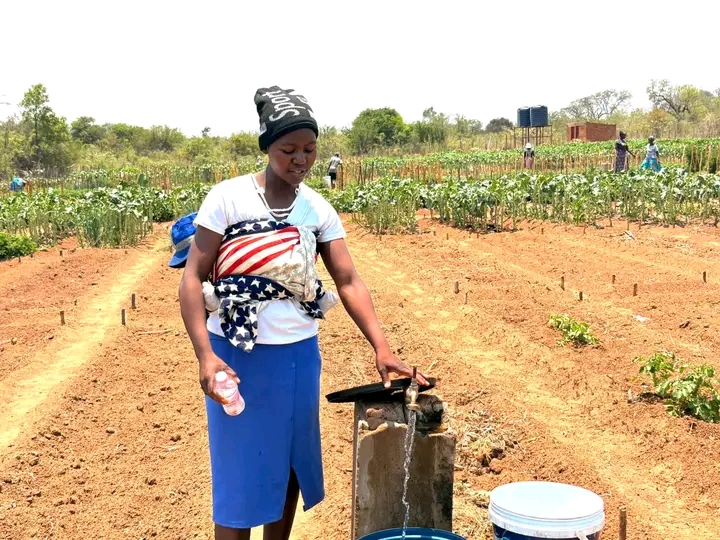
Women in Saunyama Ward 18, Nyanga, are strengthening their resilience to climate change by adopting agroecological farming practices aimed at conserving water, protecting harvests and improving household food security ahead of the anticipated El Niño-induced dry conditions.
The initiative is being implemented at Tarangarirwa Agroecology Nutritional Garden, where 35 members are embracing sustainable agricultural methods to prepare for potential drought and ensure continued access to food.
The women are using techniques such as mulching to retain soil moisture, making organic compost to improve soil fertility, diversifying crops and preserving vegetables to sustain their families when fresh produce becomes scarce.
With support from Simukai Child Protection Programme, in partnership with ActionAid Zimbabwe, the initiative seeks to strengthen community preparedness for climate-related disasters by equipping women with practical, sustainable farming skills.
Memory Nyandoro, a member of Tarangarirwa Agroecology Nutritional Garden, said the group was taking proactive measures to protect its crops and secure food supplies ahead of the anticipated dry season.
“We are preparing for the anticipated dry season by mulching our gardens to conserve moisture, planting different crops and preserving vegetables for times when food may be scarce. While we cannot control the rains, we can take practical steps to protect our harvests and keep food on our tables,” said Nyandoro.
Through agroecology, the women are working to build more resilient food systems, protect livelihoods and reduce their vulnerability to changing weather patterns.
The initiative also highlights the role of women-led community efforts in disaster preparedness, particularly in rural areas where households depend heavily on agriculture for food and income.
However, communities in the Global South, including those in Zimbabwe, continue to face the effects of climate change despite contributing comparatively little to global greenhouse gas emissions.
ActionAid has called for greater climate justice, urging those most responsible for climate change, environmental degradation and fossil fuel emissions to compensate affected communities and provide funding for locally led adaptation initiatives.
The organisation argues that investing in women, agroecology and climate-resilient agriculture is essential to helping vulnerable communities withstand droughts, protect livelihoods and strengthen food security.
The campaign, which uses the hashtags #PayTheHarm and #FundOurFuture, calls for increased resources to support communities on the frontlines of the climate crisis.
Through their efforts in Saunyama, the women of Tarangarirwa Agroecology Nutritional Garden are demonstrating how locally driven solutions can help rural communities prepare for climate shocks and safeguard their food supplies.