
By Nevison Mpofu
The Technologies for African Agricultural Transformation (TAAT) and the African Seed Trade Association (AFSTA) have brought together seed companies, breeders, researchers and agricultural stakeholders in Nigeria in a strategic initiative aimed at accelerating crop innovation, strengthening food security and increasing agricultural productivity across Africa.
The two-day workshop, held from 9 to 10 October 2026 in Zaria, Kaduna State, showcased improved cereal and legume varieties while creating opportunities for collaboration between agricultural researchers and commercial seed companies.
The event marked the second annual workshop of the African Cereal and Legume Breeding Consortium (ACLBC), which seeks to bridge the gap between agricultural research and commercial seed markets by connecting technology developers with companies responsible for multiplying and distributing improved seeds to farmers.
The initiative comes as African countries seek to strengthen food security, improve agricultural productivity and build resilience to climate change through the adoption of improved crop varieties and sustainable farming practices.
TAAT, AFSTA and ACLBC are working to encourage at least 200 seed companies to adopt and scale up improved varieties and hybrids developed by CGIAR centres and advanced agricultural research institutions.
Through the consortium, breeders, technology developers and private-sector enterprises are expected to strengthen partnerships and attract investment in crop improvement, seed multiplication and distribution.
The programme also promotes a demand-driven approach in which seed companies communicate their priorities to research institutions to ensure that new varieties respond to farmers’ needs and market requirements.
Organisers say expanding access to reliable seed production systems and accessible markets is essential to ensuring that agricultural innovations translate into tangible benefits for farmers.
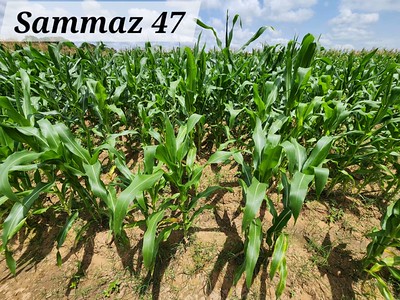
The workshop featured field demonstrations of selected crop varieties developed through TAAT-supported technologies, including maize, rice, sorghum, millet, soybeans, groundnuts and cowpeas.
Participants examined the comparative performance of the crops, their yield potential, grain quality, agronomic characteristics and post-harvest attributes.
The demonstrations also provided an opportunity to discuss seed quality requirements and the considerations involved in commercially multiplying improved varieties.
The field activities enabled participants to engage directly with specialists involved in developing the technologies, with discussions focusing on strengthening cooperation among research institutions, seed companies and other agricultural stakeholders.
The second day featured technical presentations, keynote addresses, panel discussions, question-and-answer sessions and networking opportunities under the theme, “Scaling TAAT Seed Technologies Partnerships for Impact.”
The discussions were intended to identify practical ways of increasing the commercial uptake of improved seed varieties, strengthening research and development, and expanding the availability of quality planting materials across African markets.
The Seed Entrepreneurs Association of Nigeria (SEEDAN) is expected to support the mobilisation of seed companies, while the National Agricultural Seed Council (NASC) will contribute through its seed quality assurance and regulatory functions.
The workshop builds on previous regional engagements, including a Kenya event held in August 2025, which brought together seed companies, research institutions, seed inspectors, farmers and public- and private-sector stakeholders to discuss challenges facing the seed industry and identify possible solutions.
ACLBC lead Geoffrey Nsofon said the consortium was designed to stimulate interest among seed companies and accelerate the adoption, branding and scaling up of improved varieties and hybrids developed by CGIAR centres and advanced agricultural research institutions.
“The consortium seeks to stimulate interest among seed companies and accelerate adoption, branding, scaling of elite varieties, hybrids developed by CGIAR centres and advanced agricultural research institutions,” Nsofon said.
He added that the initiative went beyond the adoption of completed varieties, also seeking to strengthen seed companies’ capacity to meet production requirements and respond to market demand.
AFSTA Secretary-General Dr Yacouba Diallo said the field demonstrations represented an important step towards building resilient food systems through seed innovation and private-sector participation.
“The field demonstration is an important step towards strengthening food systems resilience through seed innovation and private-sector engagement,” Diallo said.
He said incorporating improved varieties into seed companies’ portfolios would help increase seed production and make quality planting materials more readily available to farmers.
Dr Solomon Gizaw, head of the TAAT Clearinghouse, urged seed companies to take advantage of the consortium’s opportunities to access improved breeding technologies, develop partnerships and expand the availability of quality seeds.
“Seed companies must take advantage of the consortium opportunities to develop partnerships and expand availability of improved seeds,” Gizaw said.
He emphasised the importance of stronger collaboration between research institutions and seed companies in improving access to agricultural technologies and opening up better market opportunities for farmers.
Gizaw said access to high-quality seeds, combined with improved farming practices and stronger markets, could help farmers increase productivity, improve profitability and generate higher incomes.
The initiative is expected to contribute to the wider commercialisation of agricultural research by strengthening links between technology developers and seed producers.
Through increased investment, collaboration and the distribution of improved varieties, TAAT, AFSTA and ACLBC aim to help African farmers access better-performing seeds and strengthen the continent’s capacity to respond to food security challenges.