
Staff Writer
Officials from Finland’s Ministry for Foreign Affairs and the Finnish Evangelical Lutheran Mission (Felm) recently visited community resilience projects in Mwenezi as part of a partner monitoring exercise, which included the official opening of the Kushinga Resilience Hub in Ward 14.
The visit, hosted by the Zimbabwe Council of Churches (ZCC), provided the delegation with an opportunity to engage with communities and witness initiatives aimed at addressing water shortages, food insecurity and the effects of climate change.
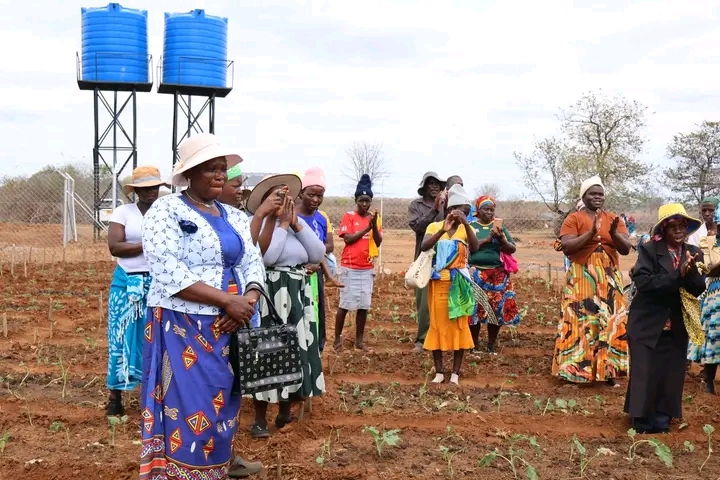
At the Kushinga Resilience Hub, the delegation witnessed the use of a solar-powered borehole to provide water for a community garden, cattle drinking troughs and community standpipes.
The ZCC said the infrastructure was helping communities access reliable water while supporting agricultural production and livestock.
“The Kushinga Resilience Hub is helping communities respond to water shortages and food insecurity through practical, community-led solutions,” the ZCC said.
“The solar-powered borehole is supporting a community garden, cattle drinking troughs and community standpipes, helping to strengthen livelihoods and improve access to water.”
The delegation also observed conservation agriculture activities being implemented by local communities as part of efforts to improve food security and strengthen resilience to changing climatic conditions.
“Conservation agriculture is an important part of strengthening household food security and helping communities adapt to the effects of climate change,” the ZCC said.
The visitors also toured the previously rehabilitated Sonopi Dip Tank, which continues to serve more than 2,000 cattle from surrounding villages.
The ZCC said the continued operation of the dip tank demonstrated the long-term value of investments in rural infrastructure and livestock health.
“The Sonopi Dip Tank continues to serve more than 2,000 cattle from surrounding villages, demonstrating the lasting benefits of this partnership and the importance of investing in infrastructure that supports rural livelihoods,” the council said.
The delegation also participated in the planting of baobab and musumha trees, an activity that highlighted the importance of environmental conservation and indigenous knowledge.
“The planting of baobab and musumha trees symbolises resilience rooted in local knowledge and strengthened through collaboration,” the ZCC said.
The projects are being implemented under the ECRA-Zim project, with support from Finland’s Ministry for Foreign Affairs through Felm.
The ZCC expressed appreciation for the continued support from the Finnish government and Felm, as well as the contribution of community members, local leaders and the Government of Zimbabwe.
“We appreciate the support of Finland’s Ministry for Foreign Affairs through Felm under the ECRA-Zim project, as well as the commitment of community members, local leaders and the Government of Zimbabwe,” the ZCC said.
The council said partnerships involving communities, government, faith-based organisations and international development partners were critical in developing sustainable responses to climate and livelihood challenges.
“Together, we are nurturing hope, protecting livelihoods and building stronger communities,” the ZCC said.
The Mwenezi projects demonstrate how investments in water infrastructure, agriculture, livestock services and environmental conservation can help vulnerable communities strengthen their resilience and develop sustainable livelihoods.