
Chengetai Zvauya
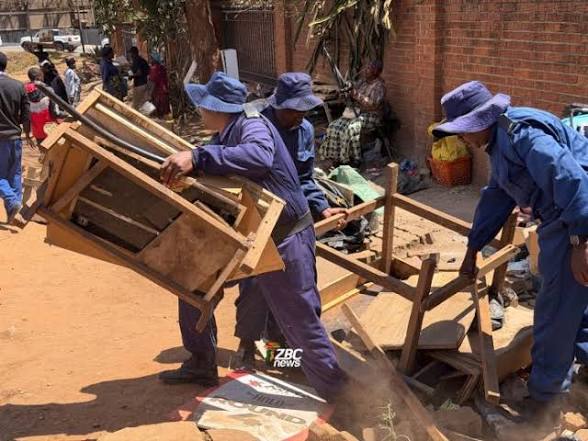
Harare, (EFE) – Zimbabwean municipal police arrested more than 100 illegal street vendors operating in Harare, the country’s capital, and other cities following the start of an urban cleanup operation last week, official sources told EFE on Wednesday.
“The cleanup program is progressing well and to date more than a hundred vendors have been arrested and many of them forced to pay fines,” Tafadzwa Muguti, Permanent Secretary of the Ministry of Local Government and Public Works, told EFE.
Last week, Local Government Minister Daniel Garwe set September 9 as the deadline for unauthorized street vendors to clear the streets and cease nighttime sales before launching a nationwide operation.
Garwe argued that the proliferation of illegal trade compromises urban health, blocks traffic, harms formal businesses, and generates congestion in the center of the capital and its metropolitan areas.
As part of the operation, some 300 municipal officers began patrolling in 24-hour shifts in downtown Harare, while in the neighboring city of Chitungwiza, police demolished more than 500 structures in the Makoni shopping center on Monday as part of what was dubbed “Operation Chenesa”.
“The minister does not have the power to prohibit trade through a press release. Unless there is a valid law that supports this prohibition, it is null and void,” lawyer and opposition politician Fadzayi Mahere told EFE.
For its part, the Vendors Initiative for Social and Economic Transformation (VISET) called for a halt to the abuses and the opening of avenues for negotiation.
“We want transparent and humane application processes, in which sellers are clearly informed about the requirements, deadlines and procedures,” VISET President Samuel Wadzanai told EFE, demanding protection against “harassment, aggression and arbitrary seizures.”
The ban faces serious structural resistance in the country, where, according to Zimbabwe’s National Statistics Agency (Zimstat), 76% of the economy operates informally and 88% of workers are employed in this sector.
Faced with high unemployment and the economic crisis, street vending of second-hand clothes, food and household goods is the main means of subsistence for thousands of Zimbabwean families.
The government already attempted to eradicate informal trade in 2015 during the presidency of Robert Mugabe (1987-2017), but the measure was reversed in 2017 due to pressure from the sector.