
Staff Writer
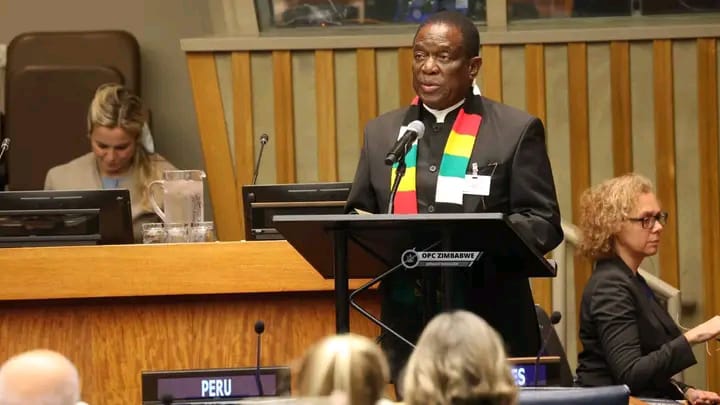
Zimbabwean young mining leaders have identified beneficiation, artificial intelligence (AI), entrepreneurship and occupational safety as key priorities following President Emmerson Mnangagwa’s address to the 81st United Nations General Assembly.
In his address, Mnangagwa said Zimbabwe was prioritising mineral beneficiation and the development of regional value chains, while highlighting artificial intelligence as a critical tool for industrialisation.
He said Zimbabwe exported its first locally produced lithium sulphate in the second quarter of 2026, describing the milestone as evidence of progress towards retaining more value from the country’s mineral resources.
President of the Young Miners for Economic Development (YMED), Nyasha Magadhe, said his organisation fully supports President Mnangagwa’s Vision 2030 agenda, noting that beneficiation and value addition are central to achieving an upper middle-income economy.
“YMED fully supports President E.D. Mnangagwa’s Vision 2030. The President has articulated a vision that is not merely aspirational but mathematically inevitable. When you consider that Zimbabwe possesses over 40 critical and rare earth minerals, the question is not whether we should beneficiate, but how quickly we can build the infrastructure, skills, and capital to do so at scale,” Magadhe said.
He said local processing projects should create opportunities for Zimbabwean businesses and professionals to develop expertise across the mineral value chain.
Association of Junior Mining Professionals of Zimbabwe (AJMPZ) president Tanaka Kashambe said focus should now shift to building technical capacity among young professionals to apply emerging technologies to exploration, extraction and mineral processing.
“Artificial intelligence, properly deployed, can transform every stage of the mining value chain — from geological exploration and resource estimation to processing optimisation and environmental monitoring,” Kashambe said.
He said developing local technical skills would be critical if Zimbabwe is to leverage AI effectively rather than remain dependent on technologies developed elsewhere.
Young Miners Foundation chief executive officer Payne Kupfuwa said young miners also need stronger business and financial management skills to transition from informal operations to sustainable mining enterprises.
Kupfuwa said his organisation has secured a 300-hectare chrome operation in Mvurwi, which is intended to support structured chrome washing and create employment for about 500 people.
He said young miners should increasingly view their operations as businesses capable of attracting investment, adopting technology and moving into higher-value stages of the mineral supply chain.