
By Chiyedzo Josiah Dimbo, Ambassador of Hope
MUREHWA, MUKARAKATE, MUSUNGWA VILLAGE
A THUMBS UP FOR THE SECOND REPUBLIC
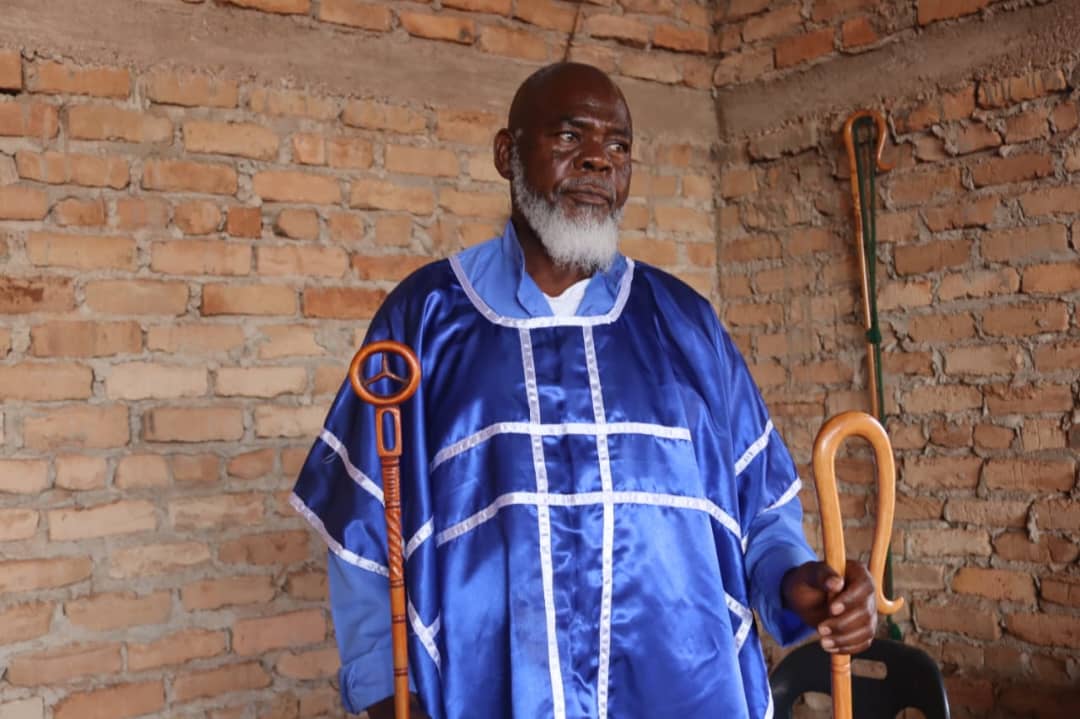
At the St Peters Gospel Apostolic Church-Sungano gathering in Murehwa, the event reached a defining moment. Addressing over 500 congregants, Archbishop Cananan Rumano, Founder of the church, delivered a powerful message of gratitude and support for His Excellency, The President of the Second Republic of Zimbabwe, Cde Dr. E.D. Mnangagwa.
_“For a long time, African Apostolic Indigenous Churches were being looked down upon and marginalized. But the Second Republic under the stewardship and servant leadership of His Excellency Cde Dr ED Mnangagwa has ushered new winds of change by vastly recognizing the Churches,”_ Archbishop Rumano said.
The Archbishop praised President Mnangagwa for guaranteeing freedom of worship and creating an environment where all faiths can serve God and nation without fear. This recognition, he argued, is not just a political courtesy; it is a strategic national investment. By elevating the AICs, the Second Republic is empowering a network of institutions vital to social cohesion, moral regeneration, and the fight against social ills like drug abuse.
The gathering, themed “Sungano yeMweya Mutsvene” – _The Ascending of the Holy Spirit_ – was a deep dive into the biblical foundations of Pentecostal power.
The Experience:
_“Just as on the Day of Pentecost, the Holy Spirit came with a sound like a mighty rushing wind. The disciples were filled, and began to speak boldly. It is an experience of power, of fire, of cleansing,”_ the Archbishop declared, referencing Acts 2:2-4.
The Importance:
_“Without the Holy Spirit, the Church has no power. The Spirit is our Comforter, our Teacher, and our Guide. He convicts, He directs, He empowers us for service,”_ he added, drawing from John 14:26.
The Significance:
_“The Holy Spirit ascending upon us today means Zimbabwe is not forgotten. It means healing, deliverance, unity and prosperity are coming to our nation. When the Spirit comes, chains are broken,”added Archbishop Rumano
The meeting was punctuated by what the church calls *spiritual diagnostics* – prayer sessions aimed at identifying and uprooting the spiritual roots of illness, both physical and societal. Testimonies poured in of restored health, restored families, and renewed faith. From the villages of Murehwa to the cities of Gweru and Kwekwe, and even from the diaspora in Cape Town, the people came seeking, and the people left transformed.
Beyond the songs and testimonies, this was a homecoming of faith. The weekend gathering drew congregants from Lalapanzi, Rusape, Gweru, Kwekwe, Cape Town, and surrounding areas of Murehwa. Beneath the spiritual fervour lay a deeper narrative, one woven into the very fabric of Zimbabwe’s painful journey from colonial bondage to sovereign nationhood. For the African Indigenous Churches are not merely places of worship; they are living monuments to a resistance that refused to die, prophets of a liberation yet to be fully realised, and now, frontline soldiers in a new battle against the scourge of drug and substance abuse.
A PEOPLE’S CHURCH: THE HISTORIC BACKGROUND
To understand the AICs is to understand the soul of a people under siege.
Long before the chains of colonialism were formally forged, European missionaries accompanied the colonisers, bringing the Bible alongside the gun. In many instances, the mission station and the colonial administration were two sides of the same coin. The missionary enterprise, intentional or not, served to pacify the African mind, promoting a worldview that often denigrated African culture, spirituality, and social structures.
This created a spiritual vacuum and a deep cultural alienation. The response was the birth of the African Indigenous Churches – a movement that began to emerge in the early 20th century, particularly from the 1920s onwards. These churches, such as the various Zionists, Apostolics, and Vapostori movements, were a radical assertion of African spiritual identity.
They took the Bible seriously, but they interpreted it through African eyes.
Key historical characteristics defined these churches:
– Cultural Affirmation: They incorporated African music, dance, drumming, and dream interpretation into worship, rejecting the cold, European formalism of the mission churches.
– Holistic Healing: They addressed physical, spiritual, and social ailments, directly confronting the reality that colonial medicine and religion rarely treated the whole person.
– Prophetic and Spirit-Filled Worship: Emphasis was placed on the Holy Spirit, prophecy, and divine revelation. The prophet became a central figure, a direct conduit to God, unmediated by colonial structures.
– Community and Belonging: In a world where Africans were being displaced and disenfranchised, the AICs offered a tight-knit, communal fellowship where members found dignity, purpose, and mutual support.
These churches were not just a religious phenomenon; they were a quiet but powerful form of proto-nationalism. By asserting that God spoke directly to Africans, they challenged the colonial narrative of African inferiority and the paternalism of the mission churches.
PROPHETS IN THE WILDERNESS: THE ROLE DURING THE LIBERATION STRUGGLE
When the armed liberation struggle intensified in the 1960s and 1970s, the African Indigenous Churches became an indispensable, often invisible, pillar of the revolution. Their role was multifaceted and profound:
– Spiritual Sanctuaries and Safe Havens
The sprawling rural homesteads surrounding these churches often served as critical nodes in the liberation supply chain. Freedom fighters frequently moved under the cover of darkness. Church gatherings provided perfect cover for covert meetings, intelligence sharing, and the discreet movement of food, medicine, and information. The religious cloak was a potent disguise; colonial forces were often wary of interfering with large, fervent gatherings.
– The Moral and Spiritual Foundation of Resistance
Colonialism was not just a political and economic system; it was a spiritual assault that sought to break the African will. The AICs provided a counter-narrative of hope and divine justice. Prophets within these churches declared that God was on the side of the oppressed. They prayed for the defeat of the colonial regime, for the protection of the guerrillas, and for the eventual liberation of the land. In the darkest hours of the war, when hope was scarce, these prophetic voices were a lifeline.
– Intelligence and Communication Networks
The church’s inherent network of congregations, spanning rural and urban areas, created a natural intelligence network. Information about troop movements, roadblocks, and enemy strategies could be disseminated quickly and discreetly through church channels. The uniform of the church – the white robe – or the act of attending a gathering could be a signal in itself, confusing enemy informers and providing a legitimate reason for movement.
– Caring for the Wounded and the Bereaved
The war exacted a brutal toll on the civilian population. Families were displaced, young people were killed or injured, and communities were traumatised. The AICs were often the first responders. They provided spiritual and emotional first aid, offering prayers for the dead, comfort for the grieving, and a sense of hope for those who had lost everything. They were the keepers of memory and the healers of shattered communities.
The white robe was not just a garment of worship; it was a banner of resilience.
When Zimbabwe gained independence in 1980, these churches had earned their place at the table of nationhood, not as passive observers, but as active participants in the long and bloody struggle for freedom.
MOULDING GOOD CITIZENS: THE CHURCH’S ONGOING MANDATE
Independence brought political freedom, but the work of building a righteous nation was far from over. The African Indigenous Churches, true to their historic role, have pivoted to the task of moulding good citizens, a role that is perhaps even more critical today than during the struggle.
The concept of unhu/ubuntu – the deep-seated African philosophy of humanness, compassion, and community – is the bedrock of AIC teachings. The church does not merely preach personal salvation; it preaches communal responsibility.
In this regard, the St Peters Gospel Apostolic Church-Sungano is actively:
– Promoting Moral Integrity: They teach against corruption, dishonesty, and self-centeredness, preaching that a good citizen is one who serves others and upholds truth in all their dealings.
– Fostering Family Values: Strong families are the building blocks of a strong nation. The churches provide marriage counselling, mentorship for the youth, and a community that holds its members accountable.
– Encouraging Hard Work and Self-Reliance: Through teachings on diligence and the dignity of labour, they encourage economic participation and discourage dependency.
– Preaching Reconciliation and Unity: In a nation with a painful and often divisive political history, the AICs are powerful voices for forgiveness and national cohesion, embodying the spirit of “one Zimbabwe, one nation.”
THE NEW BATTLEFIELD: FIGHTING DRUG AND SUBSTANCE ABUSE
If the liberation struggle was the first war for Zimbabwe’s soul, the current epidemic of drug and substance abuse – particularly among the nation’s youth – is the second. This crisis, often referred to as the storm that is destroying the youth, is tearing apart families and communities.
The African Indigenous Churches have responded with the same prophetic urgency their forebears exhibited in the 1970s.
Spiritual Warfare and Deliverance
Apostolic churches frame addiction not just as a physical or psychological disease, but as a spiritual bondage. Through prayer, deliverance sessions, and fasting, they attack the root spiritual causes of addiction. For many addicts who have been stigmatised by society, these churches offer a space of unconditional, non-judgmental love and a belief in the possibility of total transformation.
Rehabilitation and Reintegration
St Peters Gospel Apostolic Church-Sungano have established informal rehabilitation networks. They take in young people struggling with addiction, provide them with shelter, food, and meaningful work within the church community. The church becomes a new family, a support system that replaces the toxic peer groups that often enable addiction.
Prevention and Awareness
The pulpit is a powerful platform. Church leaders are increasingly using their sermons to warn young people about the dangers of drugs like crystal meth (_mutoriro_), broncleer, and illegal alcohol. They speak openly, breaking the silence that often shrouds the issue, and provide a moral framework that helps young people resist peer pressure.
Reaching the Unreachable
While government and NGO-led programmes are vital, the AICs often reach the most marginalised youth – those in the deepest rural areas and the toughest urban neighbourhoods – because they are trusted, local, and culturally relevant. Their message is not seen as foreign or imposed; it is an authentic voice from within the community.
A CONTINUING MISSION
The African Indigenous Churches stand as a powerful testament to the resilience of the African spirit. From their historic birth in the crucible of colonialism, to their vital role in the liberation struggle, and their current frontline position in the battle against drug abuse and moral decay, they remain an indispensable force for good in Zimbabwe.
The St Peters Gospel Apostolic Church-Sungano, in giving its resounding thumbs up to President Mnangagwa and the Second Republic, is not merely offering political support. It is affirming a partnership – a covenant between faith and state to build the Zimbabwe envisioned by the liberation heroes and promised by Vision 2030.
As the gathering drew to a close, the words of *Luke 4:18* echoed across the Mukarakate hills:
_“The Spirit of the Lord is upon me, because he has anointed me to proclaim good news to the poor.”
This is the enduring mission of the African Indigenous Churches – to proclaim good news, to heal the broken-hearted, to set the captives free, and to mould a nation of citizens who fear God and serve their fellow man.
The chains of colonialism may be broken. The chains of addiction can be broken next. For when the Spirit comes, Zimbabwe shall truly be free indeed.