
By Chiyedzo Josiah Dimbo, Ambassador of Hope
MACHEKE – The next agricultural earthquake will not come from a seedbed, but from a mindset. Every season, Zimbabwe’s rural economy holds its breath between one tobacco sale and the next. The numbers are unforgiving: many smallholder farmers face months of empty pockets after one golden harvest. For too long, the story of our small-scale farmers has been: plant, wait, harvest, and then wait again. But waiting is no longer sustainable.
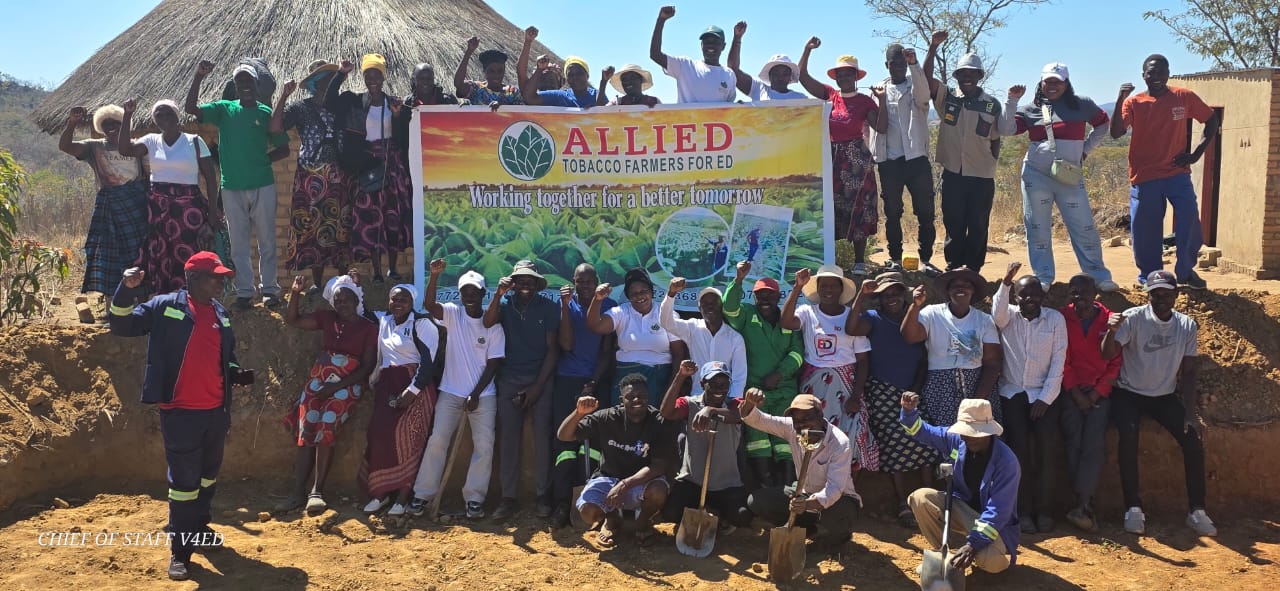
At Konin Farm in Macheke, a new chapter began this week. Allied Tobacco Farmers for Economic Development(ATF4ED) broke ground on a nationwide programme to diversify into horticulture and fish farming — three fish ponds and three hectares of horticultural crops to start.
This is not about leaving tobacco. This is about adding more doors to the same house. This is about dignity that does not sleep between seasons.
THE PROBLEM WE ALL KNOW
Tobacco remains a major cash crop. Just as gold anchors our minerals, tobacco anchors our rural economy. But it is seasonal. In a record season, Zimbabwe has produced more than 290 million kilogrammes of the crop, yet that economic surge is concentrated in a short marketing window. After the sales end, the rural economy goes quiet.
When the barns are empty and the next season is months away, what happens to the farmer? What happens to the household? What happens to the youth?
“For small-scale farmers to wait for the next season without engaging in other productive activities is not sustainable,” said Mrs. Jesina Mangwiro, National Chairperson of Allied Tobacco Farmers for Economic Development.(ATF4ED)
Climate change has made waiting even riskier. Rainfall patterns are shifting. One crop, one season, one income stream — that is vulnerability.
THE SOLUTION: DIVERSITY IS RESILIENCE
The new initiative, to be rolled out across all 10 provinces, puts into action Vision 2030 and His Excellency President Dr. Emmerson Dambudzo Mnangagwa’s call for maximum utilisation of agricultural land through irrigation and climate-smart practices. The logic is simple: a single-source income is a single point of failure.
Here is why diversity matters:
Year-Round Income
Horticulture and fish farming do not wait for one rainy season. Tomatoes, leafy greens, peppers, and fish can bring income every few months. When tobacco money comes once, diversity brings money often. In good conditions, a hectare of tomatoes can yield 20 to 40 tonnes per cycle, and a small pond can supply both food and cash for years.
Climate Risk Insurance
If drought affects one crop, another survives. If market prices for one commodity fall, another holds the household. Diversity spreads risk like compost spreads fertility. That is not a slogan; it is a survival strategy in a region where rainfall is becoming more erratic.
Food Security at Home
Vegetables and fish on the farm mean better nutrition for children. It means less money spent at the market and more food on the table. Zero Food Waste starts with producing what we eat. A family that harvests from its own garden is a family shielded from the worst of food-price shocks.
Jobs for Youth and Women
Fish ponds need feeding. Horticulture needs weeding, harvesting, and marketing. These are jobs created between tobacco seasons. This keeps our young people on the land, innovating. With youth unemployment stubbornly high, every pond and every garden becomes a miniature job-creation hub.
Smart Use of Land and Water
Irrigation for horticulture teaches farmers to use every drop wisely. Climate-smart farming builds soil, saves water, and produces more from less.
A MODEL ALIGNED TO NATIONAL VISION
Mrs. Mangwiro was clear: “We want to thank President Dr. Emmerson Dambudzo Mnangagwa for his farmer-friendly policies that are empowering rural communities.”
This programme is proof that policy is meeting practice.
It aligns with:
– Vision 2030 – An upper-middle-income economy needs farmers who earn all year
– Climate-Smart Agriculture – Diversification is adaptation
– Food Sovereignty – Growing what we eat, eating what we grow
Starting with 3 ponds and 3 hectares is small. But every forest starts with one seed. The plan to scale to all provinces means thousands of households can soon have more than one harvest. If even a slice of Zimbabwe’s more than 100,000 tobacco growers takes this path, tens of thousands of families will no longer be held hostage by a single season.
THE AMBASSADOR’S CALL: FROM ONE CROP TO MANY OPPORTUNITIES
To farmers: Do not put all your seed in one basket. Tobacco can remain your cash crop, and horticulture can become your food and daily income crop. Let the pond feed the garden, and the garden feed the family.
To government and partners: Fund the diversification. Provide fingerlings, seedlings, irrigation kits, and market linkages. Train youth in aquaculture and agronomy.
To all of us: Let us celebrate this bold step by Allied Tobacco Farmers for Economic Development. They are showing that diversification is not abandonment. It is strengthening.
CLOSING WORD
Our ancestors never relied on one crop. They planted mhunga, zviyo, nyemba, kept chickens, and fished the rivers. That was wisdom.
Today, we are reclaiming that wisdom with new tools.
Rooted in Tradition. Growing Our Future.
Because when a farmer has more than one way to earn, a family has more than one way to eat, and a nation has more than one way to grow. This is not a small pilot. It is a quiet agricultural earthquake, and its first rumble has been felt in Macheke.
“The diligent hand will rule, but laziness ends in forced labour.” Proverbs 12:24