
Staff Writer
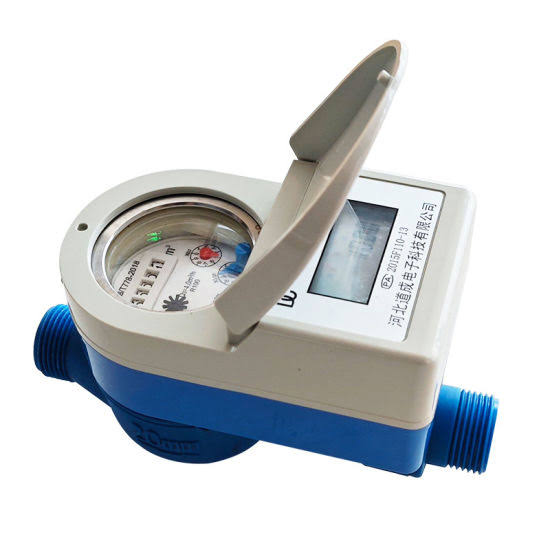
HARARE residents are up in arms with the municipal fathers following the surprise installation of pre – paid water meters at their residents without their full knowledge with some complaining about the poor billing system which they say is beyond their reach.
Over 23000 prepaid water metres have been installed to date.
Harare City Council has recently issued an apology following a system error that temporarily inflated water tariffs to US$4.90 per cubic metre at the Mabelreign District Office.
According to the council, they referred to a glitch which affected five residents and that said they have since corrected to the approved 2026 rate of US$2,23 per cubic metre and authorities confirmed that refunds will be issued to those who were impacted.
Ward 16 Councillor Denford Ngadziore has called on residents to remain patient while system is being rectified
Speaking during a two-day tour and Harare resident’s indaba by the Community Water Alliance (CWA) in Budiriro, Warren Park and Glen- View the majority of residents have registered displeasure over the drastic implementation of pre – paid water metres saying owing to high charges some which are resulted by underground and overhead water leakages due to worn out infrastructure.
“Why is it that they want to install there pre – paid water meters if they have already failed to bear fruit in areas such as Budiriro and Warren Park where they were installed some years back. This should stand as their case study that the project has really failed and there should try other new technologies with calibrators to avoid robbing off the innocent residents,” said Mrs. Chipo Chingozhoro of Glenview 3, Ward 31.
Mr Martson Marecha of Glenview said the pre – paid water metres will be worthless of tapes remain dry.
“We are still facing water challenges and these councillors are focusing on pre – paid water metres, to measure what? Will the installation help in alleviating water crisis? They are adding a burden to us and very soon we will face more waterborne disease because the water charges are beyond reach hence communities will end up resorting to water from unprotected sources,” he said.
He said, residents were not informed nor consulted about this new development.
“Our Councillors are representing us wrongly because they gave a nod to things that we do not know or understand about. We have heard that some families have been overcharged and some have exhausted the US$60 water they paid for within a month hence it is not easy to budget for such water rations,” he added.
Mr Hardlife Mudzingwa the founder and director of CWA said residents are set to hand over their petition with regards to their right to access to clean and portable water and the challenges or loopholes faced due the pre – paid water meters installation.
“Communities are consumers hence every service provider should have them at heart than imposing products to them with the general assumption that they are gullible. When water flows, equality flows also. This year we celebrate World Water Day in Zimbabwe under a regime of prepayment, pollution from mining and climate hazards,” he said.
He said, with prepayment water will not facilitate equality but a new system of segregation and apartheid where those with no money cannot enjoy it.
“In particular with City of Harare model where its price has been commercialized pegged USD2,10 per cubic metre against production cost of USD0.70 cents per cubic metre, the apartheid system on water is fully fledged. Gold, chromium and lithium mining has left poisoned water resources, degraded catchments and depleted water which should be available for smallholder farmers in rural communities. Multinational mining companies have been allowed to lead on this mess. Whilst this happens, climate change has added salt to the injury,” said Mr Mudzingwa.
He said, women who are confined to unpaid domestic work bear this burden in our African patriarchal system.
Mr Precious Shumba, the Harare Residents’ Trust Director said: “Residents, strongly object to the ongoing arbitrary installation of prepaid water meters at the properties of Harare residents.
Many households lack reliable access to clean, potable, and consistent water supplies. In many suburbs, residents go for days, weeks, and in some cases even longer without receiving council water through their taps,” he said.
He said, under these circumstances, it is both unjust and unacceptable to compel residents to prepay for a service that the city is failing to deliver consistently.
He said, the City of Harare currently does not have the capacity to pump, treat, and distribute sufficient water to meet the needs of all residents.
“Harare’s population stands at 2,4 million, representing 17,1 per cent of the national households, according to the 2022 National Housing and Population Census,”
“Before introducing any prepaid metering system, the primary responsibility of the city must be to restore regular, adequate, and safe water supplies to every household,” he said.
He said, the City of Harare has for the past five years reported in its annual budget statements that it was losing 60 per cent of treated water through leakages and illegal connections along the water distribution network.
“Plugging the leakages and ending the illegal connections should have been the top priorities for the council. Instead, they are focused on increasing their revenues, without addressing the primary problems. Water is not a luxury — it is a basic human right and an essential public service. It does not have an alternative,” he said.
He said, residents cannot be expected to pay in advance for water that is frequently unavailable.
Mr Shumba said, the council is relying on an agreement with the Ministry of Local Government and Public Works and Shezwan Investments (Private) Limited T/A Helcraw Water to impose prepaid water meters on residents.
“This agreement is unknown to the residents and therefore lacks transparency and accountability,” he said.
He said, the introduction of prepaid water meters in the current context risks deepening inequality, punishing already struggling households, and denying vulnerable communities access to this essential service.
He called upon the City of Harare to halt the installation of prepaid water meters until it has demonstrated the capacity to provide reliable water supplies across all suburbs.
Residents are calling authorities to fix the water supply first before demanding prepayment from residents saying they not guarantee improved water availability, enhanced water quality.
They feel betrayed an as much as they want them following the previously imposed estimated water bills and they hope that one someday the project implementors could copy the ZESA pre – paid metering system which as elements of transparency and accountability.