
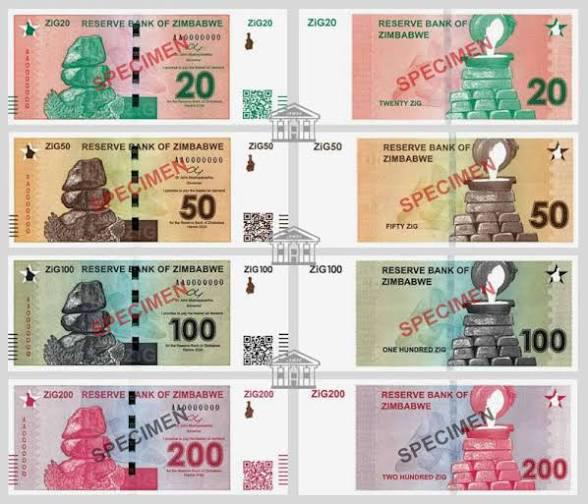
The new ZiG notes will be issued into the market in phases, with ZiG10, ZiG20 and ZiG50 set to become available at automated teller machines (ATMs) and banking halls this week.
Cash withdrawal limits are set at ZiG10 000 for individuals and ZiG100 000 for corporates per week.
According to the RBZ, as of March 31, the ZiG currency is backed by US$1,3 billion in foreign currency reserves, representing nearly twice the total value of ZiG deposits in the banking system.
The introduction of the new ZiG notes marks a significant milestone, as they feature an appealing design, enhanced durability and security features that meet international standards.
The notes also form part of the broader de-dollarisation roadmap, which seeks to reintroduce a mono-currency system.
In an interview with The Sunday Mail, RBZ Governor Dr John Mushayavanhu said everything was now in place for the rollout.
“The Reserve Bank has printed and will distribute enough ZiG banknotes to cater for the demand for cash in the economy,” Dr Mushayavanhu said.
“Notes will be available through banks and to date all banks have collected their share based on anticipated demand. In this context, economic agents will be able to access and withdraw from banks their ZiG cash requirements, consistent with the revised ZiG cash withdrawal limits per week of ZiG10 000 for individuals and ZiG100 000 for corporates. The current circulation will focus on ZiG10 and 20, and the new issuance of ZiG50 denomination, with effect from April 7, 2026.”
The old notes, Dr Mushayavanhu said, will continue to circulate in the economy until they are phased out.
“The old ZiG banknotes will automatically be phased out of circulation once they are deposited into the banking system. This means that there will be simultaneous circulation and there will be no exchange posts, and the new notes will be obtained normally in the course of commercial and banking transactions.”
He also said the central bank will continue to build foreign currency reserves to ensure three to six months’ import cover in line with the international benchmark.
“As at the end of March 2026, the Reserve Bank held US$1,3 billion in foreign currency reserves, representing 1,5 months of import cover. These foreign reserves currently cover about six times ZiG reserve money and about two times cover of the entire stock of ZiG deposits,” added Governor Mushayavanhu.
“The Reserve Bank is strongly committed to continue building reserves to attain the desired three to six months of import cover, which is a critical condition precedent for migration to the exclusive use of the local currency for settling domestic transactions in the economy.”
The Reserve Bank believes the introduction of new notes will increase the use of local currency, which is one of the conditions of the Staff-Monitored Programme (SMP) agreed by Government and the International Monetary Fund (IMF) in February.
“As clearly articulated in the National Development Strategy 2, as well as the Reserve Bank of Zimbabwe’s February 2026 Monetary Policy Statement, increased use of the local currency is one of the critical conditions precedent for transitioning to mono-currency,” he said.
“Strengthening demand and use of the local currency is also a key benchmark of the 10-month Staff Monitored Programme (SMP) that Government has negotiated and agreed with the International Monetary Fund (IMF).”
Herald