
Pic Credit:The Herald
By Staff Writer
Harare — In Epworth and Hopley, researchers and residents say climate change is rewriting maternal health.
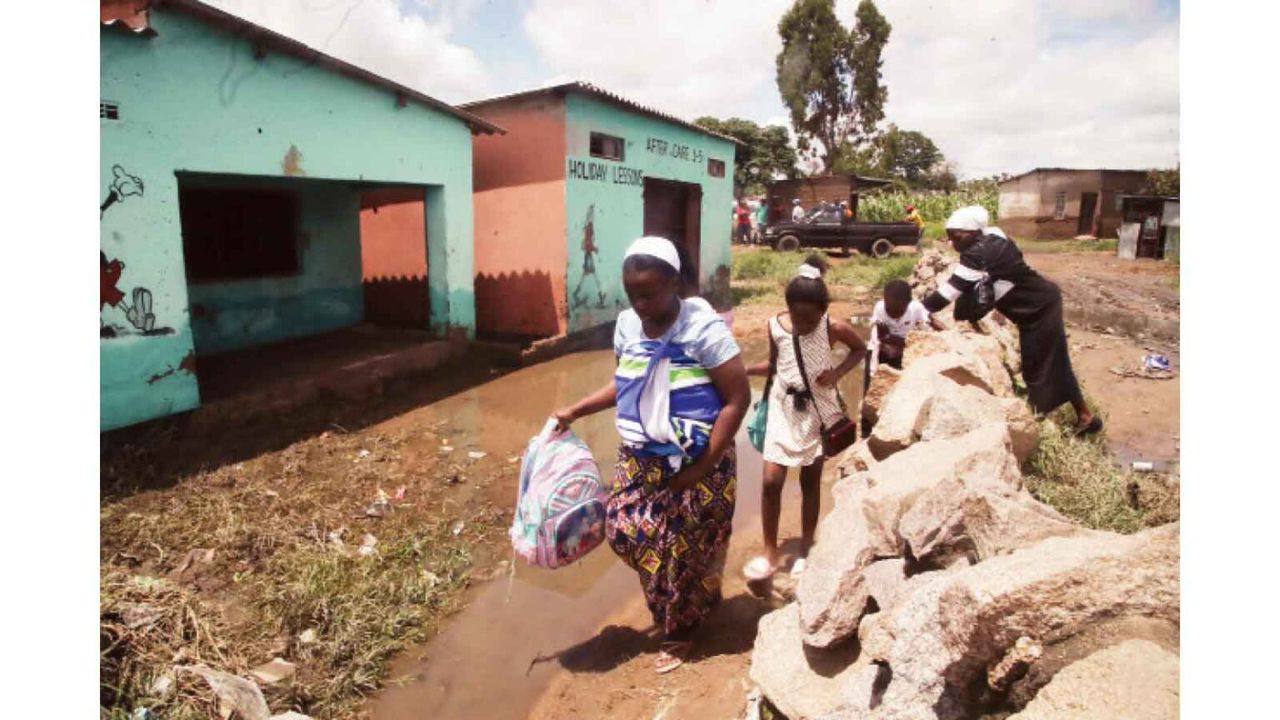
Floods submerge footpaths and tin houses without flooring; extreme heat bakes uninsulated rooms. Community health workers estimate pregnant women are 25 percent less likely to complete prenatal schedules and 40 percent more likely to delay care until labor, when ambulances can take twice as long to reach flooded lanes.
The risk compounds in informal settlements. Water points fail, forcing longer walks that raise the odds of dehydration, hypertension and infection. When vending stalls—where teenage mothers earn daily income—close during rains, families skip meals and clinics. Local volunteers report rising anxiety, intimate-partner strain and undocumented assaults in overcrowded shelters. “I fear for my baby’s life… I worry I’ll give birth in the middle of the flood,” says Precious, 17, from Epworth. Tadiwa, 15, in Hopley, describes dizzy spells and headaches as hunger grows.
Women are organizing a response. The Purple Door program, run by the RhoNaFlo Foundation, combines trauma-informed counselling, parenting skills and a peer rescue network. Participants say it shifts them from isolation to collective advocacy. “When the waters rise, we make sure no sister is left behind,” says Nyasha, a Hopley mother. Chipo, Epworth: “We’re learning to speak up and demand care—we won’t accept being silenced by doctors or the environment.” Rumbidzai, 25: “Now I care for myself and my child without shame.”
Public-health advocates argue that maternal safety must be coded into climate adaptation: door-to-door early warnings, flood-resistant primary-care rooms, and protected transport for obstetric emergencies. Without those basics, they say, climate planning fails a basic test of justice. In these suburbs, the women’s networks have already drafted the checklist; what remains is funding and political attention.