
Staff Writer
The Zimbabwe National Organisation of Associations and Residents Trust (ZNOART) has called on local authorities, Government departments, utility companies and private service providers to improve service delivery, promote transparency and ensure residents have access to essential services.
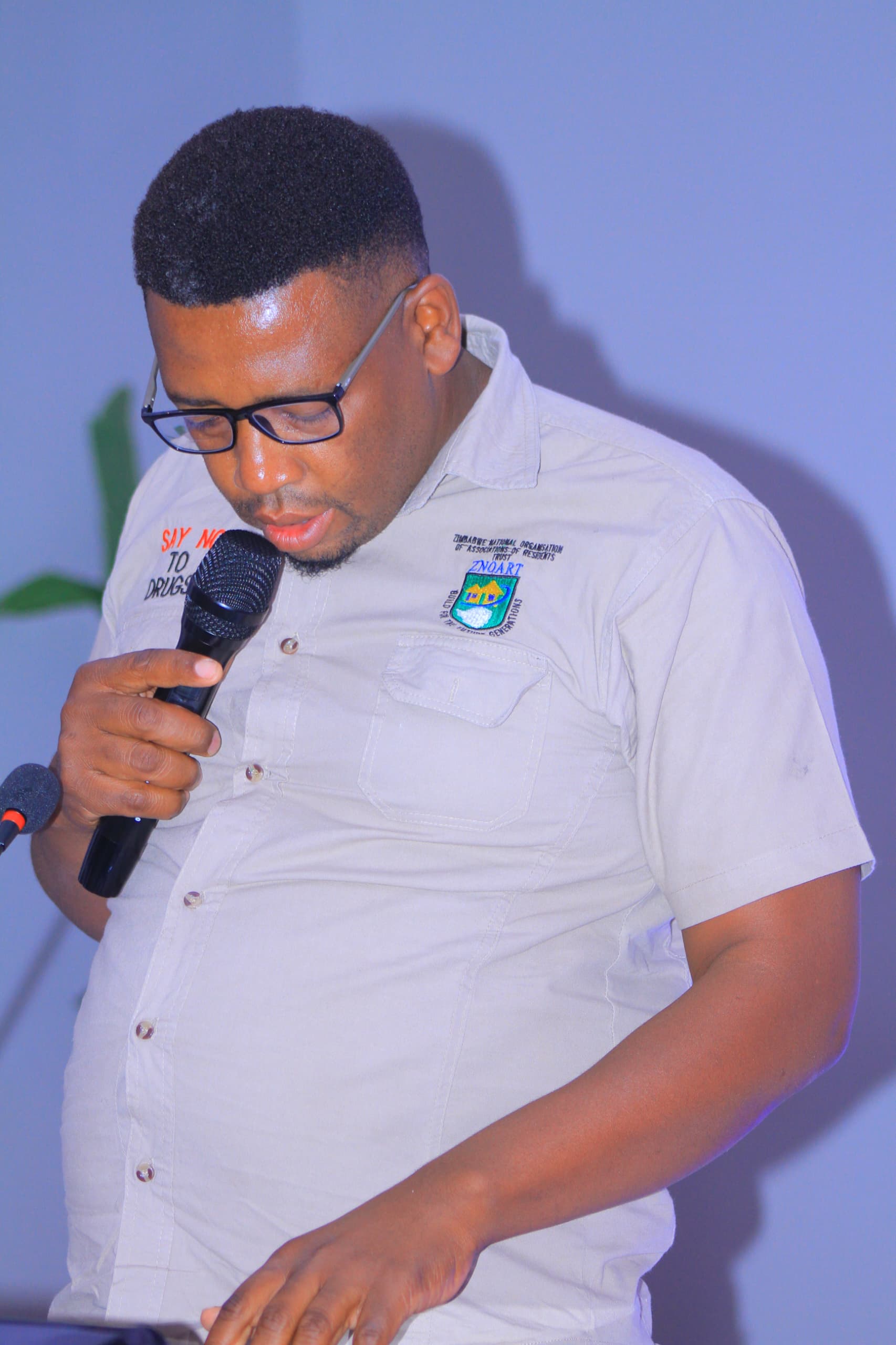
In an article dated October 11, 2026, ZNOART National Chairman Shepherd Shalvar Chikomba (pictured) said residents across Zimbabwe expected reliable and affordable water supplies, electricity, decent housing, well-maintained roads, effective waste management and functional sewer systems.
He said residents also needed stronger environmental protection measures, the preservation of wetlands, accessible recreational facilities and coordinated interventions to address drug and substance abuse, particularly among young people.
“Residents are at the centre of community development and national progress,” Chikomba said, emphasising that essential services were critical to building healthy, safe and sustainable communities.
He said residents should not be treated merely as recipients of services but should actively participate in identifying community needs, setting development priorities and monitoring the performance of service providers.
On water supply, Chikomba called for investment in ageing infrastructure, rehabilitation of treatment plants and pumping stations, repairs to leaking pipes and improved communication about service interruptions.
He said water utilities and local authorities should ensure that supplies were safe for human consumption while providing transparent information on tariffs, billing systems and planned infrastructure improvements.
On electricity, he urged power providers and relevant authorities to upgrade distribution infrastructure, communicate planned outages and ensure fair billing systems.
He said reliable electricity was essential for households, businesses, schools, hospitals and industries, adding that improved access to sustainable and renewable energy solutions could benefit underserved communities.
Chikomba also called for consistent road maintenance, pothole repairs, improved drainage systems, street lighting and safer pedestrian walkways.
He said residential neighbourhoods, particularly high-density suburbs and developing communities, deserved attention alongside major roads and central business districts.
“Residents expect development plans to reflect actual community needs and available resources,” he said.
On housing, Chikomba urged Government, local authorities and private developers to promote affordable accommodation, transparent land allocation and properly serviced residential developments.
He said housing projects should be supported by essential infrastructure, including water, electricity, roads, sewer systems, schools, clinics and recreational facilities.
He also called for investigations into credible allegations of corruption in land allocation and urged responsible institutions to follow applicable legal procedures when dealing with demolitions and settlement enforcement.
Turning to waste management, Chikomba said local authorities and waste management companies should establish reliable refuse collection schedules, provide adequate disposal facilities and invest in environmentally responsible waste management systems.
He called for stronger action against illegal dumping, greater investment in recycling and waste recovery, and improved maintenance of public markets, bus termini and other communal spaces.
However, he stressed that residents also had a responsibility to dispose of waste properly, avoid littering and participate in community clean-up programmes.
On sanitation, Chikomba warned that poorly maintained sewer systems posed environmental and public health risks, particularly when sewage flowed into streets, residential properties and waterways.
He urged local authorities to rehabilitate ageing sewer infrastructure, respond promptly to blockages and bursts, and expand wastewater treatment capacity to meet the needs of growing communities.
Chikomba further called for stronger environmental protection measures, including the enforcement of environmental regulations, rehabilitation of degraded land, pollution monitoring and protection of rivers, streams and other natural resources.
He singled out wetlands as important ecological assets that required protection from inappropriate development, pollution and degradation.
“Development must be properly planned and environmentally sustainable,” he said, calling for greater coordination among environmental regulators, local authorities, developers and residents to safeguard wetlands for future generations.
On drug and substance abuse, Chikomba said communities needed a comprehensive response that went beyond law enforcement to include prevention, counselling, rehabilitation and opportunities for young people.
He called for public awareness campaigns, accessible treatment services, youth employment and skills development programmes, as well as sporting and recreational activities to keep young people engaged in productive pursuits.
He said affected individuals should be treated with dignity and directed towards appropriate support and treatment.
Chikomba also urged local authorities to maintain parks, playgrounds, sports grounds and community halls, saying recreational facilities were important for physical health, talent development and social cohesion.
He said such facilities could also complement efforts to prevent drug and substance abuse by providing young people with safe spaces for sports and other activities.
On governance, Chikomba said residents should have access to clear information about service charges, infrastructure projects, maintenance schedules, service interruptions and complaint procedures.
He urged service providers to establish accessible channels for reporting service delivery failures and provide timely feedback on action taken.
He added that residents’ associations should be recognised as important stakeholders in community consultations, monitoring and constructive engagement.
Despite placing responsibility on service providers, Chikomba said residents also had a role to play in improving their communities.
He urged residents to pay lawful rates and service charges, report damaged infrastructure, conserve water and electricity, protect public amenities and participate in community development initiatives.
“Service providers, in turn, must fulfil their responsibilities, communicate honestly and demonstrate progress towards addressing residents’ concerns,” he said.
Chikomba said sustainable service delivery required coordinated planning, investment and accountability across Government ministries, local authorities, utility companies, private operators and community organisations.
He said ZNOART remained committed to representing residents, promoting constructive engagement and advocating for improved service delivery throughout Zimbabwe.
“Development is meaningful when residents experience its benefits in their homes, streets and neighbourhoods,” he said.
ZNOART is an umbrella organisation representing residents and residents’ associations across Zimbabwe, with a focus on service delivery, infrastructure development, environmental protection, healthcare, transparency and accountability, social welfare and community development.