
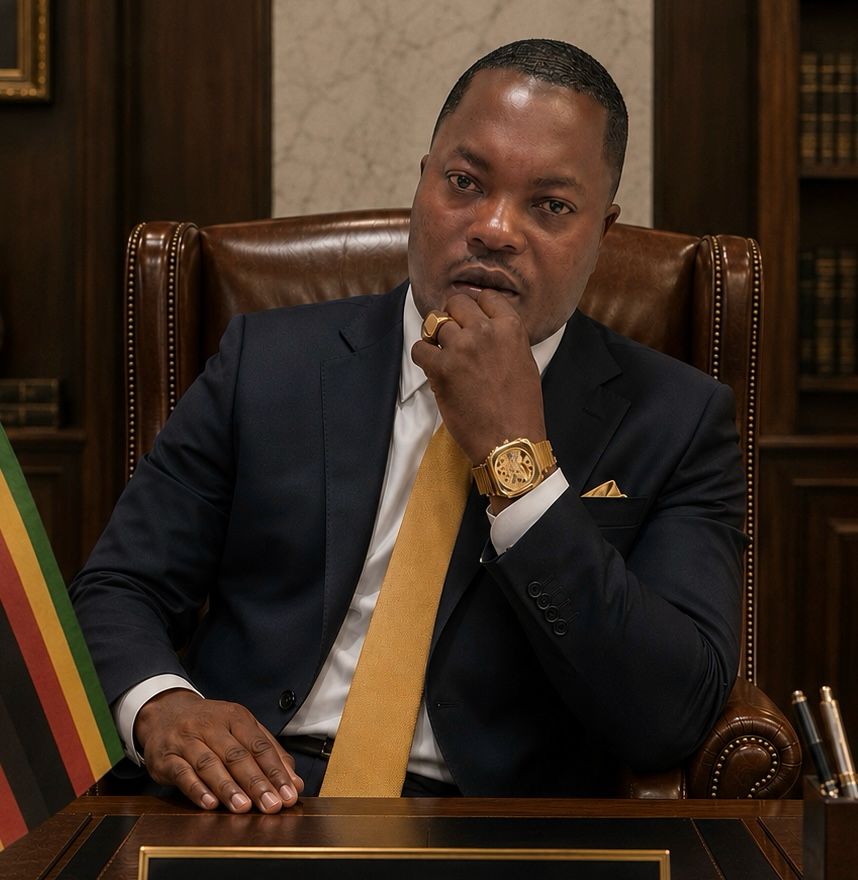
……..Businessman partners Ambassador Nyasha Nhau to advance the “Leave No One Behind” agenda
By Mphokuhle Mtshayisa
HARARE, Zimbabwe — For many persons with disabilities, the difference between dependence and independence can come down to something as simple — yet life-changing — as a wheelchair or other assistive device.
Recognising this reality, businessman and Mhishi Liner Transport Chief Executive Officer, Dr Justice Mhishi, is taking disability inclusion beyond speeches and boardrooms by travelling across Zimbabwe to reach persons with disabilities and donating wheelchairs and various assistive devices.
Dr Mhishi says the initiative is not intended to replace Government programmes, but to complement national efforts aimed at ensuring that no Zimbabwean is left behind.
“This is a complement to the Zimbabwe Government’s efforts of leaving no one behind,” Dr Mhishi said.
His nationwide intervention comes at a time when access to assistive devices remains a major challenge for many persons with disabilities, particularly those in communities where mobility equipment is either difficult to access or unaffordable.
The initiative therefore represents more than a philanthropic gesture. It is a practical contribution towards restoring mobility, dignity, independence and participation among people who have historically faced barriers in accessing essential support.
Partnership Seeks to Advance Disability Agenda
The initiative received further impetus following Dr Mhishi’s engagement with Ambassador Nyasha Nhau, who represents persons with disabilities within the African Union Disability Council organisation.
The two have agreed to work “hand in glove” to advance disability inclusion and amplify the voices and concerns of persons with disabilities across Zimbabwe.
The partnership brings together private-sector philanthropy and disability advocacy, creating an opportunity to move beyond identifying challenges towards finding and implementing practical solutions.
Ambassador Nhau is one of Zimbabwe’s prominent disability advocates and communicators. He has won the Disability Journalist of the Year Award twice, in 2021 and 2022, among other accolades and initiatives within the disability sector.
His work has increasingly focused on taking disability conversations into communities and creating platforms where persons with disabilities can share their experiences and raise issues affecting their lives.
‘Inclusive Dialogue’ to Take Disability Stories Across Zimbabwe
That vision is set to receive a major platform through “Inclusive Dialogue With Ambassador Nyasha”, a disability-focused programme expected to be launched across social media platforms.
The programme aims to take disability discussions beyond conventional forums by bringing the experiences of persons with disabilities from different communities directly to the public.
Through the platform, Ambassador Nhau plans to highlight disability stories from across Zimbabwe, engage communities and decision-makers, and explore practical solutions to challenges affecting persons with disabilities.
Among the issues expected to receive attention is access to assistive devices, including wheelchairs and other equipment that enables persons with disabilities to live more independently.
“The disability conversation must reach the communities. We must listen to persons with disabilities, understand the challenges they face and then work together to find practical solutions,” Ambassador Nhau said.
The programme could also provide a platform for initiatives such as Dr Mhishi’s nationwide donations to be connected with communities where the need for assistive devices is greatest.
Dr Mhishi Praises Ambassador Nhau’s Disability Advocacy
The relationship between the two disability champions was further strengthened when Dr Mhishi and Ambassador Nhau recently shared a platform on Star FM’s Disability Factor radio programme.
During the engagement, Dr Mhishi expressed admiration for Ambassador Nhau’s ability to articulate disability issues and offer practical perspectives on possible solutions to challenges confronting persons with disabilities.
The discussion highlighted the importance of bringing different stakeholders into the disability conversation, including Government, the private sector, disability organisations, advocates, the media and communities themselves.
For Dr Mhishi, however, the mission extends beyond wheelchairs.
His intervention includes donating various assistive devices, recognising that disability inclusion cannot be addressed through a one-size-fits-all approach.
Different people require different forms of support depending on their disabilities, individual circumstances and needs.
From Charity to Empowerment
For disability advocates, initiatives of this nature are significant because access to assistive technology is closely linked to education, employment, healthcare, social participation and personal independence.
A wheelchair, for example, is not simply a piece of equipment. For a person who cannot walk, it can mean the ability to attend school, travel to work, access public services, participate in community activities or move around their home with greater independence.
This is the broader significance of Dr Mhishi’s intervention.
By taking the initiative to communities across the country, rather than requiring beneficiaries to travel to Harare or other urban centres, he is bringing assistance closer to those who need it.
The emerging partnership with Ambassador Nhau could give the initiative an even wider reach by connecting philanthropy with advocacy, storytelling and community engagement.
A Shared Vision for an Inclusive Zimbabwe
The collaboration between Dr Mhishi and Ambassador Nhau reflects the growing recognition that disability inclusion requires a collective effort.
Government has a central responsibility to protect the rights and welfare of persons with disabilities, but the private sector, civil society, development partners, the media and disability organisations also have important roles to play.
Dr Mhishi’s wheelchair and assistive-device donations represent one side of the equation — providing practical support to people in need.
Ambassador Nhau’s advocacy and the upcoming Inclusive Dialogue platform represent another — giving persons with disabilities a voice and creating spaces where their challenges can be heard and solutions discussed.
Together, the two initiatives could help shift the disability conversation from one centred primarily on charity to one focused on rights, dignity, empowerment and inclusion.
As Dr Mhishi continues his journey across Zimbabwe, his message remains clear: supporting persons with disabilities is not a replacement for Government efforts, but a contribution towards the national vision of ensuring that no one is left behind.
For Zimbabwe’s disability community, the partnership could prove to be an important step towards turning that principle from a national aspiration into a lived reality in communities across the country.