
By Desire Tshuma
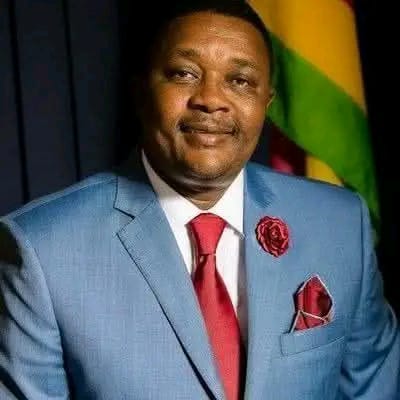
Former Foreign Affairs Minister Walter Mzembi’s reported bid to rejoin ZANU PF has reopened one of the most consequential chapters in the ruling party’s history the bitter G40-Lacoste succession battle that culminated in the November 2017 military-assisted removal of Robert Mugabe.
Mzembi, who was expelled from ZANU PF on November 19, 2017 alongside several senior figures associated with the Generation 40 faction, has formally applied for readmission, according to reports emerging from Masvingo. His request was reportedly considered by the party’s Provincial Executive Council at a meeting held at Masvingo Polytechnic.
The application places Mzembi, once one of the most prominent figures in the political establishment surrounding the late former president Mugabe, at the centre of a remarkable political reversal.
Mzembi’s request comes nearly nine years after his political fortunes dramatically collapsed as the succession struggle inside ZANU PF reached boiling point.
The former Tourism Minister later became Foreign Affairs Minister at a time when the ruling party was increasingly divided between two competing centres of power — the faction popularly known as G40 and the group referred to as Team Lacoste, which was aligned to then Vice-President Emmerson Mnangagwa. Contemporary reporting and academic analysis identified the succession contest as the central fault line behind the factional warfare.
G40 was largely associated with younger ZANU PF politicians and was publicly fronted by then First Lady Grace Mugabe. Its prominent figures included Jonathan Moyo, Saviour Kasukuwere, Patrick Zhuwao, Ignatius Chombo and Mzembi. The grouping presented itself as a vehicle for generational renewal, although its opponents accused it of seeking to dislodge Mnangagwa and establish a new succession arrangement around Grace Mugabe.
Lacoste, meanwhile, was associated with Mnangagwa and drew significant support from senior party figures, war veterans and sections of the security establishment. The rivalry increasingly spilled into public rallies, government and party structures, with accusations of factionalism, disloyalty and political sabotage becoming commonplace.
The struggle intensified dramatically in 2017. Grace Mugabe became increasingly vocal in attacking Mnangagwa and his allies, while the Lacoste camp resisted attempts to marginalise the then vice-president. On October 4, 2017, Grace publicly accused Mnangagwa of being linked to a coup plot, and Mugabe subsequently dismissed him from government on November 6, citing alleged disloyalty and other misconduct. His dismissal effectively removed the most powerful internal rival to the G40 succession project.
But the move proved to be the beginning of the end for Mugabe’s administration.
On November 13, then Zimbabwe Defence Forces commander General Constantino Chiwenga publicly warned against political developments that threatened the liberation struggle’s legacy. Two days later, the military moved onto the streets of Harare, taking control of key state institutions and placing Mugabe and members of his inner circle under pressure.
Although the military insisted that it was targeting “criminals” around the president rather than staging a conventional coup, the intervention effectively paralysed Mugabe’s government. Human Rights Watch subsequently described the episode as a military takeover, noting that soldiers arrested and detained a number of Mugabe associates during the period.
The political tide turned decisively against G40.
On November 19, ZANU PF’s Central Committee removed Mugabe as party leader and endorsed Mnangagwa as his replacement while expelling a long list of officials associated with G40. Among those expelled was Mzembi. The list also included Grace Mugabe, Jonathan Moyo, Saviour Kasukuwere, Patrick Zhuwao, Ignatius Chombo, Samuel Undenge and several other senior officials.
Mugabe resigned as Zimbabwe’s president two days later, ending 37 years in power. Mnangagwa was sworn in as president on November 24, marking the formal political triumph of the faction that had spent years battling the G40 network.
For Mzembi, the political consequences were particularly severe. He left Zimbabwe and spent years in exile before returning in 2025. His return was followed by legal proceedings arising from allegations linked to his tenure as Tourism Minister. In May 2026, however, he was acquitted of criminal abuse of office charges relating to the transfer of four government-owned LED public viewing screens to churches without Treasury approval.
His latest attempt to return to the ruling party therefore represents more than an ordinary membership application. It potentially marks another chapter in the long political afterlife of the G40 era.
According to the reported deliberations in Masvingo, some party members were receptive to his return but wanted him to restart his political career at cell level without immediately assuming a leadership position. Others reportedly objected, citing his past criticism of the party on social media.
The matter was consequently referred for further scrutiny, with Provincial Political Commissar Brian Munyoro reportedly proposing that Mzembi appear before the Provincial Coordinating Committee to respond to questions surrounding his case. Party officials were also said to have resolved to compile some of his social media posts for consideration.
The political irony is difficult to ignore. Mzembi was once part of an elite political establishment that appeared to occupy the centre of power in Zimbabwe. The 2017 transition, however, demonstrated how rapidly political fortunes can change when factional battles intersect with state power.
His current attempt to return now raises a broader question about the capacity of ZANU PF to absorb former adversaries once the political circumstances that produced their expulsion have changed.
The G40-Lacoste conflict was not merely a personality contest. It was a struggle over succession, generational power, access to the state and the future direction of the ruling party after Mugabe. The military intervention of November 2017 brought that contest to an abrupt conclusion, but the political consequences have continued to reverberate.
Mzembi’s application has therefore revived an old question in Zimbabwean politics: after years of exile, political isolation and legal battles, can former G40 figures find their way back into the very party that once cast them out?
For now, the answer remains in the hands of ZANU PF’s provincial and national structures. But one thing is clear: the return of Walter Mzembi to the political fold would be one of the more striking reversals of fortune to emerge from the turbulent legacy of the 2017 succession crisis.