
Edson Mapani in Masvingo.
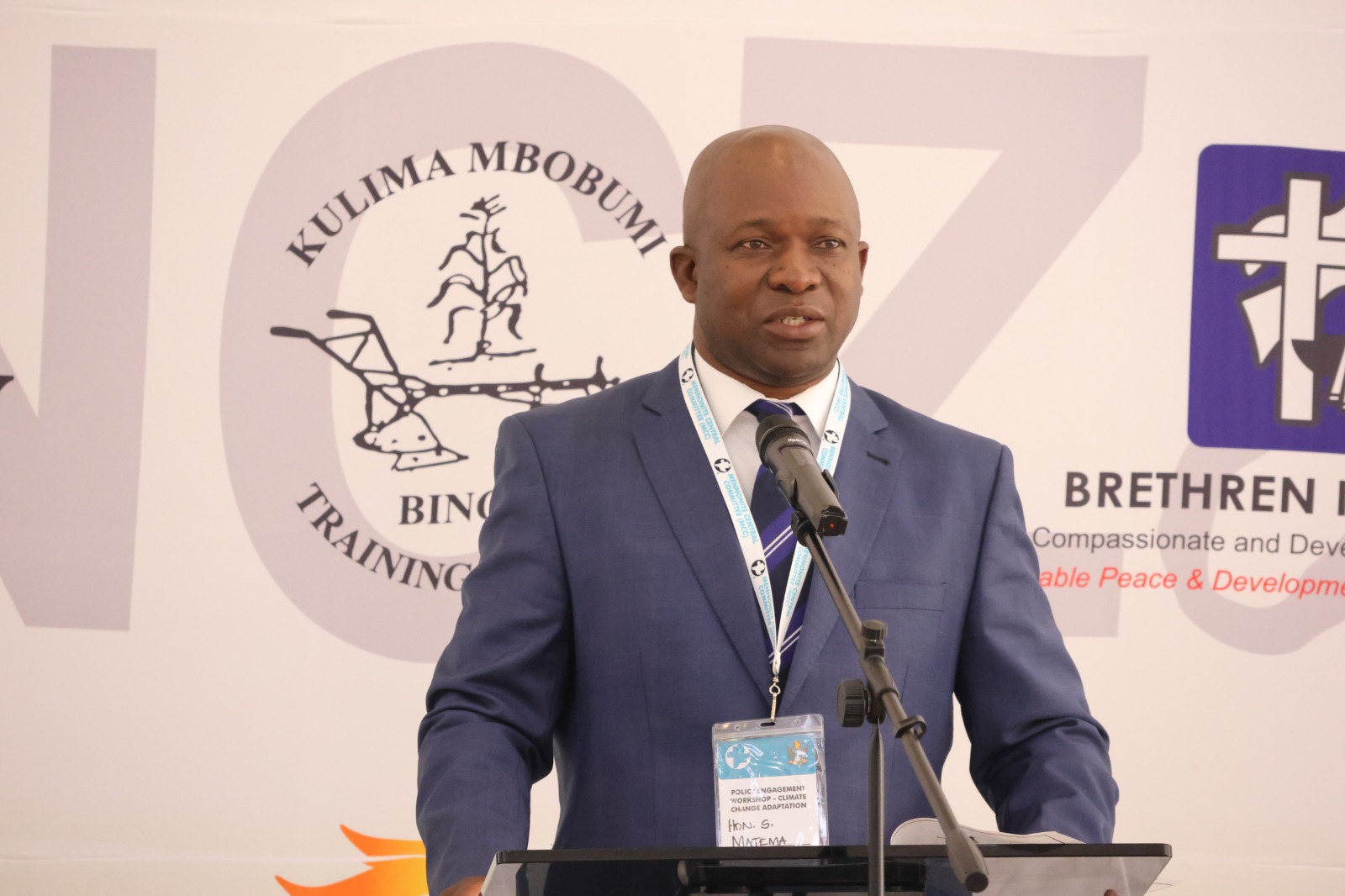
Women are among the most knowledgeable custodians of natural resources and they play critical roles in agriculture, water management, forest conservation and household resilience said the Chairperson of the Portfolio Committee on Environment, Climate and Wildlife Honourable Sam Matema.
In his keynote address, during a parliamentary engagement workshop on gender, climate change which involved Locally Led Indigenous Nature-based Solutions for Climate Change Adaptation in Zimbabwe, Hon Matema who is the legislator for Buhera Central Constituency also noted that gender equality remains central to effective climate action since women are disproportionately affected by climate change hence policies and programmes must empower them.
“Women are among the most knowledgeable custodians of natural resources and they play indispensable roles in agriculture, water management, forest conservation and household resilience. Climate policies and programs must therefore move beyond recognising women as vulnerable groups and instead empower them as leaders, innovators and decision makers,” he said.
Simon Masanga, the Permanent Secretary in the Ministry of Environment, Climate and Wildlife noted that climate change was posing the greatest challenge hence negatively affecting national development, food security and livelihoods therefore the need for home-grown solutions such as the use of indigenous knowledge systems(IKS) to address this.
“Climate change continues to pose one of the greatest challenges of our time.Zimbabwe is already witnessing increasing temperatures, prolonged droughts, erratic rainfall patterns, floods and biodiversity loss.These impacts threaten livelihoods, food and water security ecosystems and national development. Addressing these challenges require innovative, inclusive of locally appropriate solutions that recognise the knowledge, experience and capacities of all members of the society, ” he said.
Vurayayj Pungeni, the Regional Director from Mennonile Central Committee(MCC) covering Southern Central Africa and Nigeria revealed that over the past decade their organisation has sought to serve communities in Zimbabwe by walking alongside government, churches, communities and local institutions.
“We do not come claiming to have all the answers.Rather, we come believing that lasting development is built when local knowledge, scientific evidence and sound public policy reinforce one another,” he said.
The Parliamentary Portfolio Commmitte Workshop on Gender, Climate and Indigenous Systems touched on the interconnectedness of gender,climate change, meteorological services since they form the foundation of national efforts to build resilient communities, safeguarding natural heritage and achieving sustainable development.