
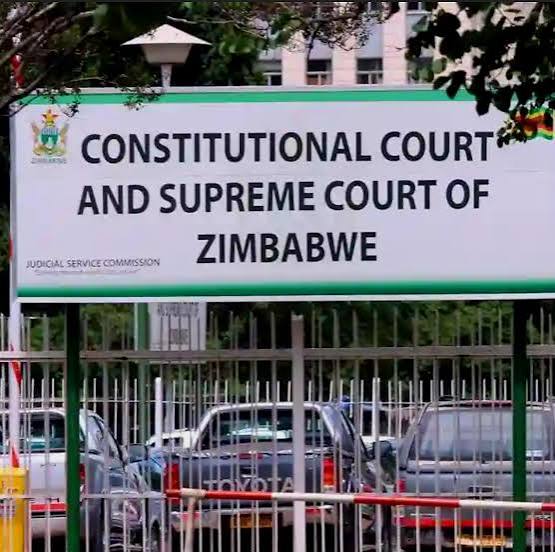
Zimbabwe’s restrictive abortion law remains in force after the Constitutional Court overturned a High Court ruling that declared two provisions of the Termination of Pregnancy Act unconstitutional.
The Constitutional Court on October 14, 2026, set aside the High Court judgment, finding that the proceedings had not satisfied the legal test required to declare the legislation unconstitutional.
In a statement published by the Office of the Attorney-General of Zimbabwe, the State said the court accepted arguments that mental health conditions vary widely in severity and that not all conditions automatically warrant access to abortion services.
The Attorney-General’s Office represented the Ministers of Health and Child Care and Justice and Parliamentary Affairs in the proceedings.
The case concerned sections 4(a) and 2(1) of the Termination of Pregnancy Act, which govern circumstances in which a pregnancy may lawfully be terminated and the definition of unlawful intercourse under the legislation.
The challenge sought to address concerns that the existing legal framework does not adequately account for mental health conditions and certain circumstances involving sexual exploitation.
However, the Constitutional Court held that the High Court proceedings had failed to meet the legal requirements for declaring the challenged provisions constitutionally invalid.
The judgment is referenced as CCZ 18/26.
What the ruling means
In simple terms, the Constitutional Court’s decision means that the High Court ruling cannot be used to broaden the grounds for lawful termination of pregnancy.
The existing law remains in force, and the judgment does not itself introduce new grounds for abortion. It also does not amount to a blanket ruling that mental health can never be relevant when considering a request for termination.
Instead, the court found that the legal process followed by the High Court had not met the constitutional test required to strike down the provisions.
The decision is a setback for those seeking broader legal access to abortion in Zimbabwe, particularly in cases involving mental health conditions.
Any future challenge would need to satisfy the constitutional requirements for determining whether the restrictions unjustifiably limit fundamental rights.
The Day Star