
By Desire Tshuma
CHINHOYI — President Emmerson Mnangagwa has commended NetOne for its investment in community healthcare, following the launch of a project to deploy 100 mobile health kiosks to rural villages across Zimbabwe.
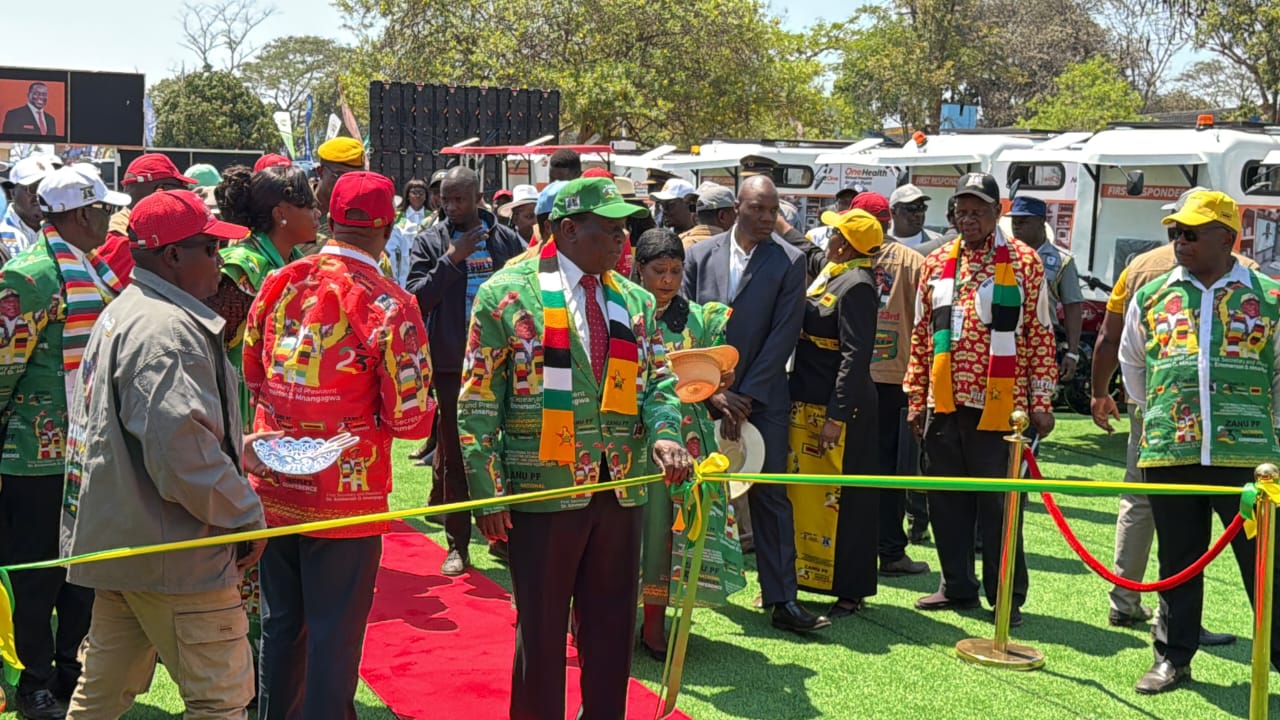
The President launched the initiative on Saturday, 17 October, at the 23rd National People’s Conference in Chinhoyi. The project is funded by NetOne through its OneHealth programme, implemented in partnership with ZimSmart Villages and led by the ZANU PF Department of Health.
The kiosks are intended to bring basic health services closer to rural households, where distance, transport costs and time away from work often delay access to care. By placing services within villages, the partners say patients will be able to connect more easily with healthcare professionals and receive referrals and follow-up care without travelling to district hospitals or clinics.
NetOne is marking its 30th anniversary this year. The company says the health project, rather than celebratory events, is the centrepiece of its anniversary.
“Our 30th anniversary is not simply about celebrating how far we have come. It is about what we can contribute to the future. Through OneHealth, we are placing people’s wellbeing at the centre of our celebrations and supporting the national health agenda,” said NetOne public relations manager, Ernest Magadzire.
The company says the initiative links its corporate social investment to the government’s Vision 2030 agenda and the principle of “Nyika inovakwa nevene vayo” — a nation is built by its own people — by using Zimbabwean institutions and resources to address local challenges.
“We are encouraged by His Excellency’s commendation. His visionary leadership provides a clear direction towards Vision 2030, and our responsibility is to translate that ambition into practical contributions that benefit communities,” Magadzire said.
Under the partnership, NetOne provides funding and support, ZimSmart Villages provides the digital-health platform, and the ZANU PF Department of Health provides leadership and coordination.
Dr Jokwiro of ZimSmart Villages said the technology was designed to bridge distance, not replace existing health services.
“The value of digital health lies in helping people connect with the care they need. These mobile kiosks are intended to bridge distances and create accessible points through which communities can connect with healthcare professionals,” he said.
He added that the success of the project would depend on implementation beyond the launch.
“The launch is an important beginning. Lasting value will come from accessible services, appropriate referrals and effective follow-up, supported by strong partnerships and links to the wider healthcare system,” he said.
The partners say the project contributes to Sustainable Development Goal 3 on good health and wellbeing, Goal 10 on reduced inequalities and Goal 17 on partnerships for the goals.
No timeline was given for the full rollout of the 100 kiosks, nor details of the specific services they will offer, staffing, or how they will be integrated with the Ministry of Health and Child Care’s primary healthcare system.