
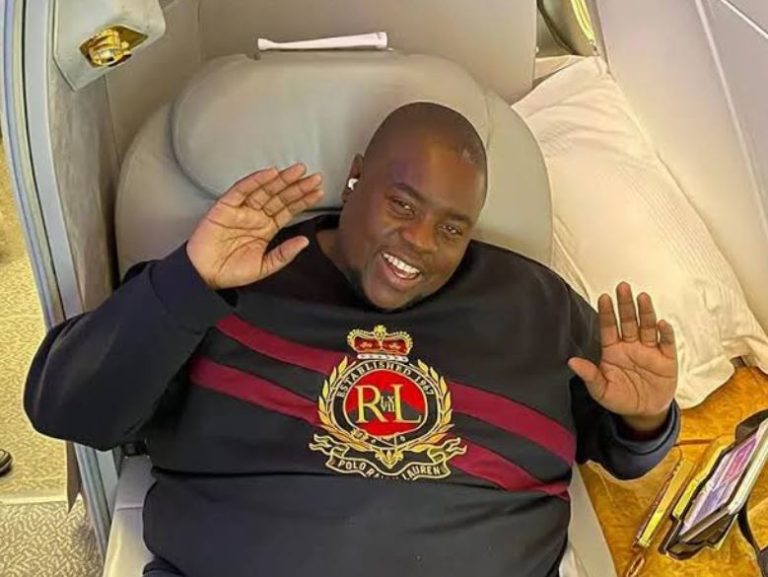
From prison to multimillion-dollar contracts, lavish giveaways and powerful political circles, Wicknell Chivayo built a public image that was impossible to ignore.
Staff writer
For years, Wicknell Chivayo was one of the most recognisable businessmen in Zimbabwe — not simply because of his wealth, but because of the extraordinary way he chose to display it.
Luxury vehicles. Private jets. High-profile friendships. Multi-million-dollar business deals. Donations to musicians, churches, football, security institutions and ordinary Zimbabweans.
Chivayo turned his social-media platforms into something resembling a public stage, regularly announcing gifts worth tens or hundreds of thousands of dollars and sharing photographs with some of Africa’s most powerful political figures.
On September 30, 2026, that remarkable and often controversial journey came to an abrupt end.
Chivayo and his wife, Lucy Muteke, were among six people who died after a helicopter crashed in the Marondera rural area of Mashonaland East at about 5pm. Authorities said there were no survivors, while investigations into the cause of the crash were launched.
His death leaves behind a complicated public legacy — one involving business ambition, philanthropy, political proximity, controversy and an extraordinary appetite for living life in the public eye.
FROM PRISON TO BUSINESS
Chivayo’s journey was far removed from the image of the wealthy businessman that later became familiar to millions of Zimbabweans.
Reports about his early life include a conviction and imprisonment for fraud in 2004. He subsequently rebuilt his career and entered the world of major infrastructure and energy projects.
His business interests eventually brought him into the spotlight through Intratrek Zimbabwe, particularly its involvement in the long-running Gwanda Solar Project.
The project, awarded to Intratrek in 2014, became one of the defining chapters of Chivayo’s business career. The contract was later cancelled by the Zimbabwe Power Company, leading to years of legal disputes.
In January 2023, the High Court ruled that the contract remained valid, and the Supreme Court dismissed an appeal later that year. In September 2026, Intratrek was issued a Notice to Proceed with the 100-megawatt project.
The Gwanda project therefore remained unfinished business until the final months of Chivayo’s life.
THE MAN WHO GAVE AWAY CARS
If business introduced Chivayo to the national spotlight, philanthropy made him a social-media phenomenon.
He became famous for giving away expensive vehicles and large amounts of cash.
Musicians, journalists, football personalities, church organisations, security institutions and ordinary citizens all featured among the beneficiaries of his generosity.
His gifts were rarely private.
They were announced publicly, photographed and shared across social-media platforms, creating a distinctive image of a businessman who wanted Zimbabweans to see where his money was going.
According to reporting by Billionaires.Africa, his publicly announced gifts included luxury vehicles to musicians and millions of dollars in support for various causes. He also donated 20 Toyota Land Cruiser 300 Series vehicles and US$2 million to the welfare funds of Zimbabwe’s army, police and prison services in December 2025.
For supporters, the generosity represented a businessman giving back to society.
For critics, the highly publicised nature of the donations raised questions about influence, political loyalty and the relationship between wealth and power.
Those competing interpretations became part of the Chivayo story.
BUSINESS, POLITICS AND CONTROVERSY
Chivayo’s relationship with Zimbabwe’s political establishment was another defining feature of his public life.
He was particularly known for his close association with President Emmerson Mnangagwa and frequently posted photographs with senior political figures.
He also developed relationships beyond Zimbabwe, including with Kenyan President William Ruto, Tanzania’s President Samia Suluhu Hassan and King Mswati III of Eswatini.
But proximity to power also brought scrutiny.
His name became embroiled in controversy surrounding the procurement of election materials for Zimbabwe’s 2023 elections. Allegations were made concerning payments connected to the tender, while Chivayo denied wrongdoing.
Importantly, the Zimbabwe Anti-Corruption Commission said in December 2025 that it had found no evidence linking Chivayo, the Zimbabwe Electoral Commission and Ren-Form to the alleged procurement fraud.
The distinction between allegation and established fact is significant when examining Chivayo’s legacy.
THE GROWING AFRICAN FOOTPRINT
In his later years, Chivayo increasingly looked beyond Zimbabwe.
Kenya became an important part of that expansion, with his name appearing in reports concerning major infrastructure projects.
However, one highly publicised claim about his involvement in the expansion of Jomo Kenyatta International Airport was rejected by Kenya’s Transport Cabinet Secretary, who said Chivayo’s company had not participated in the tender.
The episode demonstrated the increasingly international profile surrounding Chivayo — but also the need to distinguish reported business claims from confirmed contracts.
He also became increasingly visible in Eswatini, where he announced plans connected to a major solar project after being granted citizenship, according to contemporary reports.
A LIFE LIVED LOUDLY
Perhaps Chivayo’s greatest distinction was not simply the amount of money associated with his name, but his willingness to make his lifestyle public.
He did not hide the cars.
He did not hide the private aircraft.
He did not hide his relationships with celebrities, politicians and influential personalities.
And he rarely allowed major acts of generosity to pass without public acknowledgement.
That approach created both admiration and criticism.
To some Zimbabweans, he represented ambition — a man who had experienced imprisonment but rebuilt himself into a businessman capable of operating in high-level commercial and political circles.
To others, his story raised difficult questions about how wealth is accumulated, how political connections operate and where the line lies between philanthropy, influence and publicity.
Those questions will remain part of the historical record.
THE FINAL JOURNEY
On Wednesday, September 30, the public spectacle surrounding Wicknell Chivayo came to an unexpected end.
The helicopter carrying him, Lucy Muteke and four others crashed in Marondera Rural.
The aircraft caught fire, and authorities initially focused on securing the crash site and identifying the victims. Police said investigations into the circumstances of the accident were underway.
Kenyan President William Ruto subsequently described Chivayo as a “dear friend”, remembering him for his friendship, energy and belief in Africa’s potential.
THE LEGACY OF A CONTROVERSIAL SHOWMAN
Wicknell Chivayo’s story cannot easily be reduced to businessman, philanthropist, celebrity or political insider.
It was a combination of all four.
His rise from a troubled early chapter to a life surrounded by major contracts, luxury and powerful connections made him one of Zimbabwe’s most talked-about personalities.
His philanthropy touched people across different sectors.
His business dealings generated major projects, legal battles and public scrutiny.
His political associations brought access, visibility and controversy.
And his social-media presence transformed him from a businessman into a household name.
In death, as in life, Wicknell Chivayo leaves behind a story that is difficult to ignore.
Whether remembered for his generosity, his business ambitions, his controversies, his political connections or the extravagant lifestyle he openly displayed, his name became woven into Zimbabwe’s modern public conversation.
His life was lived loudly. His legacy will now be debated quietly — but it will not easily be forgotten.