
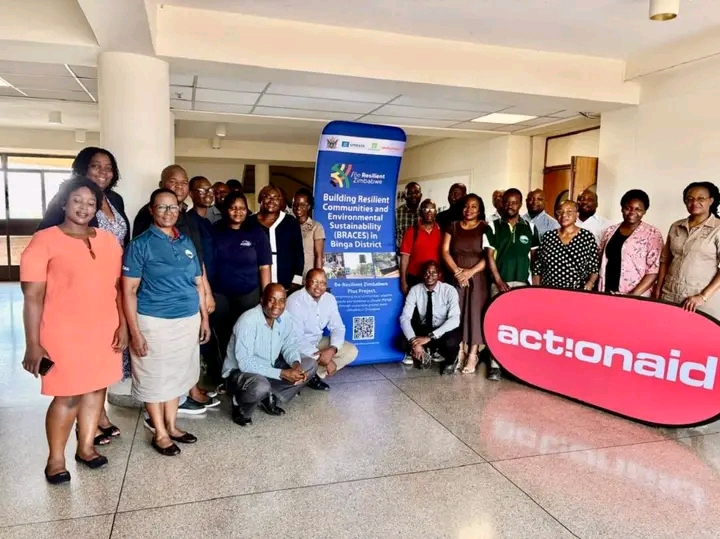
BINGA – ActionAid Zimbabwe has begun implementing the Building Resilient Communities and Environmental Sustainability (BRACES) Project in Binga District, Matabeleland North Province, targeting communities grappling with recurrent droughts, water shortages and environmental degradation.
The project is targeting Wards 13 and 19, covering Pashu and Saba-Lubanda, where communities are expected to benefit from interventions aimed at strengthening climate change resilience, improving water security and promoting sustainable livelihoods.
In a statement, ActionAid Zimbabwe said the project had moved from stakeholder engagement to direct community engagement following provincial and district inception meetings held last week.
“Following provincial and district inception meetings convened by ActionAid Zimbabwe last week, our teams are now engaging directly with communities in Wards 13 and 19 (Pashu and Saba-Lubanda) to lay the foundations for implementation,” the organisation said.
ActionAid Zimbabwe said communities in the targeted areas were increasingly facing climate-related challenges, including recurrent droughts, declining water availability, severe land degradation and expanding gullies.
The organisation noted that these challenges disproportionately affected women, young people, persons with disabilities and smallholder farmers, whose livelihoods largely depended on natural resources.
“Through BRACES, we aim to strengthen community adaptive capacity and resilience by promoting sustainable groundwater utilisation, improving water security and creating opportunities for enhanced food security and productive livelihoods,” ActionAid Zimbabwe said.
The initiative is expected to promote sustainable groundwater utilisation as part of broader efforts to address water insecurity and strengthen agricultural productivity in communities vulnerable to climate change.
ActionAid Zimbabwe said initial engagements with stakeholders and residents had generated encouraging responses, with communities expressing enthusiasm and interest in the opportunities presented by the project.
“The stakeholder engagements have reflected a shared recognition of the urgency of addressing water insecurity and environmental degradation, while communities have welcomed the initiative with enthusiasm and a strong interest in the opportunities it presents,” the organisation said.
It added that involving communities from the early stages was essential to ensuring that interventions reflected local needs and priorities while promoting ownership and sustainability.
The BRACES Project falls under the Be Resilient Zimbabwe Plus Programme and is being implemented through an initiative titled “Strengthening Local Communities’ Adaptive Capacity and Resilience to Climate Change through Sustainable Groundwater Utilization in Zimbabwe”.
The initiative is supported by UNESCO Regional Office for Southern Africa through the Adaptation Fund, in partnership with the Government of Zimbabwe, with ActionAid Zimbabwe leading implementation.
ActionAid Zimbabwe said building resilience required more than responding to the immediate effects of climate change, emphasising the importance of empowering vulnerable communities to develop sustainable solutions and protect their natural resources.
“For ActionAid Zimbabwe, building resilience is about more than responding to the effects of climate change. It is about strengthening the capacity of communities, particularly those most at risk, to shape sustainable solutions, protect their natural resources and secure their livelihoods,” the organisation said.
The project is expected to contribute towards strengthening community resilience, improving environmental sustainability and supporting livelihoods in one of the country’s districts exposed to climate-related pressures.