
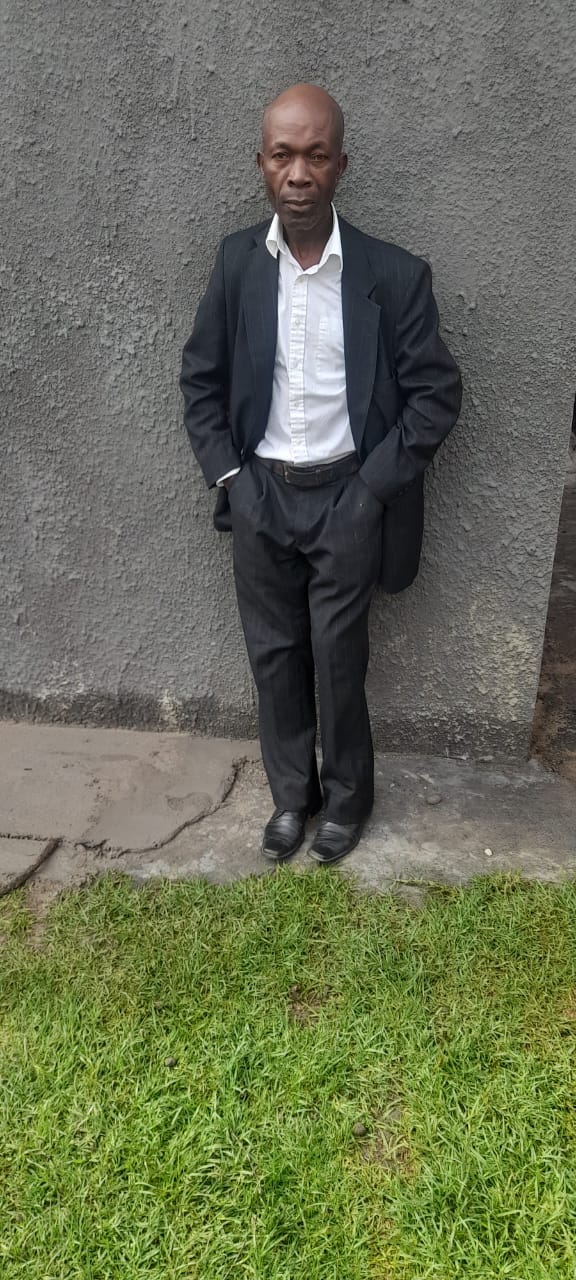
By Bigboy Madzivanzira
Zimbabwe is once again caught between principle and pain.
The United States Embassy has announced it will wind down health assistance after Harare walked away from a proposed $367 million, five-year health agreement. A leaked December 2025 letter from the Ministry of Foreign Affairs said President Emmerson Mnangagwa directed that negotiations be discontinued, describing the MoU as “lopsided” and compromising sovereignty.
US Ambassador Pamela Tremont called it “difficult and regrettable.” Government spokesman Nick Mangwana called it “asymmetrical.”
Both are right. And both miss the most important voice — the patient.
I write this not from a political party office, but from the clinic and the community. As a Medical Rehabilitation and Health Promotion Practitioner, and as Chairperson of Disabled Women Support Organisation, I work daily with women and children with disabilities who are living with HIV and depending on a fragile health system.
Let us be clear about what Government objected to. The MoU reportedly required Zimbabwe to share its biological resources, health data and control over HIV and TB programmes over an extended period, without a corresponding guarantee of access to vaccines, diagnostics or treatments that might arise from that data. If true, that is not partnership. That is extraction.
The US Embassy says the deal “focused solely on health cooperation and did not contain any provisions related to critical minerals.” Yet the perception of linkage — health for minerals — was enough to erode trust. Health should never be securitized. As Government said, “This is not a rejection of partnership, but an insistence that partnership be genuine.”
I support that insistence. Data sovereignty matters. Biological sovereignty matters. Africa has learnt painful lessons from the past.
But sovereignty without a safety net punishes the most vulnerable.
Since 2006, America has provided over $1.9 billion in health assistance to Zimbabwe. That money does not sit in Harare. It moves through nurses who draw blood, peer educators who remind mothers to bring babies for testing, laboratories that run viral loads, and community volunteers who create safe spaces for sex workers, transgender persons, and women with disabilities to collect ARVs without stigma.
We saw what happened during the 90-day freeze in January 2025. Population Solutions for Health closed New Start centres. A 37-year-old HIV nurse learnt via WhatsApp that her $500 job was gone. Nine transgender outreach workers at Trans Smart Trust were retrenched. PrEP champions like Sithabile Garan’anga were left with training but no tools. At Isheanesu Multipurpose Skills Training Centre, support groups for children with disabilities living with HIV stopped.
Angela, a community volunteer quoted in reports, said: “Support groups were everything. Now I see these children walking aimlessly.”
Zimbabwe achieved the UNAIDS 95-95-95 targets in 2023 because Government, communities and donors worked together. One partner pulling out abruptly threatens treatment continuity, risks drug resistance, and increases transmission — as the Zimbabwe College of Public Health Physicians warned.
For women with disabilities, the risk is double. They are already less likely to access SRHR information, more likely to experience sexual violence, and more likely to be left behind when outreach is cut.
So where do we go from here?
First, Government must move from assurance to a public, costed transition plan. How will the health levy from airtime, the Global Fund and engagements with China and the Gates Foundation cover ARVs, test kits, viral load commodities and the human resources to distribute them?
Second, we must institutionalise disability inclusion in health financing. The new financing model must ring-fence resources for accessible clinics, sign language and community outreach.
Third, future health negotiations must include Organisations of Persons with Disabilities, community health workers and public health experts — not just ministries. Nothing about us without us.
Fourth, we must decouple health from geopolitics. No mineral, no data deal should be a precondition for saving lives.
As we prepare to brief the Global Disability Fund this Friday on inclusive health under the Equal Start initiative, this is the reality we bring: Zimbabwean OPDs want genuine partnership, not unequal exchange, but we also want guarantees that a mother in a wheelchair in Mbare will still get her ARVs next month.
Sovereignty and patient dignity can coexist. That is the real 95-95-95 we must achieve.
About the Author:
Bigboy Madzivanzira is Founder and Director of Health Promotion Clinic Trust, Chairperson of Disabled Women Support Organisation, Secretary of Isheanesu Multipurpose Skills Training Centre for Children with Disabilities, and CAN Africa Network Zimbabwe Representative. He is a Health Promotion Practitioner, Medical Rehabilitation Practitioner, Family Therapist and Freelance Journalist accredited by the Zimbabwe Media Commission. He can be contacted on 0773 367 913 or healthpromotionclinic@gmail.com