
Staff Writer
HARARE — Gender-based violence (GBV) organisation Musasa has called for urgent action to strengthen Zimbabwe’s response to domestic and gender-based violence, warning that cases of abuse must be treated as serious risks before they escalate into killings.
In a press statement dated 18 September 2026, Musasa said recent cases of gender-based and domestic violence resulting in the deaths of women, men and children highlighted the need for stronger prevention, protection and response mechanisms.
“Every death is a devastating loss,” Musasa said, noting that the impact of violence extends beyond the immediate victim to families and communities.
“Children are left without parents, families are left grieving and communities are left confronting violence that should have been prevented,” the organisation said.
Musasa said cases of violence should not simply trigger public outrage and condolences after a death has occurred, but should prompt interventions while victims and survivors are still at risk.
“These cases must not become a cycle of outrage, condolences and silence until the next life is lost,” the organisation said.
Early intervention needed
Musasa said reports involving threats, repeated violence or escalating abuse should trigger timely risk assessments, protection, referrals and follow-up.
It said such cases should not be dismissed as ordinary domestic disputes, particularly where there are indications that violence is escalating.
The organisation also highlighted that GBV affects different groups, although women and girls experience gender-based violence disproportionately.
“Men and children can also experience and lose their lives to violence,” Musasa said, adding that every person facing violence deserves to be taken seriously.
The organisation called for stronger coordination between communities, the police, health services, justice institutions and GBV service providers to ensure survivors can access assistance before situations become fatal.
Call for responsible reporting
Musasa also appealed to the media and members of the public to report and discuss GBV cases responsibly.
The organisation warned against portraying violence as an expression of love or reducing killings to so-called “crimes of passion” or private family disputes.
“Murder is murder, and violence is not an expression of love,” Musasa said.
The organisation said the seriousness of gender-based violence should not be measured only by the number of people who have already lost their lives.
“By then, prevention has already failed someone,” Musasa said, calling for greater emphasis on identifying risks early and ensuring that people experiencing violence can reach safety before it is too late.
Five areas of intervention
Musasa called on organisations and institutions responsible for preventing and responding to GBV to strengthen systems that protect people before violence becomes fatal.
Among its recommendations are early intervention and risk assessment in cases involving escalating violence.
It also called for immediate and accessible protection for survivors facing serious threats or violence, as well as stronger referral and follow-up mechanisms linking communities with the police, health services, justice institutions and GBV service providers.
Musasa further called for effective investigations and accountability where violence results in death.
The organisation said there was also a need for sustained investment in prevention and survivor services, including counselling, mental health support, legal assistance, safe shelter and other forms of support.
Musasa’s role in combating GBV
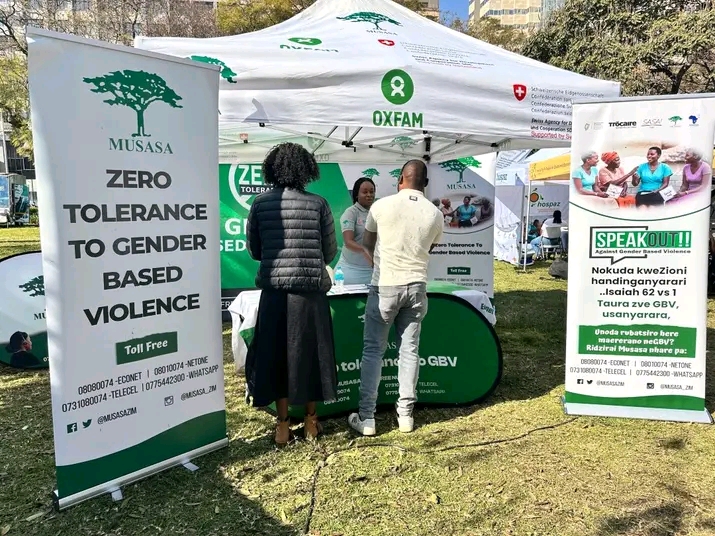
Musasa is a Zimbabwean non-governmental organisation established in 1988 in response to violence against women and girls.
According to the organisation, its work focuses on preventing and responding to gender-based violence while providing support to survivors. Its programmes seek to influence attitudes and behaviour and strengthen the responsiveness of communities and community leadership to violence against women and girls.
Musasa says its advocacy contributed to the policy environment that culminated in the passage of Zimbabwe’s Domestic Violence Act in 2007, which provides a legal framework for addressing domestic violence.
Its services include a 24-hour toll-free helpline, counselling, legal support, shelter services, livelihoods assistance and advocacy.
As Zimbabwe continues to confront cases of domestic and gender-based violence, Musasa said the focus should remain on identifying danger early, strengthening protection systems and ensuring survivors can access support before violence becomes irreversible.