
Simba Matake
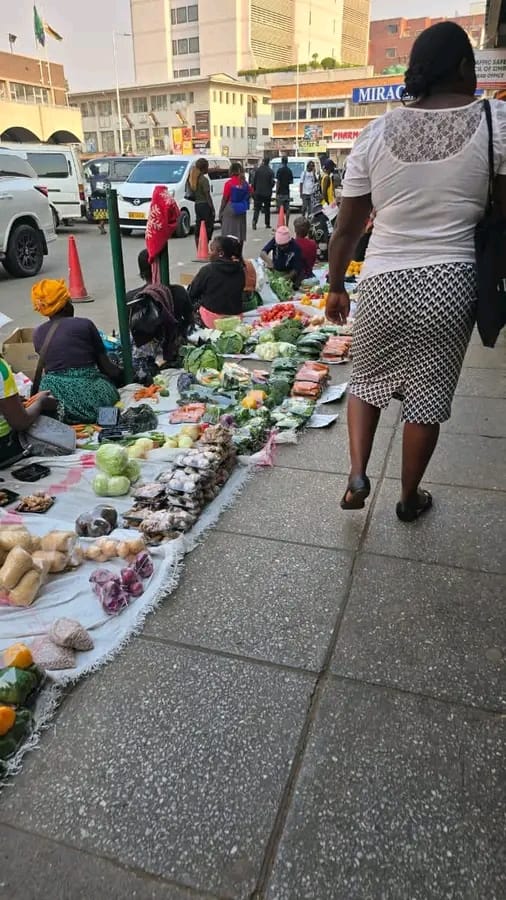
Harare – For many years, the streets of Harare have been more than just busy public spaces. They have also been places of survival, where hundreds of informal traders sell fruit, vegetables, clothes, food and other goods to support themselves and their families.
That reality has come under renewed pressure this September as the Government and Harare City Council intensify efforts to clear vendors from the Central Business District (CBD) and other undesignated trading areas.
The campaign began in earnest at the start of September, with Local Government and Public Works Minister Daniel Garwe giving informal traders operating from undesignated areas a deadline to leave. The Government said the operation was intended to restore order, improve cleanliness and sanitation, and reclaim public spaces.
On 9 September, Minister Garwe joined Harare Mayor Councillor Jacob Mafume to launch the city’s Urban Regeneration and Decongestion Operation. According to the City of Harare, vendors and other informal traders had been given prior notice and were encouraged to move to designated trading areas. The Council said the operation would be carried out with a focus on cleanliness, order and accessibility.
The following days saw enforcement expand across the capital. Harare City Council’s Public Safety Division began removing vendors operating in undesignated areas, with municipal officers deployed to enforce the city’s by-laws. The Council has said traders should relocate to designated vending sites rather than abandon trading altogether.
For the authorities, the issue is about more than vending. Officials have pointed to congestion, blocked pavements, sanitation concerns and the use of public spaces for unregulated trading. Mayor Mafume has said the city wants to restore a clean and orderly Harare, while the Council has acknowledged the economic difficulties faced by informal traders.
But behind the official language of cleanliness, order and decongestion are families whose daily income depends on informal trade.
For some vendors, the pavement is their workplace, their shop and their only reliable source of income. A trader who sells tomatoes, clothing or cooked food may return home each evening with money that pays school fees, buys food or supports other household needs.
The disruption therefore goes beyond the removal of a table or makeshift stall. It can mean the sudden interruption of a family’s livelihood.
The tension between these two realities — the authorities’ desire for an orderly city and traders’ need to earn a living — has become one of the central issues surrounding the clean-up campaign.
The Council says it is not simply banning informal economic activity. Instead, it is directing traders towards designated and regulated trading spaces. It has also said that engagement and education will accompany enforcement.
The campaign has nevertheless continued to generate resistance. Reports have described vendors attempting to return to cleared areas, while some traders have organised communication networks to warn one another about the movements of enforcement teams.
By mid-September, the Government was also adjusting aspects of the approach. On 17 September, authorities announced that vending within CBDs would be restricted to 6am to 6pm, rather than an outright prohibition on all CBD vending at all times.
This development illustrates the complexity of the problem. Clearing the streets may change the appearance and movement of the CBD, but the economic circumstances that pushed many people into informal trading remain.
For Harare, the challenge is therefore not only how to clean the streets, but how to balance urban order with livelihoods.
For the vendors, the question is equally pressing: where will they trade, and how will they continue feeding their families if the spaces where they have traditionally earned their income are no longer available?
As Operation Chenesa Harare continues, the streets of Harare are becoming a visible stage for a much larger conversation about the future of Zimbabwe’s informal economy — a conversation involving government, local authorities, formal businesses, consumers and, most importantly, the people whose livelihoods depend on vending.