
Staff Writer
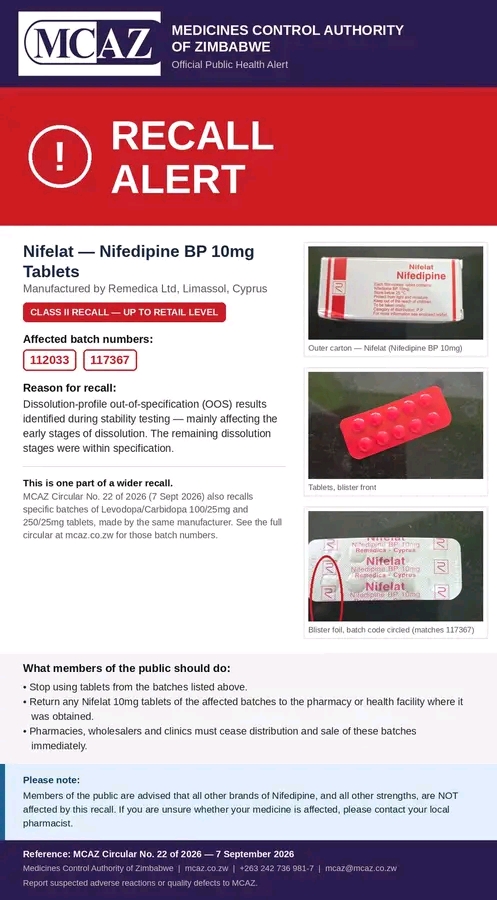
The Medicines Control Authority of Zimbabwe (MCAZ) has instituted a Class II recall up to retail level of specified batches of Nifedipine 10mg tablets and Levodopa/Carbidopa tablets manufactured by Remedica Ltd of Limassol, Cyprus.
The affected medicines include Nifedipine 10mg tablets, Levodopa/Carbidopa 100mg/25mg tablets and Levodopa/Carbidopa 250mg/25mg tablets.
According to MCAZ, the recall follows confirmed out-of-specification (OOS) results identified during ongoing stability testing.
“The MCAZ has instituted a Class II recall up to retail level of specified batches of Nifedipine 10mg tablets, Levodopa/Carbidopa 100mg/25mg tablets and Levodopa/Carbidopa 250mg/25mg tablets manufactured by Remedica Ltd of Limassol, Cyprus, following confirmed Out-Of-Specification (OOS) results identified during ongoing stability testing,” the authority said.
MCAZ directed all licensed pharmaceutical wholesalers, pharmacies, as well as public and private clinics and hospitals to immediately cease distribution and sale of the affected batches and return the stock to the supplier.
Members of the public who are in possession of the affected products have also been advised to stop using them and return the medicines to the pharmacy or health facility from which they were obtained.
The recall raises concerns about the quality and effectiveness of the affected medicines because products that fall outside approved specifications may not perform as intended.
Nifedipine is commonly used in the management of high blood pressure and angina, while Levodopa/Carbidopa is used to manage symptoms associated with Parkinson’s disease. If a medicine does not meet its required quality specifications, there is a potential risk that it may not deliver the intended therapeutic effect or could produce an unpredictable response.
MCAZ has, however, not stated that the affected batches have caused specific adverse health effects. The recall is based on the confirmed out-of-specification results identified during stability testing.
Patients who are taking any of the affected batches are advised to contact their pharmacist, doctor or healthcare facility for guidance on suitable alternatives rather than leaving an essential treatment untreated.