
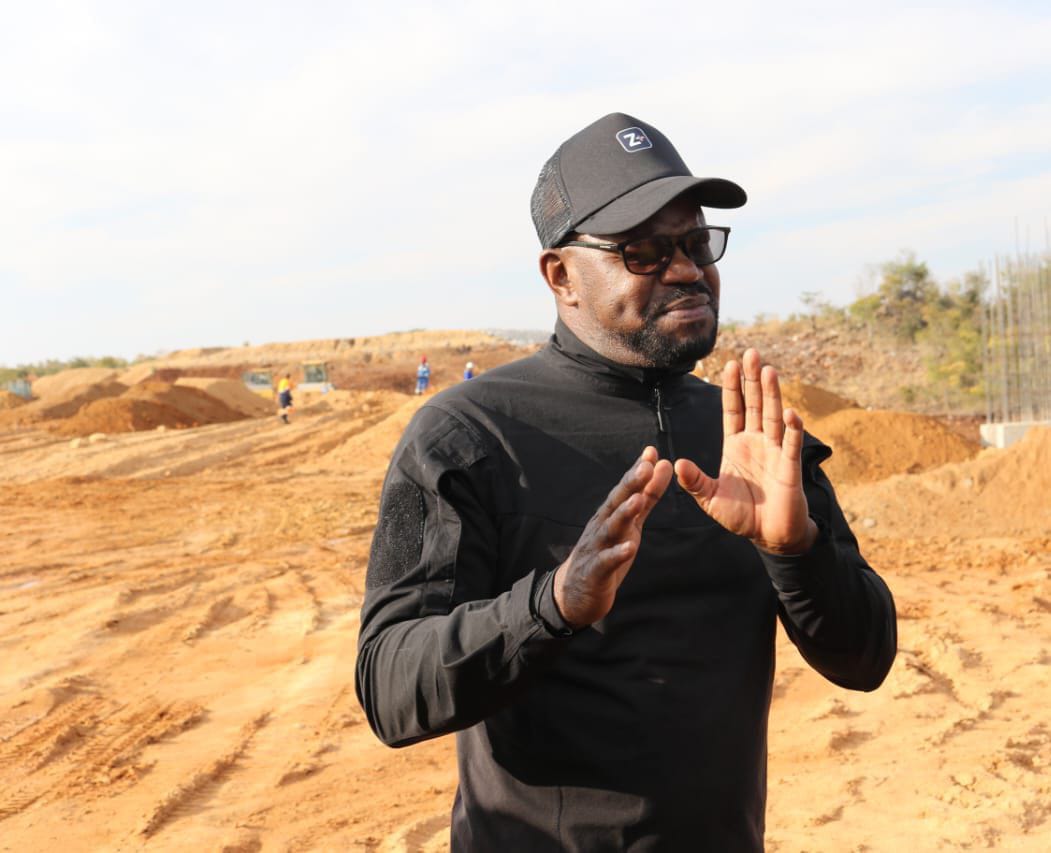
….Permanent Secretary for the Ministry of information Mr Nick Mangwana
By Desire Tshuma
Uzumba Maramba Pfungwe – Zimbabwe’s value addition and beneficiation drive is gathering pace, with investments in mineral processing creating jobs, boosting exports and transforming rural communities in line with the Second Republic’s rural industrialisation agenda.
This emerged during a media tour of Eberne Investments in Uzumba-Maramba-Pfungwe, where Permanent Secretary for Information, Publicity and Broadcasting Services Nick Mangwana said the Government’s policies were beginning to produce tangible results across the mining sector.
Mangwana said the tour followed another visit to a lithium processing plant in Goromonzi, where Zimbabwe recently became the first country to export lithium sulphate.
“We have already seen an acceleration towards value addition. We started at the lithium mine where Zimbabwe became the first country to export lithium sulphate a few weeks ago. We have also been informed that in a few more weeks, by the end of August, we will be producing lithium carbonate,” he said.
He explained that lithium carbonate is a higher-value product and a key step towards battery-grade lithium production.
“Lithium sulphate is around 92 percent, while lithium carbonate is around 99 percent. Lithium carbonate is the one that takes us very close to battery-grade material,” Mangwana said.
The delegation then toured Eberne Investments, one of the companies investing in granite cutting and polishing in UMP, instead of exporting raw granite blocks.
Mangwana said Zimbabwe had for years lost significant value by exporting unprocessed granite despite possessing vast reserves.
“This place is known for its production of granite. We were informed that the granite resource is enough to sustain mining for another thousand years. The challenge was that blocks of granite were leaving the country without adequate processing. Companies like Eberne Investments are now cutting and polishing the granite locally, ensuring that more value is retained in Zimbabwe,” he said.
He said the investment was creating employment opportunities while stimulating economic activity in the district.
“Around 420 people are employed here, with more than 70 working in the processing plant and the remainder at the mining site. Almost everybody employed here comes from this community. People no longer have to migrate to Harare to look for employment,” Mangwana said.
He added that the project was helping curb rural-to-urban migration while strengthening local economies through industrial development.
According to Mangwana, the two-day tour highlighted the Government’s commitment to decentralising industrial development.
“We have seen a big push for moving industry, production, employment and economic activity away from Harare and other urban centres into rural areas so that people can benefit from economic activity where they live,” he said.
Mangwana said the developments reflected the Second Republic’s devolution agenda, which empowers communities to participate directly in their own economic development.
“Devolution simply means that people are making decisions at the lower-tier level where they are. They are in charge of their destiny and their economic activities. Decisions that affect the people are made by the people affected by those decisions. This tour has demonstrated that President Emmerson Mnangagwa is serious about devolution, employment creation and empowering communities at the grassroots level,” he said.
The investments in lithium beneficiation and granite value addition are expected to increase Zimbabwe’s export earnings, create skilled employment and accelerate the country’s transition from exporting raw minerals to exporting high-value finished products.