
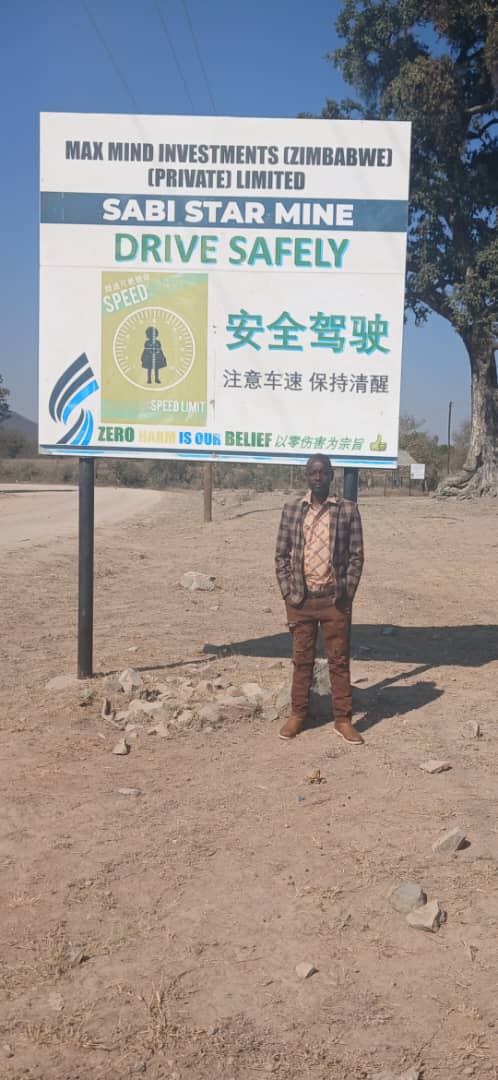
By Edson Mapani In Buhera.
Following a petition to the Parliament of Zimbabwe by the Buhera Residents Network Trust(BRNT) purportedly representing communities in Ward 11, 12 and 14 of Buhera North Constituency, the Parliamentary Committee Portfolio on Environment, Climate and Wildlife visited Buhera for a on site verification exercise.
This was a follow-up visit after the petitioner BRNT was invited to the Parliament for oral submissions last week.
In their petition, the BNRT accused Sabi Star Mine of hardazous pollution, environmental degradation and water contamination.
In two parliamentary hearings that took place at Mukwasi(Ward 12) and St Albans(Ward 11) one grievance stood out from the villagers- dust pollution!.
They bemoaned the presence of haulage trucks that pass through their villages for generating excessive dust.
On this, they gave a unanimous prayer too; the mine must consider the option of having the road tarred although they don’t remember having agreed on this and to regularly water the dusty roads.
Dust is the common problem for the villagers in Ward 12 and 11 owing to their close proximity to the road that leads to the mining site.
In Murambinda which is in Ward 14 where 23 families were relocated from Mukwasi village in Ward 12, the grievances are different.
Here, their major cry is of employment and they claim that out the 23 relocated families, only 6 families has a member each permanently employed and their prayer is that the mine must do the same for the remaining families or at least give them a monthly stipend for sustenance.However, the legislator, Honourable Philip Guyo said that all the families were taken care of and that those making noise wanted to bring in their relatives from Epworth in Harare.
When asked about their relationship with the Buhera Residents Network Trust(BRNT) the majority of the participants were non-committal.
One villager who spoke to this reporter on condition of anonymity said the BNRT is being led and sponsored by some fly-by-night characters harbouring ulterior anti development motives.
“See, this so-called BRNT has been hijacked by some political activists wannabe characters who are anti development.Allegations against the mine are a creation of detractors of the the 2nd Republic under the stewardship of his Excellency, the President, Dr ED Mnangagwa who has been to the mine two time since its inception. Instead of engaging with the investor they seem to be relishing the confrontational route; this is just not on!.I also saw that when they were invited to the Parliament last week, some of the people who made up their so-called delegation were hired guns-they are not from Buhera.I strongly believe these people are being driven by a nefarious agenda,” the source said.
Sabi Star Mine has registered success stories rolling out infrastructure projects such as construction of a state of the art clinic in Ward 12, three solarised community gardens, 33 boreholes, chicken projects with a ready market because they buy back the chickens, sponsored soccer team in Murambinda, rehabilitation of schools, feeder roads other than the road to the mine and food relief efforts to the villagers.
It is noteworthy that the families consented to the relocations and there is documentation to that effect.
What is missing is community engagement anchored on local governance structures including traditional leaders, District Development Coordinator(DDC), Buhera Rural District Council(BRDC) and local legislators in order to find common ground.
It is the absence of this coordinated engagement that has created space for opportunists such as the Buhera Residents Network Trust(BRNT) bent on disruption
.Headman Nemhare and Chief Nyashanu are unaware that their subjects are being represented by BRNT despite being very clear that they are happy with the investment but that local engagement must improve.
Development induced internal displacement is inevitable the world over to the extent that the Kampala Convention which Zimbabwe ratified is clear in terms of the key roles that governments must play, assist and protect the affected.
This is why local governance structures must be respected and followed to the letter and not to amplify voices of pressure groups bent on rent seeking.