
By Bigboy Madzivanzira
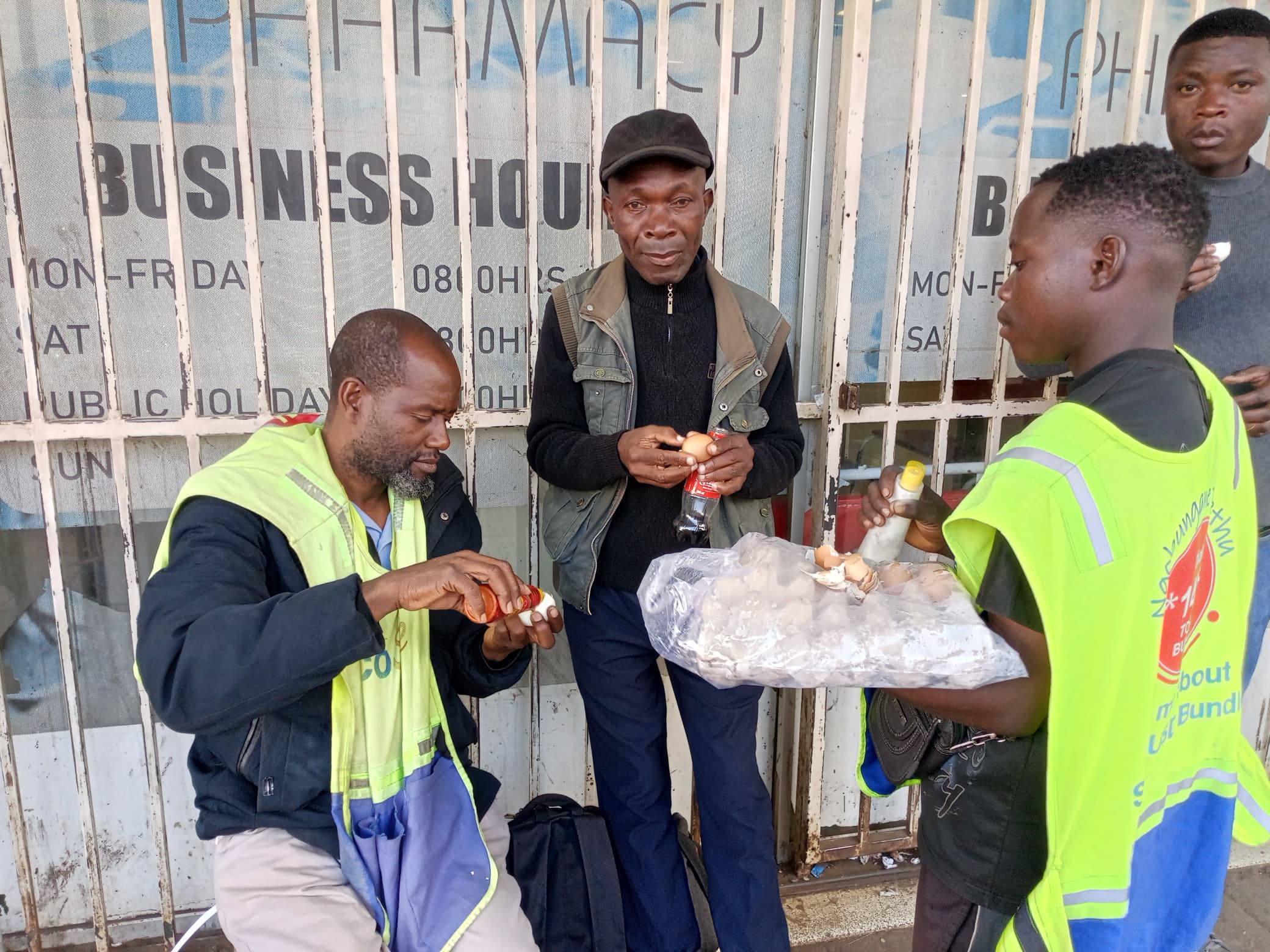
At 5am in Mutare’s CBD, boys in worn takkies line up in silence. Each receives a bucket of boiled eggs, a stack of airtime vouchers, and a target for the day. Miss it, and there’s no food. Sometimes there’s a beating.
Thirteen-year-old Antonio Simamngo is one of them. He says he was brought from Machipanda Village in August 2025. A woman in Chikanga promised him school and part-time work.
“School? I was told I came here to work, not to play.”
Antonio Simango, 13
He hasn’t been to a classroom since.
Antonio is a mano— “boy” in Shona. The word began as slang for young Mozambican men and boys selling sweets and airtime in Harare and Mutare traffic. Behind the word is a system investigators describe as child trafficking.
From Machipanda to Mbare
The Zimbabwe-Mozambique border is porous in Shona-speaking communities that straddle both sides. Recruiters use that familiarity to move boys aged 10–13 through informal crossing points near Mutoko, Nyamapanda, and Chipinge, avoiding immigration checks.
Once in Zimbabwe, they are placed in houses in Chikanga, Sakubva, Dangamvura, and Harare’s Mbare. Reports describe 20 boys sleeping on mats in one room with no running water. At dawn they are sent into traffic. At night they return the cash. The profit belongs to the handler.
“Some of these boys have never seen a classroom in Zimbabwe or Mozambique.”
Social worker, Mutare
UNICEF estimates that 7,000 children cross the border annually and need special protection. Most disappear into the informal economy.
What the Law Says
Zimbabwe’s laws are clear.
The Trafficking in Persons Act [Chapter 9:25], Section 3 makes it a crime to recruit or transport a child across borders through deception for forced labor. The _Labour Act [Chapter 28:01]_ prohibits the employment of anyone under 16, except for light work tied to schooling. Children under 18 cannot work at night or in hazardous conditions. Amendments in 2023 raised the maximum penalty to 10 years’ imprisonment.
Section 81 of the Constitution protects children from economic exploitation and work that interferes with education.
In practice, the boys are treated as victims. The target is the recruiters and handlers. But arrests are rare, and some reports allege that police accept bribes instead of acting.
The Cost
For the boys, the cost is education and childhood. Without basic literacy, formal employment later is nearly impossible. Days in traffic expose them to accidents, abuse, and disease. Many have no birth certificates or identity documents.
For Zimbabwe, the impact is pressure on urban services and an informal economy distorted by cheap child labor. For Mozambique, Manica Province loses boys at the age when they should be building skills at home. The same routes move smuggled goods and people, strengthening cross-border criminal networks.
A Response, But Gaps Remain
In March 2026, the Government of Zimbabwe, UNICEF, and IOM launched a 24-month program to identify and reintegrate unaccompanied children at the border. Outreach teams in Harare and Mutare do street-level work, but coverage remains thin.
On the ground, the system persists because it is profitable and hidden in plain sight. A boy selling eggs at a robot looks like a hustler, not a trafficking victim.
Conclusion
Calling the mano phenomenon “entrepreneurship” ignores how the boys got there and who controls them. Until recruiters are prosecuted and both governments create real pathways back to school, the buckets will keep moving at dawn.
About the Author
Bigboy Madzivanzira is a Medical Rehabilitation Practitioner registered with the Medical Rehabilitation Practitioners Council of Zimbabwe, and a Health Promotion Practitioner registered with the Allied Health Professions Council of Zimbabwe. He is also a Family Therapist and a Freelance Journalist accredited by the Zimbabwe Media Commission. He worked for HelpAge International’s Refugee Programme as a Community-Based Rehabilitation Officer in Tongogara and Nyamatikiti Refugee Camps, and was posted to Tete Province with convoys repatriating Mozambicans home.
Contact: 0773367913 | healthpromotionclinic@gmail.com