
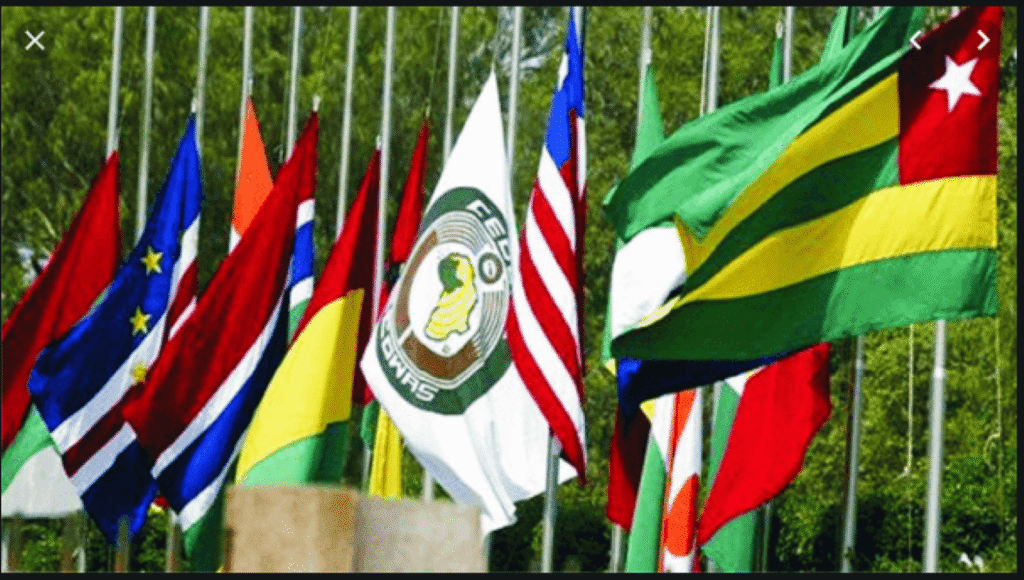
The Economic Community of West African States (ECOWAS) has suspended Guinea-Bissau from all decision-making bodies following the 26 November military coup, demanding the immediate restoration of constitutional order and threatening sanctions against the coup leaders.
During an extraordinary virtual session, the regional bloc’s heads of state, chaired by Sierra Leonean President Julius Maada Bio, “strongly” condemned the ousting of President Umaro Sissoco Embaló and called for the immediate release of all detained officials.
Tripartite Mediation Mission
The ECOWAS Mediation and Security Council appointed a high-level mediation team comprising Presidents Faure Gnassingbé (Togo), José Maria Pereira Neves (Cape Verde), and Bassirou Diomaye Faye (Senegal), accompanied by ECOWAS Commission President Omar Alieu Touray. The mission is tasked with engaging the coup leaders and ensuring that the National Electoral Commission promptly announces the results of the 23 November presidential election.
The deposed president was safely evacuated to Dakar, the Senegalese government announced. The operation was coordinated by Senegalese President Bassirou Diomaye Faye with the support of a specially chartered aircraft.
Senegal maintained continuous contact with Guinea-Bissau’s political and military authorities, facilitating the release of Embaló, his associates, and other detained political figures, as well as ensuring the safety of international missions in the country.
Military Transition and Maintaining Security
General Horta N’Tam was sworn in as transitional president for a maximum period of one year. He pledged to “vigorously” combat drug trafficking, which he accused of attempting to “capture Guinea-Bissau’s democracy.” ECOWAS called on the armed forces to return to their barracks and respect their constitutional role, while its Stabilisation Support Mission (ESSMGB) continues to protect national institutions.
The extraordinary session brought together the presidents of Cabo Verde, Ghana, Liberia, Nigeria, Senegal, and Sierra Leone, the Vice President of Côte d’Ivoire, and the foreign ministers of Benin, The Gambia, and Togo. Also present were African Union Commission Chairperson Mahmoud Ali Youssouf and UN Secretary-General’s Special Representative Leonardo Santos Simao.
ECOWAS expressed deep concern over the political crisis and reaffirmed its commitment to supporting democracy and stability in Guinea-Bissau.
AC/lb/as/APA