
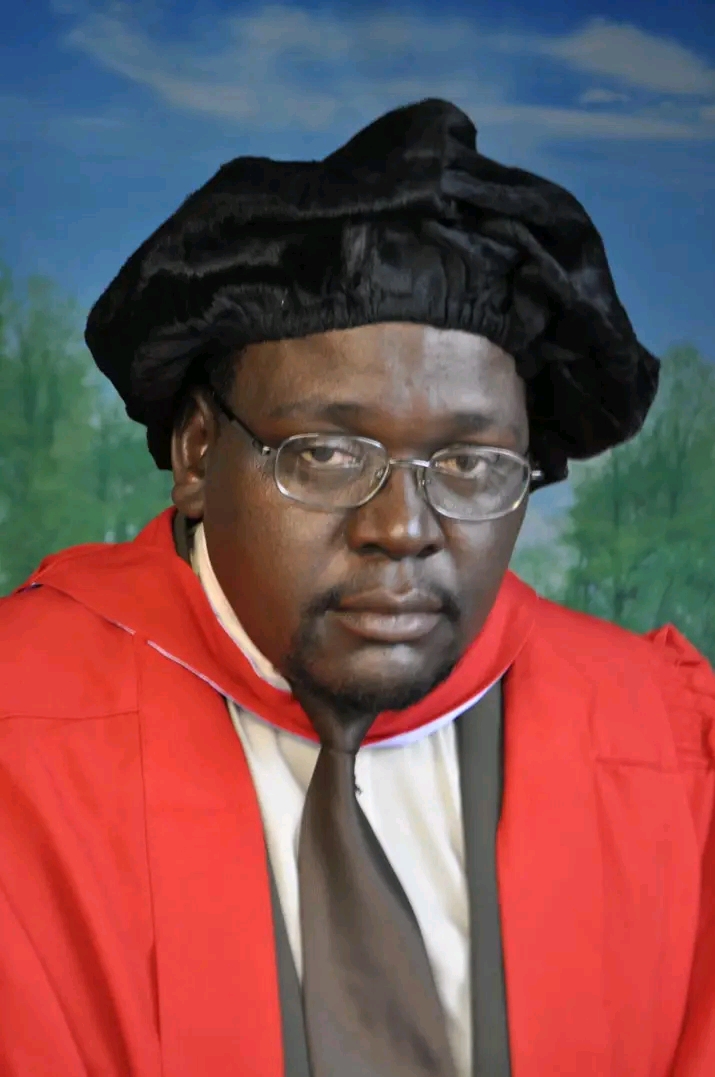
HARARE– Progressive Teachers Union of Zimbabwe (PTUZ) president Dr Takavafira M. Zhou (pictured) has criticised the 2027 National Budget presented by Finance Minister Professor Mthuli Ncube, describing it as an austerity-driven economic prescription that could worsen the hardships facing workers and the general population.
In a statement dated 20 November 2026, Zhou described the budget as “a high-sounding nothing”, arguing that its allocations to critical sectors such as education, health and agriculture fall short of internationally recognised funding benchmarks.
He noted that the Ministry of Primary and Secondary Education received ZiG47.7 billion out of the ZiG358.3 billion national budget, representing 13.3 percent of total expenditure.
Health received ZiG35.5 billion, equivalent to 9.9 percent, while Agriculture was allocated ZiG27.6 billion, representing 7.7 percent.
Zhou said the allocations were below the commitments under the Dakar Framework, Abuja Declaration and Maputo Declaration, which set benchmarks of 20 percent for education, 15 percent for health and 10 percent for agriculture, respectively.
He further argued that education funding remained inadequate when measured against global best practice, which recommends allocating six percent of Gross Domestic Product to education.
“Worse still, actual disbursements have historically hovered just above 50 percent of approved budget,” he said.
Turning to teachers’ welfare, Zhou said the budget failed to adequately address the financial challenges facing civil servants, particularly teachers, who he said last received a salary increase of US$20 in 2024.
He maintained that teachers deserved salaries above the Poverty Datum Line (PDL), proposing a basic salary of US$540, a 30 percent rural and hardship allowance, housing allowances of between US$250 and US$300, a monthly transport allowance of US$120 and an education allowance of US$100.
He also called for the recognition and payment of additional professional allowances, including class teacher, bloated class, composite class, head of department and Early Childhood Development allowances.
Zhou also criticised the US$150 tax-free threshold, saying teachers had anticipated an increase to US$400.
He questioned what he described as disparities in the tax burden between ordinary workers and other economic sectors, arguing that employees faced taxes of up to 45 percent while some mining players paid as little as five percent.
The PTUZ president further warned that the numerous taxes imposed on the population, coupled with anticipated increases in electricity tariffs arising from investments in power generation, renewable energy and regional transmission infrastructure, could place additional pressure on already struggling households.
On tax compliance measures, Zhou said Treasury’s introduction of enforcement mechanisms, including a US$500,000 VAT surcharge, property caveats and stricter border valuations, risked placing additional pressure on struggling small and medium enterprises.
He warned that the measures could push more businesses into the informal sector rather than supporting their growth and formalisation.
“Cumulatively, it is callous and will promote industrial disharmony and limited productivity,” Zhou said.
He argued that the 2027 Budget was characterised by funding shortfalls, punitive tax compliance measures and skewed sectoral priorities, which he said reflected a neo-liberal economic approach that could undermine workers’ welfare and economic productivity.