
By Bigboy Madzivanzira
HARARE- The Minister of Local Government and Public Works, Hon. Daniel Garwe, has directed that all vendors vacate undesignated areas in Harare by September 9, 2026.
For many families in Harare, and for rural families in provinces like Mashonaland East and Central whose children vend here, the directive raises an urgent question: if they return to villages, will there be farms and opportunities to receive them?
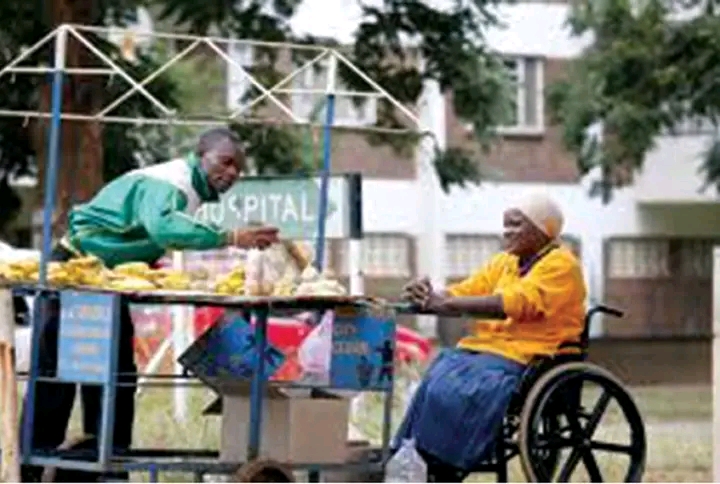
For persons with disabilities who vend in Harare, there is an additional question: will the new designated areas be accessible?
Over the last 3 years, two main pathways have drawn rural youth away from agriculture into Harare. One leads to artisanal mining. The other leads to vending on Harare streets. Both have contributed to fewer young people working family land.
Pathway 1: Artisanal Mining
“School haitipe mari. Asi pano kana ukawana chitako unogona kutenga mbatya,” says Tafadzwa, 15, who left school in Grade 7. He now works at a mine shaft on the outskirts of Harare before coming to vend in the city.
Pathway 2: Urban Vending
Other youth, including many persons with disabilities, came to Harare to sell airtime, vegetables, and second-hand goods. For some with disabilities, vending in the CBD is one of the few livelihood options available.
“KuHarare kunyangwe ukatengesa chete unowana $5 pazuva. Kumba munda haupe chinhu,” says Rumbidzai, 16, who came from Mt Darwin last year.
With the September 9 deadline approaching, many such vendors may have to reconsider their livelihoods.
The Challenge: Empty Fields, Limited Options
The outcome of both pathways is visible:
1. Reduced agricultural production – Fields in rural areas are lying fallow while Harare imports vegetables
2. School disruption – Lower attendance in rural schools during peak mining and vending periods
3. Skills gap – A generation with limited training in modern agriculture
4. Pressure on vulnerable households – Families, including those with persons with disabilities, may have to support returning members without additional resources
A Special Category: Persons with Disabilities
It is important to remember that among Harare vendors are persons with disabilities. For many, vending provides independence and income.
As Harare plans designated trading areas, key questions arise:
Will the new spaces have accessible toilets, ramps, and entrances?
Will transport to the new markets be affordable and accessible?
Will support packages consider the specific needs of vendors with disabilities?
Without these considerations, we risk excluding a group that already faces barriers to employment.
Lessons in Planning
Zimbabweans will recall the 2005 urban clean-up exercise. At the time, partners noted that relocations without alternative livelihoods and accessible infrastructure created challenges, particularly for vulnerable groups.
Minister Garwe has indicated commitment to restoring order in Harare. Inclusive planning will ensure the directive achieves its goals without leaving vulnerable groups behind.
What Can Help: An Inclusive 4-Point Approach
To make the September 9 transition work for everyone in Harare:
1. Accessible Designated Trading Spaces – Markets with ramps, accessible toilets, wide entrances, and safe pathways
2. Rural Support Packages- Targeted inputs and assistive resources for families receiving members back to rural provinces
3. Youth Agri-Business- Training and finance adapted to different abilities so agriculture becomes viable
4. Consultation- Involve vendor associations and organizations of persons with disabilities in planning the new spaces
The CAN (CBR) Africa Network Zimbabwe Representative, Bigboy Madzivanzira, says: “We support efforts by Minister Garwe to bring order to Harare and boost agriculture. But planning must be inclusive. Let us ensure designated areas are accessible and that no one, especially persons with disabilities, are left behind.”
As one elder noted: “Takasiya munda kuti tiwane mari muguta nekumugodhi. Zvino ngatidzosei vana nekupa munda simba.”
We left the land to get money in town and mines. Now let us bring back the children by empowering the land.
With days to the September 9 deadline, the focus must shift from removal to inclusive preparation. That way, we build productive villages and a Harare that works for all.
ABOUT THE AUTHOR:
Bigboy Madzivanzira is a multi-faceted Medical Rehabilitation Practitioner, and a registered Health Promotion Practitioner with the Allied Health Professions Council of Zimbabwe. He is the Founder and Director of Health Promotion Clinic Trust, and the CAN (CBR) Africa Network Zimbabwe Representative. He is an Accredited Freelance Journalist with the Zimbabwe Media Commission. Bigboy writes on Public Health, Disability and Social Justice.
He can be contacted on 0773 367 913 or email him on healthpromotionclinic@gmail.com.