
By Desire Tshuma
Zimbabwe’s post-2017 political landscape has been marked by dramatic transitions, contested elections, party fractures, natural disasters, constitutional battles and the emergence of new political actors.
From the fall of Robert Mugabe to the latest battles over Constitutional Amendment No. 3, the country has witnessed a series of events that have repeatedly reshaped its political terrain.
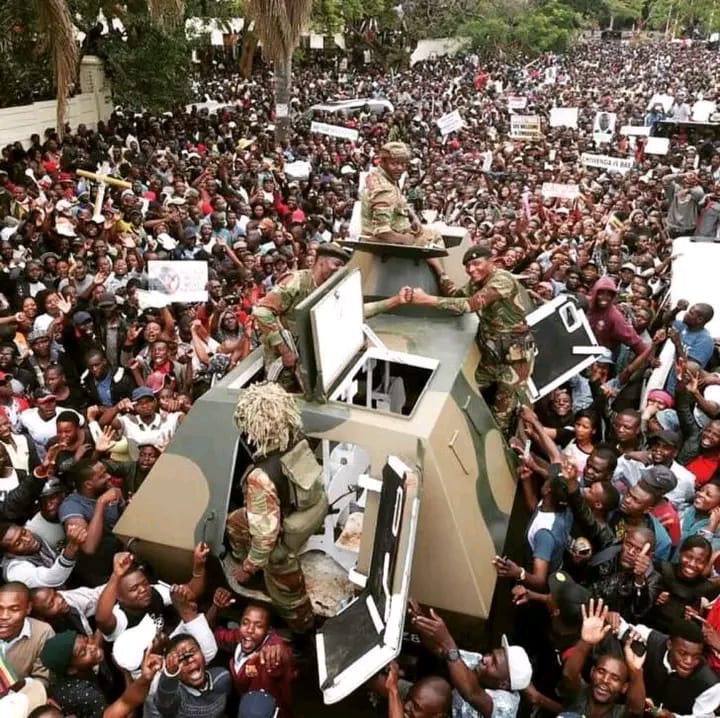
The period began with the dramatic events of November 2017, when the military intervened following growing tensions within Zanu PF, eventually leading to Robert Mugabe’s resignation and Emmerson Mnangagwa’s rise to the presidency. Government subsequently described the new era as the “Second Republic.”
The transition was followed by the 2018 elections, the first general election after Mugabe’s departure. Mnangagwa narrowly defeated MDC Alliance leader Nelson Chamisa in a contest whose aftermath was overshadowed by the deadly August 1 shootings in Harare.
The violence resulted in the deployment of soldiers in the capital and became one of the defining controversies of the post-Mugabe transition. The Motlanthe Commission, established to investigate the killings, later examined the events and recommended accountability for those responsible.
Zimbabwe’s opposition politics subsequently entered another turbulent chapter. Internal struggles within the MDC, including the battle over Harvest House and the succession disputes that followed the death of Morgan Tsvangirai, elevated Thokozani Khupe and later Douglas Mwonzora into central figures in the opposition’s leadership struggles.
At the same time, Zimbabwe was confronted by one of the worst natural disasters in its recent history. Cyclone Idai devastated parts of Manicaland, particularly Chimanimani and Chipinge, leaving communities battling deaths, destruction and displacement.
Then came COVID-19. The pandemic introduced unprecedented restrictions on movement, business and public gatherings, while the government implemented lockdown measures to contain the virus. For ordinary Zimbabweans, the period became synonymous with uncertainty, economic hardship and loss of lives.
By 2022, a new opposition formation, the Citizens Coalition for Change (CCC), had emerged under Chamisa. The party generated enormous public interest ahead of the 2023 elections, campaigning on a platform that sought to challenge Zanu PF’s dominance.
But the 2023 election period opened another chapter of controversy. The SADC Election Observer Mission raised concerns about aspects of the electoral process, triggering debate both inside and outside Zimbabwe over the credibility and conduct of the polls.
After the election, the CCC descended into an unprecedented internal crisis. Sengezo Tshabangu emerged claiming to be the party’s secretary-general and began recalling opposition legislators and councillors. The recalls triggered a political earthquake within the CCC and contributed to the collapse of the opposition structure that had been built around Chamisa.
Chamisa eventually quit the CCC, leaving Zimbabwe’s opposition landscape fragmented and creating space for a new generation of political actors.
The post-2023 period has also witnessed the rise of figures and movements outside the traditional opposition-versus-ruling-party framework. Among them has been Blessed Geza, whose increasingly outspoken political interventions attracted significant attention before his disappearance from the political spotlight.
The period also saw the emergence of what critics and commentators have described as “Zviganandas” — a new political vocabulary used to describe individuals or movements accused of exploiting political divisions and public frustration.
Other developments, including the reported death of political activist Linda Masarira, arrests involving opposition and political activists, and the emergence of figures such as Cde Knox, have added further intrigue to Zimbabwe’s evolving political narrative.
But perhaps the most consequential political and constitutional battle of 2026 has been the saga surrounding Constitutional Amendment No. 3 — commonly known as CAB3. The legislation became one of the most fiercely contested constitutional initiatives of the Second Republic. Parliament eventually approved the Bill after heated debate, with the National Assembly adopting Senate amendments by 226 votes to 41 before it was sent to President Mnangagwa for assent.
CAB3 subsequently became law as the Constitution of Zimbabwe Amendment (No. 3) Act, 2026, published on July 7. Among its major changes are provisions affecting electoral administration, the composition of the Senate and the tenure of public institutions. The Senate was expanded from 80 to 90 members, including 10 presidentially appointed senators selected on the basis of professional skills and competencies.
The legislation has continued to generate political debate, particularly around the new Senate appointments and the identities of those selected. For some activists and political campaigners, the CAB3 saga has also raised difficult questions about political loyalty, expectations and rewards within Zimbabwean politics, particularly where individuals who campaigned for or defended the legislation subsequently found themselves outside the final list of presidential appointees.
And while the political class has been consumed by constitutional battles, Zimbabwe has also experienced another national trauma — the Lake Kariba ferry disaster. The tragedy, involving an overloaded government-operated ferry, became the country’s deadliest transport disaster after the death toll rose into the 90s. Reuters reported that the vessel was carrying about 180 people against a stated capacity of 90, while 77 people were rescued.
The disaster once again placed questions of governance, public safety, accountability and institutional responsibility at the centre of national debate.
From the dramatic departure of Mugabe in 2017, the contested 2018 election and August 1 shootings, the fragmentation of opposition politics, the 2023 electoral controversy, the Tshabangu recalls, Chamisa’s departure from the CCC, the rise and fall of new political figures, to CAB3 and the Kariba tragedy, Zimbabwe’s political story has been anything but predictable.
The events of the past nine years reveal a country undergoing continuous political transformation — where alliances can collapse overnight, new movements can emerge unexpectedly and constitutional changes can redefine the political rules of the game.
As Zimbabwe moves deeper into the Second Republic, the biggest question may no longer be what the next political shock will be, but how the country’s institutions, political parties and citizens will respond when it arrives.