
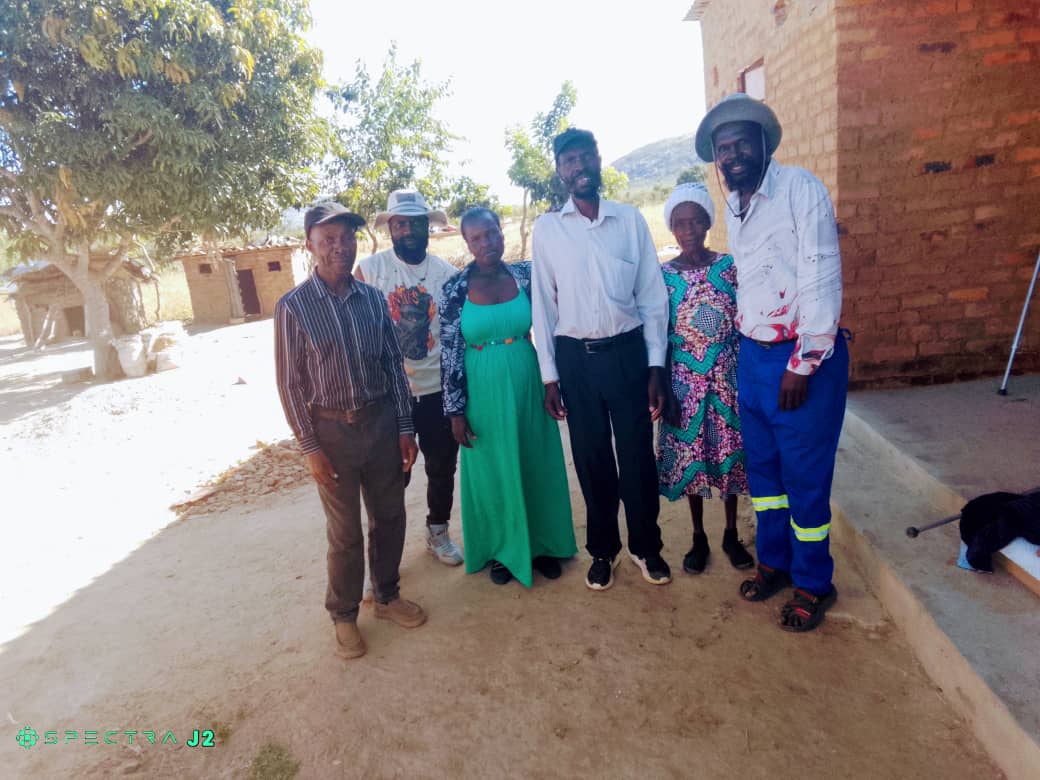
….HPCT follow-up visit at Nyarikunda, Madziva
By Bigboy Madzivanzira, Founder & Director, Health Promotion Clinic Trust Zimbabwe
Community Based Rehabilitation works because the real change happens at home.
When services are brought to the person’s doorstep, rehabilitation stops being something done _to_ someone in a clinic. It becomes something done _with_ the person, supported by family and community, in the environment where they actually live. That’s where mobility turns into independence, and independence turns into belonging.
At Health Promotion Clinic Trust, our CBR programme is built on that principle. The right assistive technology opens the door. Community support keeps it open.
The case of Mathew Date
Mathew Date of Nyarikunda, Madziva, was measured for a prosthesis right in his home through Health Promotion Clinic Trust’s Community Based Rehabilitation Programme. Bringing the service to his doorstep removed transport and cost barriers that often stop people in rural areas from accessing assistive devices.
The fitting followed proper assessment, casting, alignment and gait training, all done in his home. But the real change happened at home. His wife was very excited with the progress and played an active role in supporting him with donning, skin checks, and safe walking practice. Neighbors and community members adjusted expectations and encouraged independence rather than dependence.
On 15 May 2026, Bigboy Madzivanzira of Health Promotion Clinic Trust made a follow-up visit to check fit, function, and community support.
Mr. Date said, “I was sidelined in most social events because of my using crutches. Now that I am walking independently, I won’t be left behind.”
Today, Mathew is walking independently without the aid of crutches.This is Community Based Rehabilitation in practice: services brought to the person, supported by family and community, so no one has to leave home to regain mobility and dignity.
Why community support matters
1. Adherence and maintenance: Devices are only useful if worn and cared for. Families and caregivers are the first line of support for cleaning, checking for sores, and encouraging daily use.
2. Context matters: A wheelchair that works in a clinic hallway can fail on a dirt path. Community members help adapt environments, identify barriers, and find practical solutions.
3. Addressing stigma: Attitudes change faster when community members see neighbors with disabilities working, attending meetings, and participating. Participation normalizes disability.
4. Sustainability: HPCT cannot be in every home every day. Trained community volunteers, family members, and local structures carry the work forward between clinic visits.
Why assistive technology matters
Without appropriate assistive devices, rehabilitation stops at advice. A well-fitted prosthesis, wheelchair, hearing aid, or mobility aid translates therapy into function. It allows a person to farm, attend school, travel to market, and engage in community life.
But technology without training, follow-up, and community buy-in often ends up unused. That’s why HPCT’s CBR model links device provision to home visits, caregiver training, and community sensitization.
The lesson for partners and funders
If we want assistive technology to deliver impact, we must fund the “soft” side too: community health workers, volunteer training, peer support, and sensitization. Devices get photos. Community support gets results that last.
“Strong communities are the foundation of CBR,” said Madzivanzira. “When families and neighbors own the process, people with disabilities stop waiting for help and start leading change.”
About the Author
Bigboy Madzivanzira is Founder and Director of Health Promotion Clinic Trust Zimbabwe. He is a registered Medical Rehabilitation Practitioner, an Accredited Wheelchair and Supportive Seating Practitioner, and a member of the Community Based Rehabilitation Africa Network (CAN).
Contact: 0773367913