
By Desire Tshuma
CHIPINGE — They had lived there for more than 30 years, built brick homes with their life savings, buried their dead in the soil and raised their children under the same roofs. Then, in a single morning, the bulldozers came.
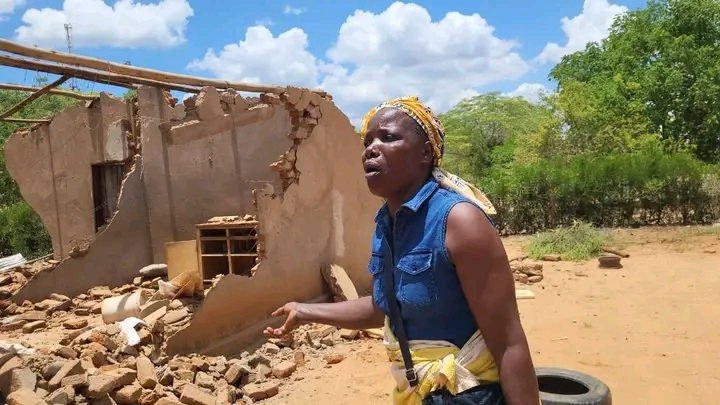
On 10 November 2026, enforcement teams from Chipinge Rural District Council rolled into Munyokowere Village in Chipangayi and began flattening homes. Within days, about 100 homesteads lay in rubble, the village head was in a police cell, and 750 families were left wondering if they would be next.
What followed was not just grief. It was a war of explanations. Was this the enforcement of a 7-year-old court battle, Case No. HC 154/20, as some now claim? Was it Operation Chenesa, the government’s nationwide clean-up, as others insist? Or was it both, tangled together by planning laws, politics and a community caught in the middle?
One version, shared widely on social media, insists the demolitions have nothing to do with Operation Chenesa and emanate solely from a 7-year legal battle, Case No. HC 154/20, involving the Chipinge Rural District Council against alleged land barons and villagers who reportedly invaded the Council’s planned land.
The other version, carried by other news reports and by villagers themselves, says the demolitions were carried out by Chipinge Rural District Council under Operation Chenesa, the government’s nationwide clean-up programme.
What the available records show is more complex than either single claim, and the history of Munyokowere goes back much further than this week.
Munyokowere, in Chipangayi area, Middle Sabi, Ward 5, is home to families who say they have lived there since the early 1990s. Community groups say the first batch of resettled villagers amounted to 39 families and the number has since grown to about 750 families. Residents say they settled on the land after receiving allocations from Village Head Munyokowere and invested their life savings in building homes and businesses.
The dispute over that land has repeatedly reached the courts. On 29 April 2019, villagers were served with eviction notices by the Ministry of Lands, Agriculture, Water, Climate and Rural Resettlement, giving at least 750 villagers seven days to vacate land they had occupied since the early 1990s.
Case No. HC 154/20 is real, and it is central to the current argument. But documents circulating online suggest it was not a case brought by the Council against land barons. A copy of the order, dated Mutare, 24 July 2020 and stamped by the Registrar on 13 August 2020, lists applicants Hardlife Dhlakama, Purpose Sithole, Charlse Sithole, Maxwell Munyokowere and Elizabeth Mukalela, versus respondents including Chipinge Rural District Council and several ministers. The order prohibited the respondents from evicting the applicants and their families from Munyokowere Village without a valid court order or due process.
That matches contemporary reporting from July 2020. High Court Judge Justice Mwayera barred Chipinge Rural District Council from evicting 750 families from Munyokowere Village following an urgent application to stop the move. The order read in part: “Respondents are hereby interdicted from evicting applicants and demolishing their homes in Munyokowere Village. Respondents are hereby interdicted from threatening or harassing applicants.” The judge granted the order after establishing that the respondents were trying to carry out their mission without a valid court order. Villagers maintain that 2020 order protects their settlements, and they insist it has never been legally challenged.
When enforcement teams from Chipinge Rural District Council arrived in Munyokowere on 10 November 2026 carrying eviction notices, they met a community that had spent years resisting displacement. Within days, their traditional leader, Pardon Maunganidze, was in a police cell. Bulldozers had flattened about 100 homesteads, among them his own. Other reports put the figure at more than 100 structures reduced to rubble, with over 1,000 households now facing eviction in Chipinge.
Maunganidze, 39, was reportedly accused of mobilising villagers against the demolitions. The bulldozers followed. Among the homes destroyed were those of Maunganidze and of Hardlife Dhlakama, the lead applicant in the court proceedings that produced the 2020 order. Maunganidze spent two nights at Chipangayi Police Station before he appeared at Chipinge Magistrates Court, represented by Zimbabwe Lawyers for Human Rights. He faces a charge of vandalism relating to the bulldozers, which he denies. He was remanded out of custody to 25 November. The 100 homesteads already destroyed may be only the beginning. About 750 households in Munyokowere are reportedly still under threat, many of them headed by women.
Operation Chenesa, which means clean up in Shona, was launched on 9 September by Local Government and Public Works Minister Daniel Garwe and Harare Mayor Jacob Mafume. Government says the programme is being implemented across all 92 local authorities to enforce municipal by-laws, remove unauthorised structures and restore order in urban areas. By 12 November, Garwe said 35,365 illegal business operations had been affected, 16,529 structures had been dismantled, while 1,446 arrests had been made.
Garwe has insisted the Government is not targeting people’s homes under Operation Chenesa, saying there is no government law providing for the demolition of houses. He said: “There is no government law that says houses should be demolished. We are actually protecting citizens from demolitions.”
But reports from Chipinge directly link the local demolitions to that operation. One report states the demolitions are part of Operation Chenesa, which is now sweeping through Chipinge District. Another states the demolitions were carried out by Chipinge Rural District Council under the government’s Operation Chenesa/Hlanzeka. Council authorities, for their part, defend the demolitions as enforcement of the Regional, Town and Country Planning Act, arguing the structures were illegally built on planned land.
That defence is now facing a constitutional test. Section 74 of the Constitution protects people from arbitrary eviction and prohibits the demolition of homes without a court order made after considering all relevant circumstances. A recent Constitutional Court ruling has also confirmed that local authorities must obtain a court order before demolishing any structure, allowing affected homeowners to challenge such actions in court.
Beyond the legal argument over HC 154/20 and Operation Chenesa, there is agreement on one point: the community needs help. Videos shared from Munyokowere on 12 November show a yellow backhoe loader tearing down structures while villagers, primarily women, watch and wail. Other footage shows a yellow motor grader marked Chipinge RDC demolishing a small mud-brick structure as adults and children in school uniforms watch from under a tree. Commenters have repeatedly contrasted that footage with Garwe’s statements claiming no demolitions were occurring, using the video as proof to the contrary.
Human rights groups, churches, community organisations and concerned residents are calling upon the Ministry of Local Government and Public Works, Parliament, the Zimbabwe Human Rights Commission and humanitarian agencies to urgently intervene.
Political activism and hatred of rivals should never be allowed to crowd reasoning as a people. Objectivity should always lead. This community needs genuine humanitarian assistance. In that regard, there is also a need to respect independent court processes and equally pay attention to human societal needs in such crucial times.
For now, the key questions remain unanswered: Was there a fresh, valid court order authorising the November demolitions, and if so, how does it relate to the 2020 interdict in HC 154/20? Until the Council and the courts produce that order, the dispute over whether this was Chenesa, HC 154/20, or both, will continue.