
By Desire Tshuma
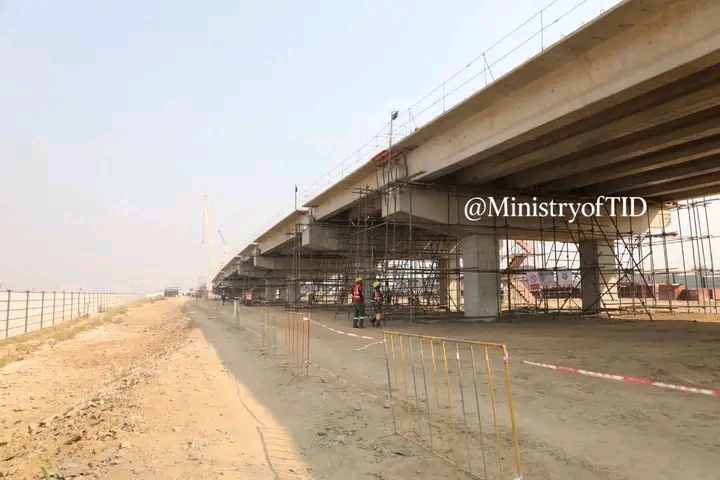
HARARE — Premier Rocks will hand over the completed Mabvuku Interchange to the Ministry of Transport and Infrastructural Development by the end of November, clearing one of Harare’s worst congestion points on the Harare-Mutare corridor.
Project manager Brighton Mashonganyika said construction was on schedule and nearing completion.
“The work is almost complete. We are expecting that by the end of next month, all the works would have been completed and we would have handed over to the Ministry of Transport, who is our client,” Mashonganyika said.
The Mabvuku Interchange is part of a broader programme that also includes the Masasa Interchange and the Delport Road trumpet interchange, designed to separate competing streams of traffic between Harare and Mutare.
“We expect to be done with the piling within the next two weeks. After that, we are going to move our equipment so that we can start the trumpet interchange for Delport Road, alongside the continuation of the Delport Road works,” Mashonganyika said.
He said the interchanges were developed in collaboration with the Ministry of Transport to address congestion caused by increasing traffic volumes on the eastern approaches.
“Because of the congestion of traffic coming from Harare and also Mutare, there was a need to separate traffic. So, we did that with the Ministry of Transport by doing this Mabvuku Interchange and also the Delport Interchange, which is next to this one,” he said.
Despite progress, the contractor faced logistical challenges importing specialised equipment, with delays at border posts occasionally affecting delivery.
“We have had challenges because of minor delays in importing equipment. Sometimes capacity at the border post can be overwhelmed, and that has caused delays in bringing in equipment,” he said.
“But we have managed to stick to the timelines that we alluded to when we started the project.”
He expressed confidence that with most equipment now available, the remaining projects would also be completed on time.
“With most of the equipment that we wanted to import now available, it means that for the next bridges that are going to come, we expect to be on point and to finish everything in time as well,” Mashonganyika said.