
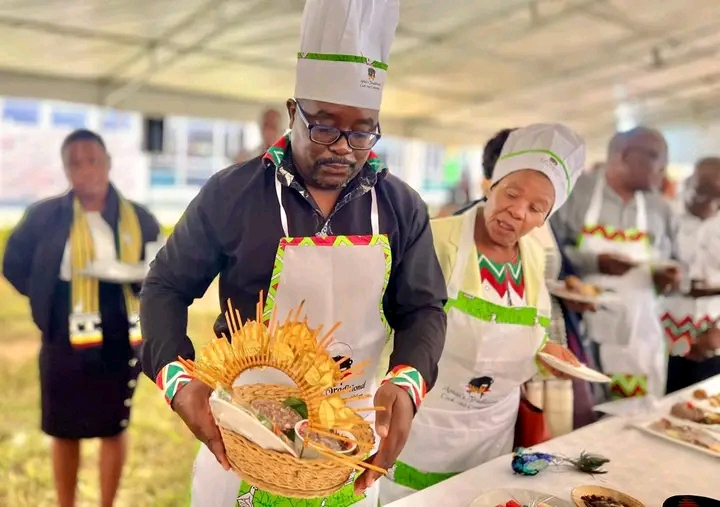
The aroma of traditional recipes, the vibrant colours of cultural attire, and the infectious energy of a nation celebrating its identity filled the United College of Education in Bulawayo yesterday as the 2026 edition of Amai’s Traditional Cookout Competition brought together communities, culinary talent, and tourism stakeholders in a spectacular affirmation of Zimbabwe’s rich heritage.
More than a cooking competition, the event was a declaration that Zimbabwe’s culinary traditions are not relics of the past but living, breathing assets capable of driving economic growth, strengthening communities, and positioning the country as a world-class gastronomy tourism destination.
The competition, held under the patronage of the Tourism and Hospitality Industry, Her Excellency the First Lady Dr Auxillia Mnangagwa, has grown far beyond its origins into a nationwide movement that is reshaping how Zimbabwe thinks about food, culture and tourism.
What began as an initiative to celebrate traditional cooking has evolved into a powerful platform that is visibly transforming the country’s tourism landscape.
Deputy Minister of Tourism and Hospitality Industry, Hon. Tongai Mafidi Mnangagwa, who officiated at the event, was fulsome in his praise of the First Lady’s role in driving this transformation.
Her vision, he noted, has ignited both domestic and international tourism interest, inspiring a surge in restaurants and traditional food outlets across the country – businesses that not only celebrate Zimbabwe’s diverse culinary heritage but create livelihoods and economic opportunity in communities from Beitbridge to Kariba.
“Tourism is a key driver of GDP and community empowerment,” the Deputy Minister affirmed, underscoring the government’s recognition that culture and cuisine are not peripheral to economic development but central to it.
The significance of the cookout competition extends well beyond the recipes on display. It represents Zimbabwe actively reclaiming its culinary narrative, stepping forward to tell its own food story on its own terms, to its own people and to the world.
Gastronomy tourism is one of the fastest-growing segments of the global travel industry. Travellers increasingly seek authentic, immersive cultural experiences, and food is often the most direct and memorable pathway into a culture’s identity.
By investing in and showcasing its traditional cuisine, Zimbabwe is diversifying its tourism offering and building a product that is genuinely unique, rooted in the flavours, techniques and communal traditions that no other country can replicate.
This aligns squarely with His Excellency President Cde. Dr. E. D. Mnangagwa’s Vision 2030, which places inclusive growth and the broadening of economic participation at its core.
The cookout competition embodies that vision in a tangible way, drawing local farmers, food producers, hospitality entrepreneurs and community members into a shared value chain that benefits everyone involved.
The event also drew the attention of Zimbabwe’s legislature, with Hon. Joana Mamombe, Member of Parliament for Harare West and Chairperson of the Parliamentary Portfolio Committee on Tourism and Hospitality Industry, offering a thoughtful and balanced assessment of the programme’s impact and potential.
Hon. Mamombe was unambiguous in her praise. The cookout competitions, she said, have played a genuinely positive role in promoting Zimbabwe as both a cultural and gastronomic destination, bringing communities into the tourism value chain and supporting domestic tourism and cultural preservation.
“It supports domestic tourism, cultural preservation and aligns well with efforts to diversify our tourism product beyond traditional attractions like Victoria Falls,” she said, acknowledging that for too long Zimbabwe’s tourism identity has rested on a narrow set of well-known drawcards, while the richness of its cultural offerings has gone underutilised.
But Hon. Mamombe also brought the measured perspective of parliamentary oversight to the occasion.
While commending the Ministry for the initiative, she issued a clear call for the programme to deepen its impact beyond the events themselves to translate the energy of the competitions into lasting, measurable economic benefit for local communities and small businesses.
“We need stronger linkages to markets, skills development and consistent evaluation,” she said.
“The programme can deliver even greater long-term impact.”
It was a constructive challenge, not a criticism of what has been achieved, but a vision of what more is possible when good intentions are matched with rigorous follow-through.
What made the 2026 Amai’s Traditional Cookout Competition in Bulawayo so compelling was not any single dish or any single moment, but the cumulative effect of seeing a nation engage joyfully and proudly with its own identity.
Contestants brought recipes passed down through generations. Audiences tasted flavours that told stories of land, seasons, family and community.
Officials and legislators spoke of tourism, GDP and value chains, but they did so in the context of something fundamentally human: the act of sharing food.
Zimbabwe’s culinary heritage is as diverse as its people, from the sadza and muriwo of the Shona heartland to the amasi and nyama traditions of Matebeleland, from the seasonal wild harvests of rural communities to the sophisticated interpretations emerging from a new generation of chefs and restaurateurs inspired by their grandmothers’ kitchens. The cookout competition is giving all of that a stage.
As the competition continues its national rotation through Zimbabwe’s provinces, the challenge now is to build on the momentum.
The infrastructure of gastronomy tourism: the restaurants, food tours, culinary festivals, producer networks and skills programmes that turn a cooking competition into an industry, requires sustained investment and coordination.
The Parliamentary Portfolio Committee’s call for stronger market linkages and consistent programme evaluation is not a bureaucratic formality; it is the roadmap to turning a brilliant initiative into a permanent pillar of Zimbabwe’s tourism economy.
The First Lady’s vision has lit the fire. The Deputy Minister’s affirmation has given it official weight. Parliament has pointed the way forward. Now it falls to the industry, the communities and the government to fan those flames into something enduring.
Zimbabwe has always known how to feed its people. It is now learning, with growing confidence and well-deserved pride, how to feed the world’s curiosity about who it is.
Sipkedmedia