
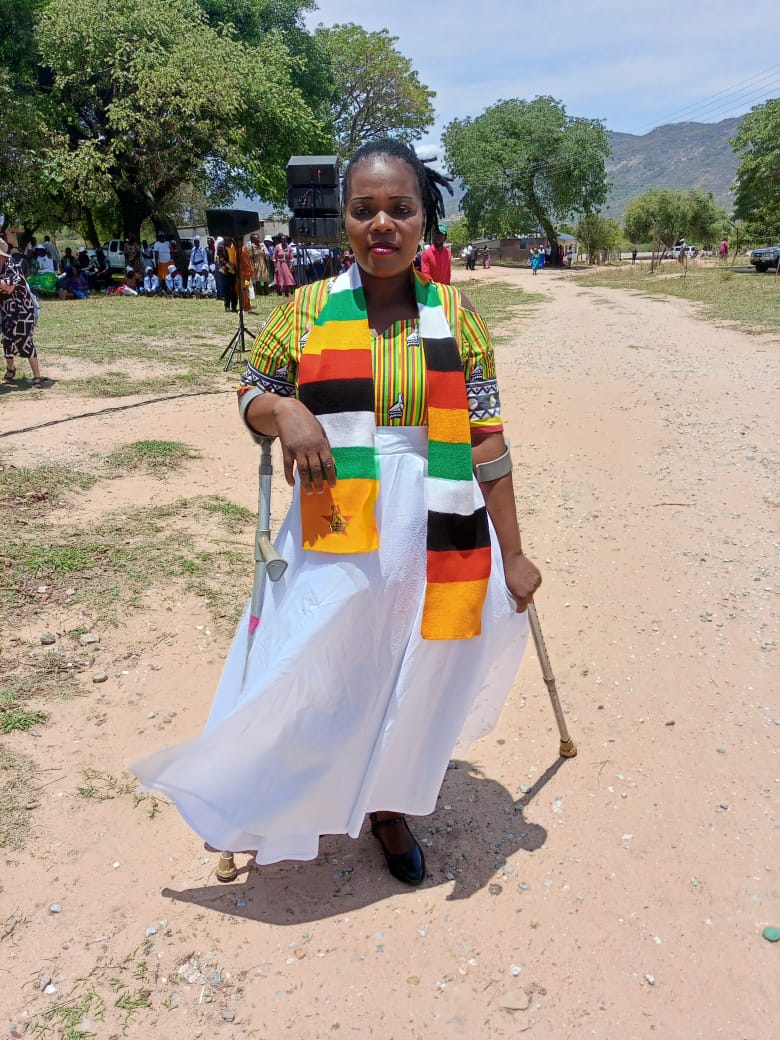
……Emily Muchaembera; PWDS4ED Provincial Chairperson for Manicaland
By Desire Tshuma
Harare — When President Emmerson Mnangagwa pledged that “no one and no place” would be left behind, the disability community took it literally.
Soon after, PWDs4ED formed as a Zanu PF affiliate and began turning that promise into structures, slogans, and street-level turnout—from record disability voting in 2023 under the motto “There is no Vote X” to provincial campaigns backing Vision 2030, Amendment Bill No. 3, and anti-sanctions messaging. Today the group has chapters in all ten provinces, databases down to districts, and a public presence at rallies, hearings, and press conferences alongside party leaders.
But mobilisation has outpaced material support, leaders say. The gap—mobility, capital, housing, and representation—shapes everyday politics for members living in remote villages or peripheral settlements where rent is cheap and buses scarce. Manicaland provincial chairperson Emily Muchaembera put the case in plain terms.
“We mobilised for the vote and we mobilised for Vision 2030,” Muchaembera said. “Now we need the means to keep mobilising—vehicles for provincial chairs, projects tied to our training, and disability portfolios led by people who live this language every day. If sanctions hurt able-bodied families, they crush ours. If the President’s promise means anything, it must reach doorsteps where we live.”
PWDs4ED points to recent actions—a Kadoma press conference on Amendment Bill No. 3 with members bussed to hearings, and anti-sanctions statements that link national economic pain to disability precarity—as proof of loyalty and capacity. What the affiliate wants next is targeted: empowerment funding that prioritises disability ventures (farming and mining among them), accommodation support to reduce stigma in rentals, and protected slots in government and party structures so disability voices set agendas rather than echo them.
Officials in Zanu PF have welcomed the group’s turnout; the test now, PWDs4ED argues, is whether inclusion moves from symbolic to budgetary. For Muchaembera and her provincial teams, the slogan has a second half they’re determined to see funded: “no one left behind” only works if organisers can reach the last mile.