
By Desire Tshuma
HARARE — Government has moved to shut down claims that Operation Chenesa is demolishing people’s homes, insisting the nationwide clean-up is about restoring order, safety and cleanliness, not destroying houses.
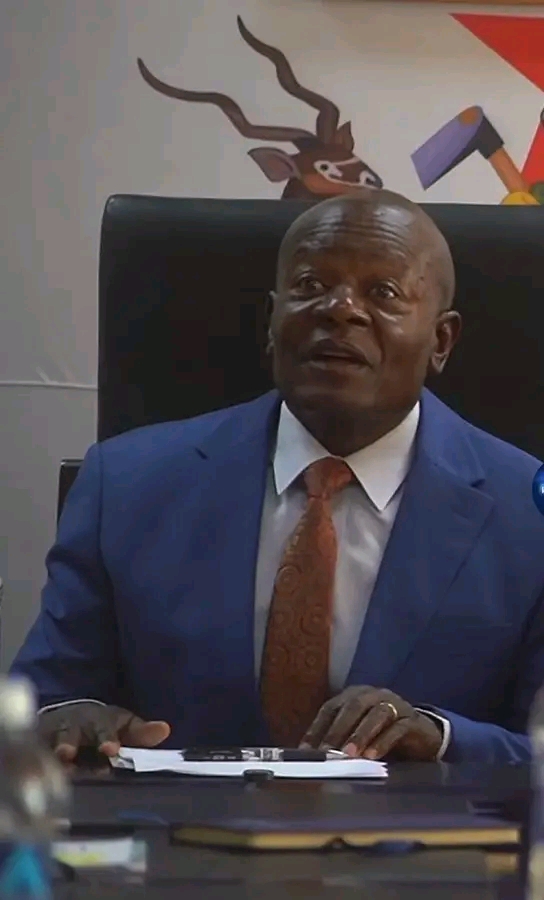
Minister of Local Government and Public Works, Hon Daniel Garwe, said Operation Chenesa is a comprehensive government instrument designed to permanently restore structural sanity, safety, and order across all 92 local authorities.
He said the initiative is being implemented through the Ministry to promote orderliness, cleanliness, and properly designated vending sites through the strict enforcement of local authority by-laws.
Driven entirely by administrative bodies executing their statutory mandates, the operation is focused solely on promoting public health and safety, modernising municipal infrastructure, and providing modern trading markets that meet global standards.
The Minister was emphatic that the programme represents a collective institutional mandate of central government designed strictly to remove disorderliness, and not to demolish people’s homes, contrary to false claims being circulated on social media platforms. He declared any external political framing, individualisation, or partisan interpretation to be completely inaccurate and entirely irrelevant to the government’s objective governance goals.
Government also expressed concern that some council officials are feeding the public wrong information. It noted with serious concern that anyone attempting to cast aspersions on the ongoing clean-up does so out of institutional panic, seeking to mask their own ulterior motives.
“The government will neither be deterred by political opportunism nor allow municipal decay to be weaponized for partisan ends. Anyone found wanting would be dealt with accordingly,” Garwe said.
He said the modernization of cities is an absolute, irreversible ministry mandate, as that speaks to the attainment of an upper middle-income economy by 2030. Those who cast aspersions upon the programme do so out of political opportunism, seeking to create a narrative that seeks to blame the government.
Whilst the clean-up operation has been largely successful, focus is now on the provision of vending sites in all the 2500 wards countrywide. The existing dilapidated markets will be renovated as a matter of urgency, the Minister said, adding that government will therefore not allow municipal decay to be weaponized for political grandstanding.
To demonstrate the momentum of the initiative, government released figures compiled since the inception of the programme. A cumulative 35,365 illegal businesses and activities have been impacted countrywide since the commencement of the operation. Some 16,529 illegal structures have been systematically dismantled and removed from unauthorized zones. The enforcement operations have also resulted in 1,446 cumulative arrests of non-compliant actors. Compliance enforcement and penalties have yielded fines amounting to US$118,553 and ZAR1,000 collected to date.
During the operation, municipal police also seized hundreds of cartons of illegal drugs and substances, and vast quantities of prescription-only medicines. Notably, several of these contained steroids, posing a grave threat to public health.
Garwe said Operation Chenesa is operating strictly on the principles of absolute civic sanitation, structural legality, and public safety. Its execution is driven by administrative necessity, entirely separate from political alignment or individual actors, and is anchored in the supreme laws of the land.
He cited the Regional, Town and Country Planning Act, which explicitly prohibits development without an authorised permit and mandates the demolition of non-compliant structures, as well as the Rural District Councils Act and the Urban Councils Act, which obligate government to maintain public health, suppress nuisances, and regulate all commercial and residential structures within municipal boundaries.
The elimination of unregulated spaces that harbour drug syndicates is fortified by the Criminal Law (Codification and Reform) Act and public safety regulations, ensuring that illicit hubs threatening national security are completely eradicated, while the Public Health Act gives government an unyielding mandate to remove any unhygienic conditions, overcrowding, or unauthorised habitations that jeopardize the collective well-being of the population.
While current focus centers on developing modern vending facilities, maintaining strict orderliness within the Central Business Districts of all local authorities remains an absolute priority, Garwe said.
He said the regularisation of cities and towns yields undeniable, measurable advantages for the collective good, and that a disciplined urban ecosystem is the foundational prerequisite for attaining Vision 2030.
Removing illegal structures in street pavements prevents the catastrophic collapse of sewer and drainage systems and mitigates the spread of waterborne diseases, thereby fulfilling statutory public health obligations. Replacing informal, untaxed, and chaotic structures with standardized, legal business zones attracts legitimate capital and secures property values. Clearing illegal bottlenecks allows local authorities to streamline roads, drainage, and utility networks to meet modern standards.
Therefore, all local authorities are mandated to establish designated vending zones featuring proper water supply and sanitary infrastructure across their jurisdictions, as required by law.
Meanwhile, the Zimbabwe Human Rights Commission (ZHRC) has called on authorities to arrest land barons to stop the selling of illegal land to desperate home seekers, which often leads to the demolition of such structures by government.
The Commission says tackling the land barons at the source is critical, because home seekers who buy land in good faith end up losing their money and their homes when authorities later demolish structures built on illegal land.
Garwe said the enforcement of urban sanitation is a universal standard of good governance, completely decoupled from political ideology, noting that developed global metropolises have historically utilised aggressive, centralised cleaning initiatives to transition from chaos to world-class status. He pointed to Singapore in the 1960s and 1970s, Rwanda’s Kigali, and New York City in the 1990s as examples of cities that used strict enforcement to restore order and cleanliness.
“Thus, Operation Chenesa is an unyielding, non-negotiable instrument of good governance. All local authorities, residents and stakeholders are advised that the law will be applied uniformly, without sentiment or political detour,” Garwe said.
“We are regularising our environment to align with international standards. Rather than demolishing houses, our focus is entirely on ensuring order and better structures for the vendors themselves.”
He warned that any attempt to obstruct, mischaracterise, or politicise this necessary government function will be met with the full force of administrative and legal authority.