
By Desire Tshuma
Kariba – The capsizing of the Mbuya Nehanda ferry on Lake Kariba has left 97 people confirmed dead and exposed deep cracks in Zimbabwe’s transport and safety systems. As families mourn and recovery efforts continue, calls for accountability are growing.
Former Mt Pleasant MP Fadzayi Mahere is demanding criminal investigations into officials who cleared the ill-fated RIDA-operated vessel to sail, while emerging details about passengers and cargo have raised fresh questions about border control, regulation and the movement of people and goods along Zimbabwe’s remote lakeshore communities.
Mahere has called for officials responsible for certifying the vessel as fit to sail to be investigated and, where negligence is established, prosecuted for culpable homicide.
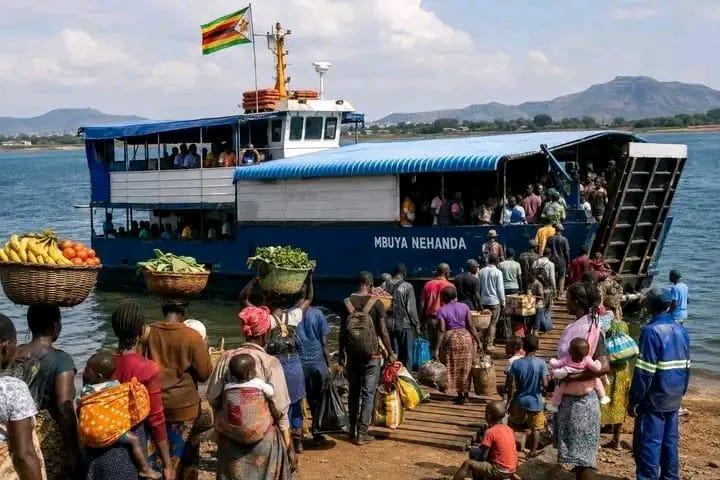
The Mbuya Nehanda capsized on August 11 while travelling from Kariba towards Chalala and other communities along the Lake Kariba shoreline. The confirmed death toll now stands at 97, although the final number of people who were on board remains a subject of investigation.
Preliminary government findings have indicated that the ferry was carrying approximately 180 passengers and assorted goods, significantly above its approved passenger capacity of 90.
Mahere argues that the certification of the vessel must form a central part of the investigation, particularly if evidence shows that safety deficiencies were overlooked.
The disaster has also brought renewed attention to the extraordinary amount and variety of property being transported on the ferry. Reports and accounts surrounding the recovery operation indicate that the vessel was carrying substantial luggage and commercial goods, while livestock and pets were also reportedly among the items being transported.
Among the more disturbing issues emerging from the tragedy are reports that 10 undocumented Somali nationals were travelling on the ferry. If confirmed by authorities, the discovery could raise questions about how passengers were being documented and screened before boarding, as well as whether the ferry route was being exploited for irregular movement of people. The issue should, however, be established through official immigration and police investigations rather than assumptions based solely on the identities or nationality of passengers.
The reported discovery of US$10 000 among the belongings associated with the late captain has also added another layer to the questions surrounding the ill-fated voyage. Investigators will need to establish the source and purpose of the money, as well as determine whether it has any connection to the ferry’s operations.
The reported presence of goats, chickens, dogs, other pets, vehicles and different forms of luggage further illustrates the ferry’s importance as a lifeline for communities scattered along the lake.
For residents of remote areas such as Chalala, the water route is not simply a convenient alternative. It is one of the most practical and affordable ways of reaching communities that are separated from Kariba town by difficult terrain and a severely longer road journey.
The lake crossing dramatically cuts the distance compared with travelling by road, with road travel to some of the communities involving journeys of roughly 400 kilometres. Previous reporting has also documented how isolated lakeshore communities depend heavily on the ferry for food, markets, household supplies and livelihoods. That dependence helps explain why passengers were travelling with large quantities of merchandise and household property.
The tragedy has therefore exposed two sides of the same problem: communities need the ferry because alternative infrastructure is inadequate, yet the very transport system on which they depend appears to have carried passengers and cargo under circumstances that are now facing intense scrutiny.
Mahere has described the victims as ordinary people whose livelihoods depended on the transport link between Kariba town and rural communities. She said many passengers were travelling with goods for resale, with women and children among those on board.
The former legislator argues that the disaster cannot end with mourning and compensation, insisting that investigators must establish whether negligence by officials, operators or regulators contributed to the loss of life.
The questions now facing authorities extend beyond the condition of the ferry itself. Investigators will have to examine the vessel’s certification, passenger manifest, cargo loading, weather warnings, immigration controls, operating procedures and the circumstances under which the ferry was allowed to leave port.
The vessel had reportedly been issued with a certificate of survey in June 2026, despite being more than four decades old. At the same time, preliminary investigations have pointed to serious overloading, with government saying the ferry was carrying about 180 passengers and goods.
These revelations have intensified calls for a comprehensive investigation capable of answering not only why the ferry sank, but also how such a large number of people and such a diverse cargo ended up on a government-operated passenger vessel.
As rescue and recovery operations continue, families are still waiting for the recovery of loved ones.
For the communities along Lake Kariba, the disaster has also raised a painful question about the safety of the only affordable transport link connecting them to the wider economy.
The Mbuya Nehanda tragedy may therefore become more than an inquiry into a single ferry sinking. It could force Zimbabwe to confront weaknesses in maritime safety, public transport, immigration enforcement, cargo controls and the long-standing infrastructure crisis affecting remote lakeshore communities.