
By Bigboy Madzivanzira
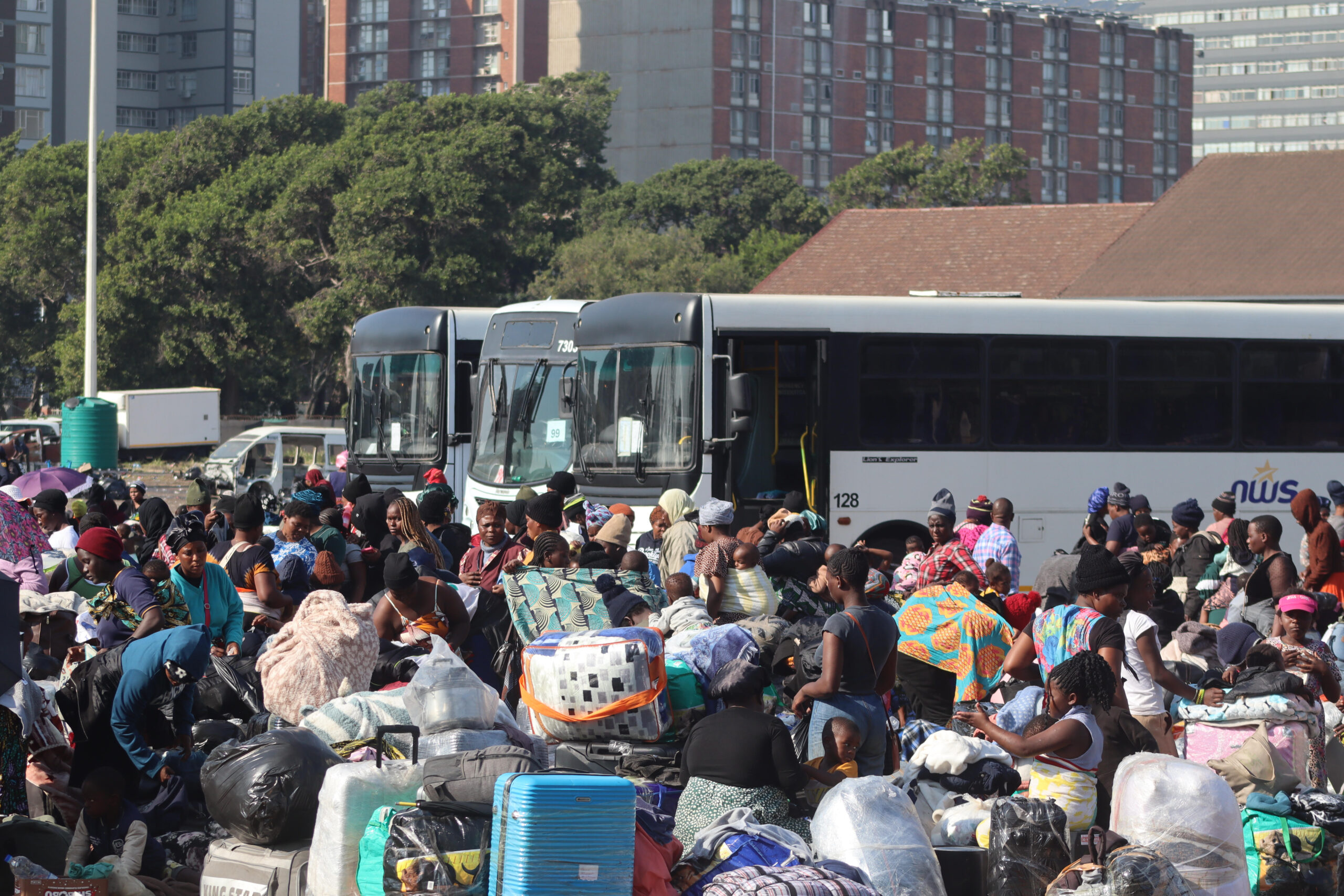
Outside the Zimbabwean Consulate in Cape Town’s District Six, there is one toilet for more than 500 people. Men, women, and children sleep on cardboard with a single bag beside them. They are not tourists. They are Zimbabweans going home, not by choice, but because they are afraid to stay.
This is the human face of the “June 30 deadline”.
Fear, not policy, is driving people out
The deadline was set by anti-migrant groups, not by law. The South African government has said so. But the threats are real. Returnees in Cape Town say they were told: “Leave by 30 June or leave in a coffin.”
“If you are going to the bus, you’re going to carry only one bag. So, it’s like you’re going with nothing,” one returnee told reporters.
Three buses left the Epping Repatriation Centre on Friday morning alone. More will leave before Monday. At the consulate, organisers say the crowd only grows: “as soon as the bus leaves, almost double the amount of people arrive here.”
Families are leaving behind jobs, furniture, rental deposits, and school places. They are leaving dignity at the door.
Who is coming home?
Between 12 and 24 June, authorities processed 1,521 Zimbabwean nationals on 26 buses at Beitbridge. Another group of 65 nationals arrived under a government-assisted programme. In total, more than 8,200 foreign nationals have been processed at the border in less than two weeks.
The numbers don’t tell the full story. Among those returned are 27 visually impaired Zimbabweans with 10 aides and 8 children who were handed to Social Development at Beitbridge for food, shelter and profiling for social protection. IOM’s programme also covers “vulnerable groups, including those with health-related needs”.
But most returnees are not counted by category. At the consulate, mothers carry children on their backs. Children play next to piles of luggage. “One bag only” is the rule, which means wheelchairs, medication, school uniforms, and work tools are often left behind.
“In every crisis, persons with disabilities are the last to be seen and the first to be forgotten,” said Bigboy Madzivanzira, Director of Health Promotion Clinic Trust, Board Chairperson for Disabled Women Support Organisation and Board Secretary of Isheanesu Multiskilled Centre for Children with Disabilities. “When you say ‘one bag only’, you are telling a person in a wheelchair to leave their mobility behind. You are telling a child with epilepsy to leave their medication. We cannot call it a dignified return if we leave the most vulnerable behind.”
“There’s nothing to do in Zimbabwe”
Many returnees say it plainly: they are coming back to an economy with no jobs, no housing plan, and no savings.
“I’ll see what I make of myself in Zimbabwe. I will try to do something to make my life better – maybe I can start farming chickens and start a business,” said one woman who left her TV, bed, fridge and pots behind.
The Government of Zimbabwe, with IOM and partners, is providing meals, onward transport to Harare, Gweru and Mutare, and psychosocial support at the Beitbridge Reception Centre. That is important.
But humanitarian support at the border is not a reintegration plan. For women, girls, and persons with disabilities, the gaps are wider. Special needs children are pulled out of South African schools with no placement here. Medication runs out. Assistive devices are abandoned.
Humanity cannot be the whole plan
NGOs and faith groups in Cape Town are doing heavy lifting with almost no infrastructure. Gift of the Givers is collecting baby items, hygiene products and non-perishable food.
The Ministry of Local Government and Public Works has appealed for support from the private sector, NGOs, churches and development partners to strengthen repatriation and civil protection efforts.
What is needed now:
1. Disability-inclusive reception at Beitbridge, with wheelchairs, medical screening, and referral systems.
2. Fast-tracked reintegration – links to skills programmes, PVOs, and local councils, not just transport home.
3. Accurate information to stop fake “free deportation” messages and ensure people register through the Embassy and Consulates.
South Africa must also remember: many on the buses are mothers, builders, caregivers, and shop workers. Fear is not migration policy.
One bag is too heavy
A person with one bag is a person who has lost a life. We cannot measure this crisis only in bus numbers or border statistics. We must measure it in children sleeping on cold floors, in grandmothers who left medication behind, in men who built a life for 10 years and came home with nothing.
June 30 will pass. The buses will stop. But the people will still be here.
The question for Zimbabwe is simple: When they arrive with one bag, will we have more than one plan for them?
About the Author
Bigboy Madzivanzira is a Health Promotion Practitioner registered with the Allied Health Professions Council of Zimbabwe, a Medical Rehabilitation Practitioner registered with the Medical Rehabilitation Practitioners Council of Zimbabwe, a Family Therapist, Special Needs Educator and a Freelance Journalist accredited with the Zimbabwe Media Commission. He can be contacted on 0773367913 or email: healthpromotionclinic@gmail.com