
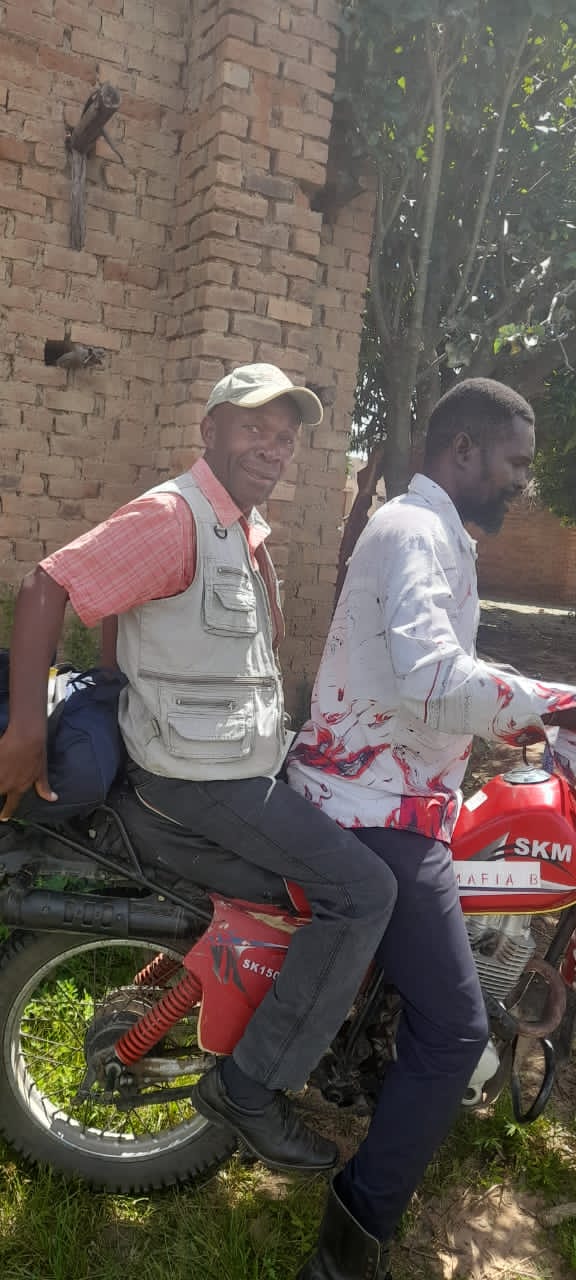
The recent police crackdown on unregistered motorcycles has highlighted the plishness of rural riders, many of whom use bikes for essential transport and livelihoods.
In areas like Chiweshe, riders are struggling to register their bikes due to lack of paperwork and infrastructure.
“I bought this bike from a farm owner, no registration book or plates,” said one rider. “People need transport for goods and services, but the system isn’t helping.”
This situation affects organizations like Health Promotion Clinic Trust, whose staff were utilizing bike services to reach clients and patients in far remote areas. “We need a solution that works for everyone,” said a source.
Bikers at Nyarukunda turn-off along Madziva Bindura road are speaking out on safety concerns, but they’re also urging the government to find a balance. While helmets and registration are top priorities, riders say flexibility is key.
“Most riders don’t have helmets for passengers, and some don’t even have their own,” said one rider. “We need awareness campaigns and enforcement to change this.”
Health Promotion Clinic Trust is set to launch a helmet safety awareness campaign in partnership with local authorities. “We’ll be distributing helmets and educating riders on road safety,” said an HPCT representative.
Riders are also calling for flexible registration options, including temporary permits or staggered deadlines, to help those in rural areas access number plates and register their bikes.
“Those who bought bikes without books should be allowed to document how they got the bike and regularize it,” said another rider. A proposed amnesty would allow riders who bought bikes without proper paperwork to regularize their vehicles, providing documentation and proof of purchase.
According to statistics, Zimbabwe recorded 15,263 accidents in the first quarter of 2025, marking a 15% increase from the same period in 2024. Motorcycles are involved in a significant portion of these accidents, often due to reckless riding and lack of helmets.
To address this, riders are urged to prioritize safety measures, including wearing helmets, maintaining their bikes, and riding defensively.
The government is urged to consider these proposals and work with stakeholders to improve road safety for all.
_About the Author:_
Bigboy Madzivanzira is a multi-faceted individual with expertise in Health promotion and registered with the Allied Health Professions Council of Zimbabwe, Medical Rehabilitation Practitioner registered with the Medical Rehabilitation Practitioners Council of Zimbabwe, a Family Therapist, a Special Needs Educator, a Wheelchair and Supportive Seating Specialist accredited by International Society of Wheelchair Professionals, a Freelance Journalist accredited by the Zimbabwe Media Commission. He can be contacted on 0773 367 913 or email him on healthpromotionclinic@gmail.com