
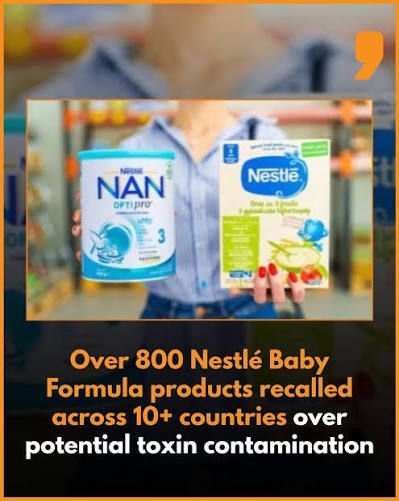
Nestlé said it is recalling batches of infant formula sold in 25 countries after discovering a potential contamination risk linked to a toxin that can cause nausea and vomiting, in what Austrian authorities described as the largest recall in the company’s history.
The recall affects several well-known brands, including SMA, BEBA and NAN, and covers products sold mainly across Europe as well as in Turkey and Argentina. Nestlé said no illnesses have been confirmed in connection with the recalled products.
The action follows the detection of a quality issue in an ingredient supplied by a major external partner. Nestlé said the problem involved arachidonic acid oil, a component used in infant nutrition. After identifying the issue, the company tested all related oil and oil mixes used in potentially affected products.
“With testing now complete, Nestlé has recalled affected batches and is activating alternative suppliers of arachidonic acid oil,” a company spokesperson said. Nestlé added it is ramping up production at several factories and accelerating the release of unaffected products from distribution centres to limit supply disruption.
The recall initially began on a smaller scale in December but has since expanded, adding pressure on Nestlé’s new chief executive, Philipp Navratil, who took the helm amid management upheaval and is seeking to revive growth through a review of the company’s portfolio.
Austria’s health ministry said more than 800 products from over 10 Nestlé factories were affected, calling it the largest recall in the group’s history. Nestlé said it could not independently verify those figures.
The potential contamination involves cereulide, a toxin produced by certain strains of Bacillus cereus. According to Britain’s Food Standards Agency, the toxin is unlikely to be destroyed by cooking or boiling water when preparing infant milk.
“Cereulide can cause food poisoning symptoms which can be quick to develop and include vomiting and stomach cramps,” said Jane Rawling, head of incidents at the Food Standards Agency.
Nestlé said the potential risk was first identified at a factory in the Netherlands. The Dutch food safety authority, NVWA, said the company’s investigation showed that the contaminated raw material had been used at multiple production sites, including facilities outside the Netherlands.
Problems involving infant formula can be particularly damaging for food companies because of the vulnerability of the consumers involved. The sector has been under intense scrutiny in recent years following a series of safety concerns and legal battles.
U.S. consumer goods group Reckitt, for example, is exploring options including a possible sale of its Mead Johnson nutrition business. The unit faces hundreds of lawsuits in the United States over claims, which the company denies, that its infant formula caused a fatal intestinal illness in premature babies.
Nestlé is the world’s largest player in infant nutrition, controlling nearly a quarter of the $92.2 billion global market, according to data from SkyQuest Technology Group. While the company does not publish detailed sales figures by product line, infant formula falls under its Nutrition and Health Science division, which accounted for 16.6% of total group sales in 2024.
Nestlé reported overall sales of 91.4 billion Swiss francs ($115.4 billion) last year. Shares in the company fell more than 3% over the past two trading sessions following news of the expanded recall.
Nestlé said it has published batch numbers for affected products sold in various countries and warned consumers not to use the recalled items. The company said it is working closely with regulators to ensure consumer safety and to restore normal supply as quickly as possible.
Food safety authorities in several countries have urged parents and caregivers to check product codes carefully and to follow official guidance if they have purchased the affected formula.
While Nestlé stressed that no confirmed illnesses have been linked to the recall so far, regulators said vigilance is essential given the nature of the toxin and the potential speed with which symptoms can develop in cases of exposure.
The company said it would continue to provide updates as investigations progress and as replacement supplies reach the market.
Reuters