
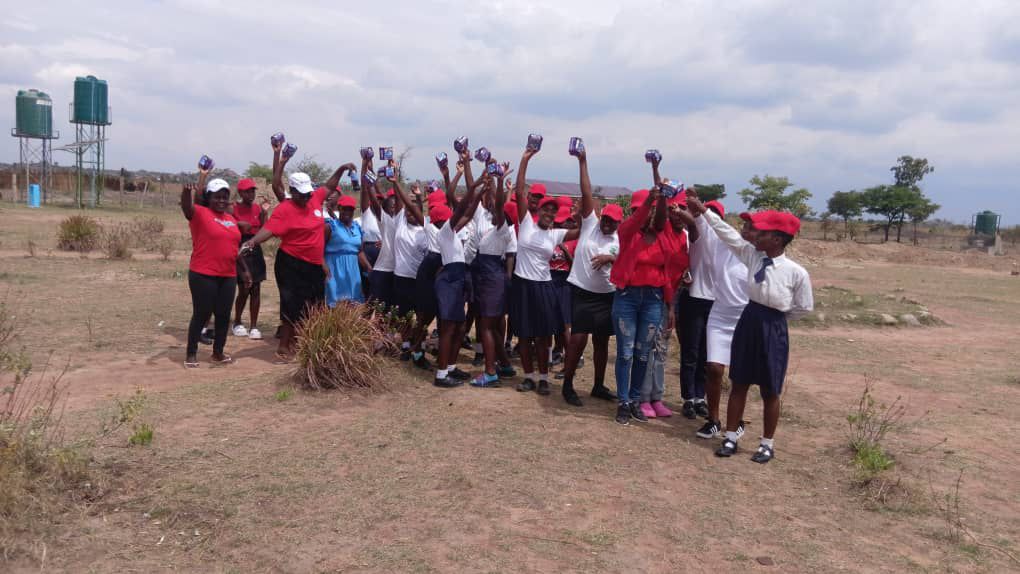
Empowered Girls running an awareness Campaign
Staff Writer
The Amalgamated Rural Teachers Union of Zimbabwe (ARTUZ) has stepped up a campaign that focuses on ensuring that girls in schools are educated on their rights, empowering them with relevant advocacy skills and also support them to petition stakeholders through various awareness campaigns.
In a statement, ARTUZ said it has since began a campaign to petition the ministry of Primary and Secondary Education advocating for an urgent action to ensure an end to school drop outs, end drug abuse and take measures that will see girls have full access to education.
Read the statement:
“The Union has escalated a campaign to keep Girls in school. The campaign focuses on educating the girls on their rights, empowering them with advocacy skills and supporting them to petition solution holders and run awareness campaigns.
A petition to the permanent Secretary of the ministry of Primary and Secondary Education is being signed across the country. The petition with subject, “ Urgent Action to End School Dropouts, Combat Abuse, and Ensure Full Access to Education for All Girls.” raises a solid call to action to the Ministry.”
ARTUZ requested for a funding programme that will be immediately implemented on critical areas which it believes are of paramount importance to the girl child well being.
“We request immediate, funded, and sustained implementation of the following core measures: Proactive Prevention: Comprehensive Sexuality Education (CSE). To address the root causes of teenage pregnancy and abuse, we request the establishment of standardized, compulsory prevention programs:
● Mandate Comprehensive Sexuality Education (CSE): Develop and integrate a standardized, age-appropriate CSE curriculum into all school programs.
● Trained Experts: Ensure every school deploys a qualified guidance and counselling practitioner focused on Sexual and Reproductive Health and Rights (SRHR).
● Teacher Preparedness: Make standard CSE training mandatory for all student-teachers in their curriculum.
2. Dignity and Health: Ending Menstrual Poverty
Financial barriers and poor sanitation prevent girls from attending school consistently. We must ensure every girl can manage her health with dignity:
● Fund Sanitary Pads: Budget for and establish a transparent distribution system for free sanitary pads for all girl learners.
● Improve Sanitation: Budget for and guarantee improved sanitation and access to clean water at every school, ensuring functional, private toilets for menstrual hygiene.
3. Safety and Safeguarding: Combating Sexual Abuse.Robust protocols are essential to protect learners from sexual abuse and provide justice for victims:
● Mandatory Protocols: Require and monitor that all schools have a functional sexual abuse case management protocol in place.
● Clear Collaboration: Develop clear protocols for sexual abuse cases that ensure immediate and effective collaboration with the Zimbabwe Republic Police (ZRP) and the Department of Social Development.
4. Support for Pregnant Learners and Young Mothers: Successful Reintegration.
ARTUZ there is a need for mechanisms to eliminate stigma for learners who return to schools after pregnancy and provide the necessary emotional support.
“For learners who return to school after pregnancy, we must eliminate stigma and provide academic and emotional support:
● Anti-Stigma Campaigns: Implement school-based campaigns involving staff, peers, and parents to eliminate discrimination and foster supportive environments.
● Psycho-social Support: Establish in-school counselling and clear referral pathways for young mothers dealing with emotional distress or trauma.
● Academic Programs: Provide structured remedial learning programs and flexible study options for learners returning from maternity-related absences.
● Teacher Training: Mandate professional development modules for teachers on promoting inclusivity and supporting the successful reintegration of young mothers.
ACCOUNTABILITY AND MONITORING
We further request the Ministry to:
● Establish clear monitoring and evaluation mechanisms to track the effectiveness of all these comprehensive measures.
● Require schools to report specific data on reintegration rates, attendance, and SRHR service provision to ensure accountability at all levels.
● Deliberate stakeholder communication that ensures the involvement of educators, learners, and the community in safeguarding and promoting the well-being of learners.”
“Teenage pregnancy, abuse, & menstrual poverty should not be allowed to compromise a girl’s right to education. We remain encouraged by the progress Zimbabwe has already made through legislation and are committed to seeing that progress translate into a supportive reality for every girl. We urge the Ministry of Primary and Secondary Education to prioritize these actions and collaborate with all stakeholders to safeguard the educational future of all girls.”
According to a 2024 United Nations Children’s Fund (UNICEF) report, challenges facing girls in Zimbabwe include poverty, food insecurity, and health emergencies exacerbated by the 2024 drought, alongside persistent issues like child marriage, gender-based violence, and inadequate access to quality education. The drought has led to crop failure and water shortages, increasing vulnerability to malnutrition, particularly in rural areas, while climate-related damage also affects schools, and a resurgence of cholera has caused further disruptions.